


More news on this day
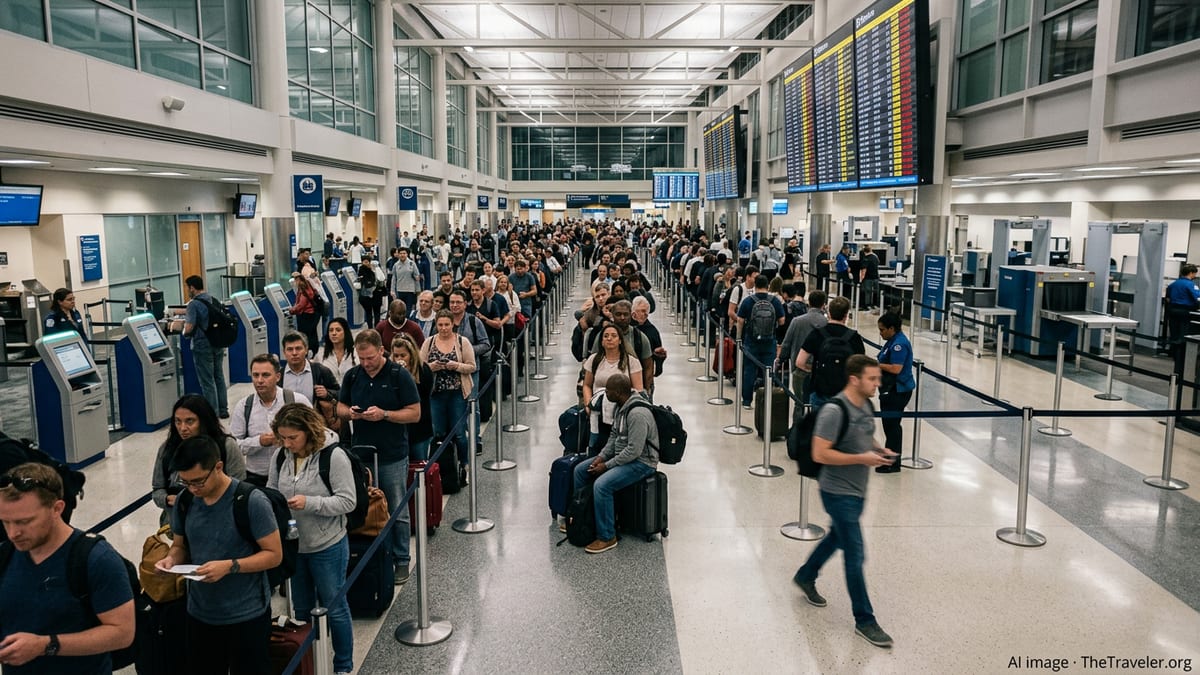
An unprecedented communications failure in the US air traffic control network on November 13 left more than 11,000 flights and an estimated 1.5 million passengers in limbo, transforming terminals across the country into crowded holding pens where some travelers napped on the floor, others scrolled through phones, and a few passed the time by making music.
Get the latest news straight to your inbox!
Nationwide ground stop brings air travel to a standstill
The Federal Aviation Administration ordered a nationwide halt to departures on Friday afternoon after what officials described in public statements as a major communications breakdown at multiple air traffic control centers. According to flight-tracking and aviation analytics data cited in widespread media coverage, more than 11,000 flights due to depart US airports after 4 p.m. Eastern time were affected, with roughly 4,000 already in the air when the disruption began.
Transportation officials later said US airspace was reopened to departing flights at about 8:15 p.m. Eastern. Even with the formal ground stop lifted, airlines cautioned that it would take many hours, and potentially much of the weekend, to reposition aircraft and crews and clear the backlog of disrupted trips. Publicly available schedules and tracking data indicated cascading delays and cancellations running late into Friday night at major hubs including Atlanta, Chicago O Hare, Dallas Fort Worth, Denver, Los Angeles and New York area airports.
Early assessments from federal agencies and aviation experts quoted in national coverage pointed to a failure within the communications systems that link regional air traffic control centers to aircraft, rather than a cyberattack or deliberate sabotage. The incident was described by multiple outlets as only the second time since the attacks of September 11, 2001 that flights across the United States had been halted on such a broad scale for safety reasons.
Life inside crowded terminals from Los Angeles to Chicago
Inside terminals, the sudden shutdown translated into long lines at service counters, dense crowds in seating areas and a scramble for essentials such as food, power outlets and last available hotel rooms. Reporting from Los Angeles, Chicago and Washington described concourses where nearly every chair was occupied, passengers sat in circles on the floor around charging stations, and baggage carousels were so infrequently used that travelers perched on the motionless belts.
At Los Angeles International and other large West Coast gateways, some passengers arriving for evening departures found their flights already delayed or pulled from departure boards as the ground stop expanded. Local coverage from California and Illinois described travelers in airport-branded hoodies or wrapped in coats, stretched across benches and gate area carpets with carry-on bags as makeshift pillows, bracing for overnight stays when rebooking options were exhausted.
For many, the first word of the ground stop came from pilots or gate agents relaying limited information from operations centers. Passengers who had already boarded in cities such as Denver, Chicago and Washington reported sitting on the tarmac for extended periods before being brought back to the terminal or told to remain on board while crews awaited updates. In some cases, travelers said they watched entire movies on seatback screens while their aircraft remained parked.
The ripple effects extended well beyond leisure trips. College and professional sports teams reported altering game times, chartering buses or delaying travel altogether, while business travelers missed client meetings and families reconsidered weddings and milestone gatherings planned for the weekend. With flight crews and aircraft out of position, even airports not initially hit as hard by the outage began reporting late-night cancellations.
From harp solos to card games: how passengers passed the time
Amid the frustration, images and first-hand accounts posted to social platforms showed pockets of creativity and calm. In several airports, musicians who happened to be traveling with instruments played informally in gate areas, drawing small crowds around piano keyboards and stringed instruments. One widely shared clip showed a harpist seated near a window wall, performing for a semicircle of stranded passengers who applauded between songs.
Elsewhere, families spread out travel games on the floor, while solo travelers set up laptops on top of luggage and turned terminals into temporary offices. Airport children s play areas, where available, filled quickly, and some parents described walking long loops through concourses to occupy restless kids between sporadic announcements. Card games, crossword puzzles and impromptu group chats became small distractions from departure boards filled with the word “delayed.”
The long waits also highlighted the importance of basic amenities. With many outlets and USB ports quickly occupied, passengers swapped portable chargers and took turns at scarce power strips. Food courts and convenience outlets saw extended queues, and in cities where nearby airport hotels sold out, some travelers reported planning to spend the night in public seating areas rather than attempt long, uncertain taxi or ride-hail journeys into town.
Why one outage stranded an estimated 1.5 million people
Travel industry groups have noted for years that a record volume of passengers is moving through US airports while the infrastructure that supports air traffic control, baggage systems and security has struggled to keep pace. Trade association data for 2025 showed more than 900 million passengers screened at Transportation Security Administration checkpoints, including several days that exceeded 3 million travelers. Against that backdrop, even a few hours of disruption can quickly translate into hundreds of thousands of disrupted journeys.
Friday s ground stop hit at the start of a busy mid November weekend, when carriers had already scheduled tight turnarounds to meet demand. When communications links failed, controllers in multiple centers reportedly lost reliable channels to speak with some aircraft, prompting the system wide safety halt. Once flights on the ground were held, aircraft already aloft were diverted or slowed, forcing airlines to juggle gate space, crew duty limits and aircraft maintenance requirements.
Aviation analysts quoted in national and regional coverage emphasized that while the United States still operates one of the world s largest and most complex aviation systems, years of underinvestment and staffing shortages have left little margin for error. Recent government reports have documented persistent gaps between the number of certified controllers on duty and the staffing levels agencies consider ideal, especially at some of the busiest en route centers that manage traffic between airports.
The result on Friday was a cascading network failure that stranded travelers across hundreds of cities, from small regional fields to the nation s largest hubs. Even as flights slowly resumed, airlines faced the task of reconnecting missed itineraries, ferrying aircraft back into position and honoring passenger protections that vary from carrier to carrier when disruptions originate from government or air traffic control problems.
What stranded travelers can expect next
For passengers still trying to reach their destinations this weekend, airline advisories and consumer advocates recommend verifying flight status frequently through official airline channels rather than relying solely on airport departure boards, which may lag behind schedule changes. Carriers have been waiving change fees in many cases and encouraging travelers with flexible plans to move flights to later dates to ease immediate congestion.
Because the disruption originated with air traffic control communications rather than airline operations, current US rules do not require carriers to provide cash compensation for delays or cancellations. However, published passenger rights policies indicate that airlines may provide meal vouchers, hotel accommodations or ground transportation in some circumstances, particularly if travelers are rebooked for the following day and seats are available at nearby properties.
Travel planners suggest that those stranded overnight keep receipts for additional expenses, monitor airline notifications closely and consider alternative routings through less congested hubs once more capacity is restored. With aircraft and crews scattered, some routes may see larger aircraft substituted to move more people at once, while others could experience rolling cancellations until schedules stabilize.
As investigations into the root cause of the communications failure continue, pressure is likely to intensify for sustained investment in the technology and staffing that underpin US air travel. For the more than one and a half million people who found themselves unexpectedly grounded on Friday, the experience offered an up close view of just how quickly that system can grind to a halt, and how resourceful passengers must become when terminals turn into temporary waystations.