


More news on this day
A cellphone video recorded by a stranded airline passenger and shared widely on social media is putting a human face on the unprecedented nationwide ground stop that halted flights across the United States on Friday, capturing the tense mix of confusion, frayed tempers and real-time announcements rippling through the cabin as the hours-long disruption unfolded.
Get the latest news straight to your inbox!
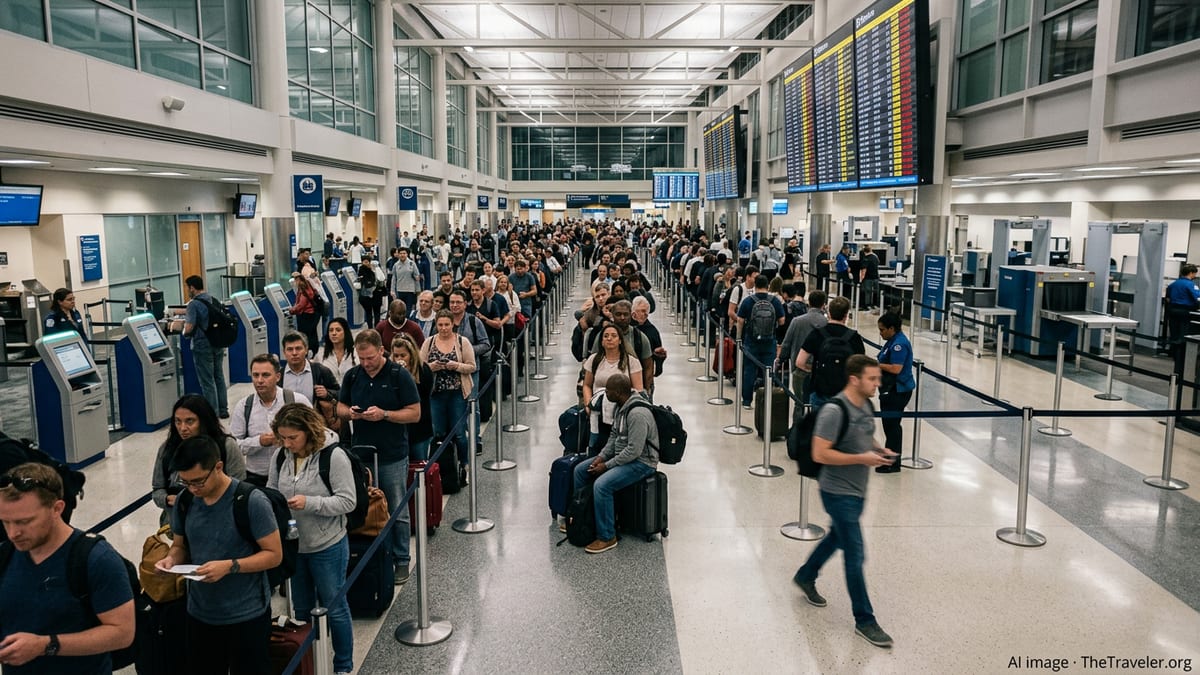
A rare nationwide halt to US air travel
According to publicly available information from the Federal Aviation Administration, the nationwide ground stop began on the afternoon of November 13, 2026, after a communication failure affected air route traffic control centers that manage high-altitude traffic across the country. The agency described the action as a safety response while technicians worked to stabilize the system.
Coverage from major outlets indicates that for several hours, departures from virtually all US airports were paused while flights already in the air were allowed to continue to their destinations. Aviation analysts noted that moves on this scale are extremely rare, drawing comparisons to post-9/11 restrictions and a 2023 system outage that temporarily grounded domestic flights.
Data compiled from airline trackers and airport reports shows that by late evening, the disruption had led to thousands of delays and cancellations nationwide, with ripple effects expected to continue through the weekend as aircraft and crews fell out of position. Crowded terminals, stretched call centers and long lines at rebooking counters quickly became the norm at many large hubs.
Within that wider disruption, the now widely shared passenger video offers a granular look at how the crisis played out on a single aircraft: a plane that had pushed back from the gate but never took off, leaving travelers stuck on the tarmac as updates trickled in from the cockpit.
Inside the cabin as the delay drags on
The video, distributed by Reuters Connect and rebroadcast by multiple news organizations, begins with the cabin lights dimmed and passengers scrolling through their phones as a pilot announcement comes over the intercom. The message relays that a nationwide ground stop is in effect due to an air traffic control issue and that no departures are being cleared while the problem is investigated.
As the minutes turn into hours, the recording shows the cabin atmosphere shifting. Some travelers appear resigned, leaning back in their seats with headphones on. Others are visibly agitated, standing in the aisle to retrieve bags or pressing call buttons. Overhead bins open and shut as people dig for snacks, medication or chargers, underscoring how an ordinary short flight has abruptly become an indefinite wait.
Background chatter captured in the clip references missed connections, weddings, sports events and work commitments, reflecting the broad cross-section of journeys suddenly in limbo. A parent can be heard trying to entertain a restless child, while another traveler appears to be using a laptop to search for train schedules and rental cars in case the delay stretches into the night.
Publicly available transportation data indicates that federal rules allow most domestic flights to remain on the tarmac for up to three hours before carriers must offer passengers the option to deplane at a gate, barring safety or air traffic control constraints. The video appears to have been filmed as that window approached, with the flight crew repeatedly updating passengers that they are waiting for a slot to return to a gate in a congested airport.
Airports from Denver to LaGuardia feel the strain
Reports from airports across the country describe similar scenes of disruption. At Denver International Airport, video shared by television networks and business news outlets shows crowds gathered around departure boards filled with red "delayed" markers as stranded travelers form long lines at airline service desks. Some passengers interviewed on camera said they had already spent hours on planes that never left the ground before being sent back to the terminal to rebook.
At New York’s LaGuardia Airport, a traveler speaking in a widely circulated broadcast segment described security lines freezing in place as departure screens simultaneously flipped to ground stop notices. Rolling images from the terminal captured people sitting on the floor against walls, eating takeaway meals beside their luggage and trying to recharge devices at overcrowded power outlets.
Local coverage from regional airports such as Fresno Yosemite International painted a similar picture on a smaller scale, with families waiting near baggage carousels to see whether their flights would ever depart and others weighing long drives as an alternative. Airport operators advised passengers to stay in close contact with their airlines and to verify flight status before heading to the airport, noting that recovery from the ground stop would not be immediate even after the FAA lifted restrictions.
Online forums dedicated to travel and aviation quickly filled with first-hand accounts from people stuck in concourses from Atlanta to Seattle. Posts described aircraft circling for available gates, crews timing out after exceeding duty-hour limits and long waits to retrieve checked bags after flights were abruptly canceled.
Technology failure highlights fragile aviation systems
Analyses published in national magazines and business outlets link the disruption to an issue in the FAA’s modernization of its air traffic control technology. Commentators noted that the ground stop followed the recent rollout of a new system designed to optimize airspace routes using advanced software and artificial intelligence, raising questions about resilience and backup procedures when critical systems fail.
While detailed technical findings are still being collected, early explanations in public reports point to a breakdown in communications between regional traffic control centers, making it difficult to safely coordinate en route aircraft. In that context, pausing departures nationwide was described as a precaution intended to prevent aircraft from becoming stranded in congested skies without reliable guidance.
Aviation experts cited in coverage drew comparisons to past technology-linked shutdowns, including a 2023 outage in the Notice to Air Missions system and airline-specific meltdowns caused by software updates and scheduling tools. The recurring theme, they suggested, is that increasingly complex digital infrastructure has introduced new points of failure that can transform a localized glitch into a nationwide problem within minutes.
The stranded passenger video has become a vivid symbol of that fragility, illustrating how a back-end systems issue, largely invisible to the public, can suddenly spill into everyday life for millions. For the travelers in the cabin, the jargon of "communication outage" and "system stability" translated directly into cramped seats, missed milestones and uncertainty about when they would be allowed to move again.
What travelers can do when the system seizes up
As airlines and regulators assess the outage, consumer advocates are using the high-profile disruption to remind passengers of their rights during extensive delays. Federal rules require most large US carriers to allow passengers to leave an aircraft after three hours of domestic tarmac delay, with limited exceptions, and to provide access to food, water, operational lavatories and medical attention if needed while the plane is on the ground.
Published guidance from the US Department of Transportation notes that compensation and meal or hotel vouchers for cancellations and long delays are largely governed by airline policies rather than federal law. Many major carriers have adopted customer service commitments outlining when they will cover overnight accommodations, ground transportation or rebooking on another flight, and these commitments are now listed in a centralized federal dashboard intended to help travelers compare airlines.
Travel planners observing the latest incident suggest several strategies drawn from prior mass disruptions. Passengers are encouraged to keep essential items, such as medication, baby supplies and a change of clothes, in carry-on bags in case of extended tarmac delays or unexpected overnight stays. Maintaining multiple ways to rebook, including airline apps, websites and customer service phone lines, can also reduce reliance on airport counters during peak surges.
For those already on board when a ground stop is declared, the viral video illustrates how quickly information can circulate between the cockpit, the cabin and the wider world. Travelers watching the situation unfold can benefit from following official airline and airport channels, while also documenting their own experience and expenses in case they seek reimbursement later. As the events of November 13 show, when a critical system falters, an ordinary flight can turn into an unplanned test of patience for everyone on board.