


More news on this day
Air travelers across the United States spent Friday night and Saturday morning sleeping on terminal floors, reshuffling itineraries and searching for scarce rental cars after a rare nationwide ground stop brought departing flights to a halt and triggered thousands of delays and cancellations.
Get the latest news straight to your inbox!
A rare shutdown ripples through the system
Publicly available data from flight tracking services on November 13 indicated several thousand delays and hundreds of cancellations nationwide after the Federal Aviation Administration ordered all departing flights stopped because of what the agency described as a communication issue affecting Air Route Traffic Control Centers. The disruption began in the late afternoon and was gradually lifted in the evening as systems were restored, but the operational impact extended well into November 14 as airlines struggled to reposition crews and aircraft.
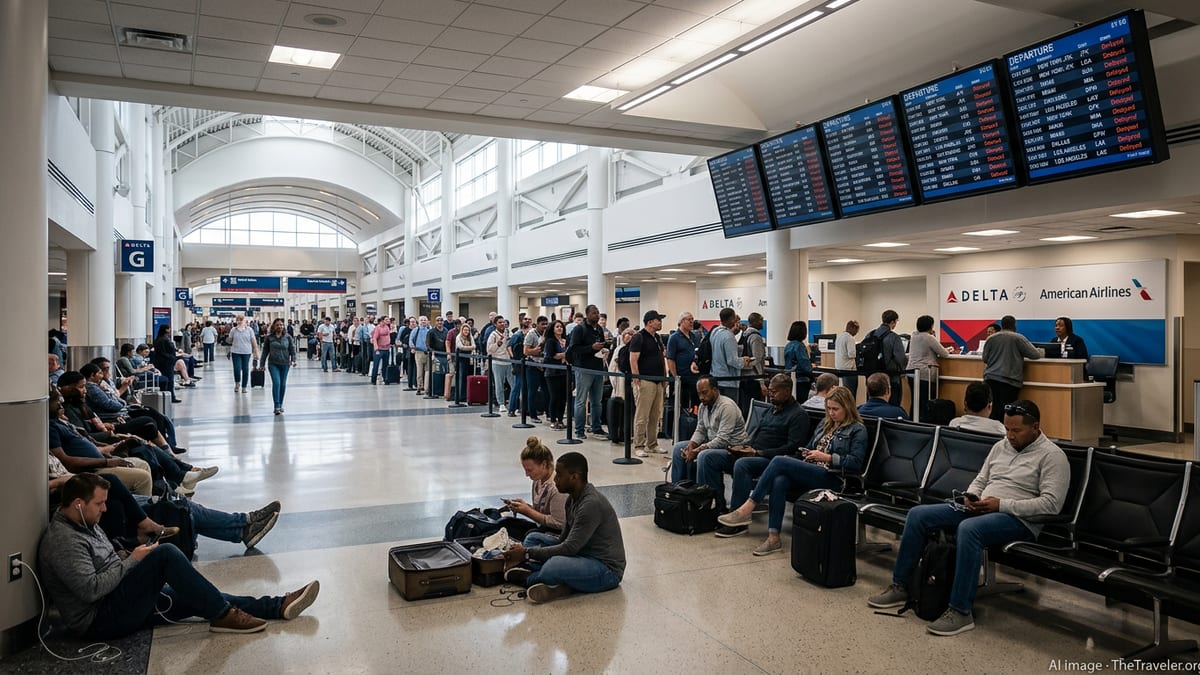
Coverage from national outlets described crowded concourses from Boston to Los Angeles, with departure boards filled with red and yellow notices and security lines slowing as travelers realized their flights were no longer moving. Photographs from airports including Boston Logan International Airport, Chicago O’Hare and New York’s LaGuardia showed passengers clustered around information screens and gate podiums as updates trickled out in real time.
The ground stop was characterized in several reports as the most sweeping halt to U.S. departures since a January 2023 outage of a key pilot-notification system, and only the third such nationwide disruption since 2001. Aviation analysts noted in published commentary that, although aircraft already in the air were allowed to continue to their destinations, freezing new departures created gridlock on the ground as planes waited for gates and crews bumped up against duty-time limits.
Scenes of disruption from coast to coast
Local coverage at major and regional hubs captured the immediate effects on travelers. Television stations in North Carolina reported hundreds of delays at Charlotte Douglas International Airport, with some passengers facing missed connections and overnight stays as evening departures evaporated. In Alabama, reports from Montgomery Regional Airport described travelers attempting to rebook on already full Saturday flights as cancellation tallies climbed across the national network.
In the Northeast, images from LaGuardia and John F. Kennedy airports showed long lines at ticket counters as airlines waived some change fees and urged customers to manage itineraries through mobile apps. Airport operators in New York advised passengers that, even after the ground stop was lifted, schedules would remain heavily disrupted while carriers restarted operations and cleared backlogs of stranded customers.
On the West Coast, San Francisco International Airport reported on social channels late Friday that the nationwide order had been lifted and that it was reverting to normal operations. Local reporting there noted that “normal” remained relative: departure boards on Friday evening and into Saturday still showed waves of delays and cancellations as aircraft and crews were out of position and evening banked departures had been missed.
Stranded passengers improvise new routes
For passengers caught in the disruption, the focus quickly shifted from the cause of the outage to the scramble for alternatives. Regional news outlets in the Southeast carried accounts of families being offered rebooking options two or three days later, prompting some to look at one-way car rentals or intercity buses to complete trips that would ordinarily take a few hours by air.
In several cities, publicly shared images showed travelers stretched out on benches, clustered near charging outlets and lining up at fast-food counters that stayed open late to accommodate the crowds. Social media posts compiled by national broadcasters highlighted stories of wedding guests trying to reach weekend ceremonies, students attempting to return to college campuses after Veterans Day breaks and business travelers calculating whether to attempt overnight drives to make Monday morning meetings.
Some passengers already on board aircraft when the ground stop took effect reported via online forums that pilots taxied back to gates and announced estimated delays of four to seven hours, only to provide further updates as the FAA refined its advisories. Others described spending extended periods on parked aircraft while crews waited for official clearance, adding to the sense of uncertainty as daylight turned to night in terminals across multiple time zones.
Airlines and airports race to recover
According to airline statements and airport alerts issued Friday evening, carriers shifted quickly into recovery mode once the order was lifted. Some international airlines announced that they would cancel all flights to and from the United States for the remainder of the night, focusing instead on operating limited long haul departures from hubs such as Boston and New York once they could be assured of consistent air traffic control coverage along their routes.
Domestic carriers encouraged travelers to use self-service tools where possible and extended travel waivers that allowed customers booked on November 13 and 14 to change to later dates without additional fees in many cases. Airport authorities in several major metros advised passengers not to come to the airport unless their airline had confirmed that a flight was expected to depart, warning that parking facilities, security checkpoints and gate areas were already congested.
At the same time, cargo and express carriers were reported to be assessing the impact on overnight operations. One major freight airline stated publicly that it was activating contingency plans to minimize disruptions to time-sensitive shipments, a reminder that the ground stop affected both passenger itineraries and the movement of goods across the country.
Focus turns to aging infrastructure and traveler preparedness
As stranded passengers navigated the immediate consequences, attention in policy circles and aviation commentary returned to the condition of the systems that underpin U.S. air travel. Recent reporting has detailed efforts by the FAA to phase out legacy hardware and modernize networks at hundreds of facilities, including a multiyear plan to replace out-of-date information systems at air traffic control centers and radar sites. A technical outage in October near Houston, which was traced to a damaged fiber optic cable and briefly halted some departures, had already raised questions about resilience.
Analysts writing in national magazines and industry publications suggested that the November 13 ground stop may reinforce calls for accelerated investment in redundant communication links, updated routing equipment and more robust backup systems. Commentaries compared the event to the 2023 outage and argued that, while nationwide halts remain rare, the knock-on effects highlight how tightly coupled airline schedules, crew duty rules and airport capacity have become.
For individual travelers, consumer advocates quoted in recent coverage pointed to the disruption as a case study in the value of preparation. Recommendations included downloading airline apps in advance, traveling with essential medications and a change of clothes in carry-on bags, and considering travel insurance that covers lengthy delays. With the busy holiday season approaching, the images of stranded passengers across the United States served as a vivid reminder that even routine domestic trips can be upended in a matter of minutes when critical aviation infrastructure falters.