


More news on this day
A shaky smartphone video shot by a stranded airline passenger has become a vivid symbol of the nationwide US ground stop on November 13, capturing the confusion and mounting frustration inside packed cabins as thousands of flights were halted for hours.
Get the latest news straight to your inbox!
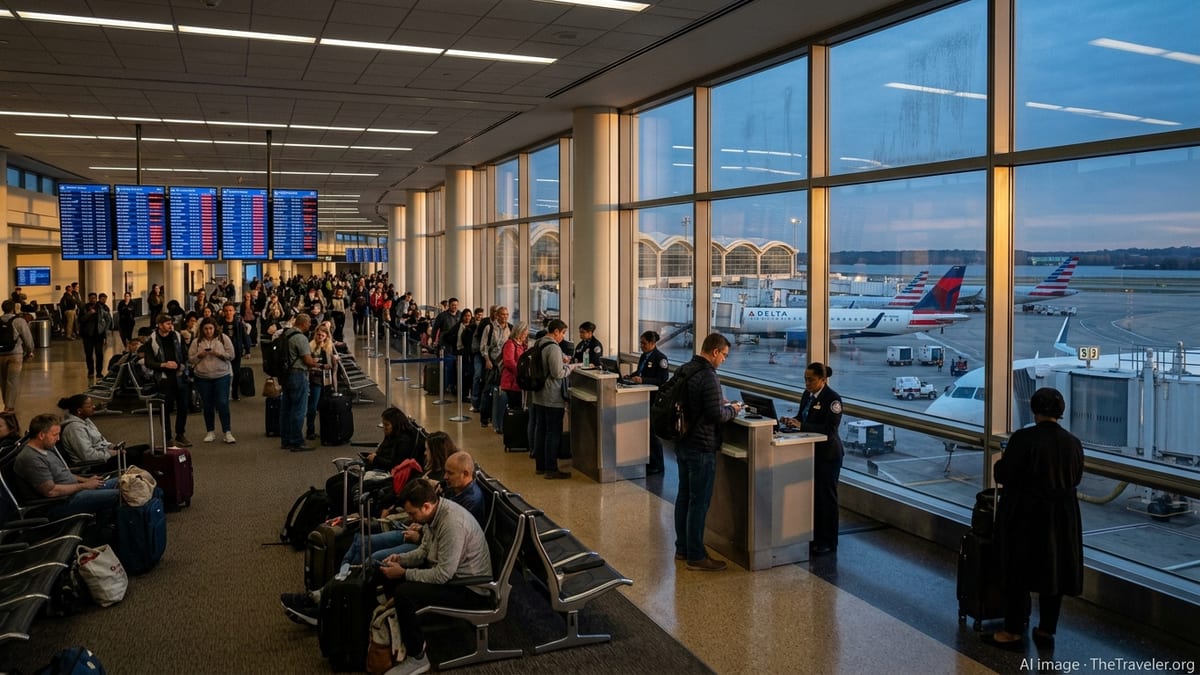
Rare nationwide halt brings air travel to a standstill
The Federal Aviation Administration ordered the extraordinary pause on departures across the United States on Friday afternoon, citing what public statements described as serious communications problems inside the air traffic control network. According to published tallies from flight-tracking services, nearly 5,000 flights were canceled and many more were delayed as the system-wide stoppage rippled through the schedule.
Analysts note that nationwide ground stops of this kind are extremely rare in US aviation. The last time all domestic flights were halted was in January 2023, when a failure in a key pilot-notification system forced a morning shutdown of departures, and before that in the aftermath of the September 11, 2001 attacks. Aviation writers observing Friday’s events described the move as a measure of last resort taken in the name of safety while technicians worked to stabilize data flowing through radar and communications equipment.
Initial accounts from government briefings and industry statements point to overloaded routers and unstable communications between Air Route Traffic Control Centers, which manage cruise-altitude traffic over large regions of the country. A recently introduced airspace management platform designed to optimize routes and reduce congestion has drawn attention as investigators look at how newer tools interact with aging infrastructure, although public information available so far does not identify a single confirmed point of failure.
For travelers, however, the technical root cause was largely an abstraction. At airports from Boston to Los Angeles, departures boards flipped from green to red within minutes. Aircraft already on the ground were held at gates, pushed to remote stands, or left waiting on taxiways as airlines tried to anticipate how long the halt would last.
Viral cabin video shows human cost of hours on the tarmac
The now widely shared video that has come to epitomize the disruption was recorded on a domestic flight that had already landed but was unable to reach a gate at a major US airport. In the clip, rows of passengers sit masked and visibly fatigued under dimmed cabin lights while the sound of an overhead announcement struggles to cut through the murmur of conversations and phone alerts.
According to captions and accompanying reports on major broadcast and online outlets, the aircraft had been stuck away from the terminal for several hours, joining a queue of jets waiting for a free gate while arrivals outpaced departures during the ground stop. The video pans from the seatback screen, frozen on a route map, to the crowded aisle where passengers stand shoulder to shoulder, some clutching carry-on bags in hopes of a quick exit once the doors finally open.
Similar scenes appeared in licensed news footage and local newscasts from airports including Los Angeles, Denver, Sacramento and Atlanta, where passengers were filmed waiting on parked aircraft, deplaning onto crowded concourses or attempting to retrieve checked luggage from flights that never left the ground. In Las Vegas, a traveler interviewed alongside images of packed gate areas described a sense that “nobody has answers,” echoing a common refrain as flight crews relayed limited updates from cockpits.
Clips shared by passengers and news organizations quickly spread across social platforms on Friday evening, showing children trying to sleep across rows of seats, travelers lining up at customer service desks and aircraft tails stacked nose to tail along taxiways. For many viewers, the stranded-passenger perspective crystallized the impact of a highly technical failure on individual journeys for business, family visits and long planned holidays.
System overload exposes fragile aviation infrastructure
Aviation specialists and transportation commentators say the latest ground stop highlights long running concerns about the resilience of the US air traffic control system. Publicly available analyses point out that critical pieces of the network still rely on decades old hardware and bespoke software, even as flight volumes have rebounded to or exceeded pre pandemic levels.
In recent months, the FAA has announced plans to phase out some of the most antiquated components, including legacy data storage and information exchange systems slated for replacement through 2028. A new platform called the Strategic Management of Airspace Routes and Trajectories has been promoted as a way to use advanced analytics to plot more efficient routes and reduce weather related congestion, but experts quoted in technical and policy coverage caution that integrating modern tools with older communications infrastructure is a complex and delicate process.
Reports following Friday’s disruption describe a cascade triggered when data passing through key routing and communications equipment became inconsistent or overloaded, prompting safety managers to halt new departures while traffic already in the air continued under standard control. Commentators emphasize that in such situations, a ground stop is designed to increase safety margins by preventing additional aircraft from entering a stressed system, even if it creates hours of delay on the ground for passengers.
The stranded passenger video and others like it have also raised questions about how information is shared during fast moving system failures. While some pilots were recorded calmly explaining the situation and offering time estimates based on what they could see on their own instruments, many travelers reported receiving little more than periodic assurances that updates were pending, fueling speculation and anxiety in crowded cabins.
Airports and airlines scramble to recover through the weekend
Although the FAA lifted the nationwide ground stop on Friday night, recovery operations at major hubs are expected to stretch across the weekend. Airlines are contending with out of position aircraft and crew members who hit duty time limits after spending hours waiting with passengers on parked planes. Carriers have described the response as an all hands effort to reassemble schedules, add extra sections where possible and prioritize connections for those who missed onward flights during the shutdown.
At large hubs such as Chicago O’Hare, Hartsfield Jackson Atlanta, Denver International and Dallas Fort Worth, local coverage showed security lines reforming as evening flights gradually resumed. At the same time, passengers interviewed on camera described sleeping on terminal floors or nearby hotels after missed connections left them with no same day options. Regional airports, from Fresno in California’s Central Valley to mid sized cities in the Midwest and Southeast, also reported extensive disruption as aircraft and crews were diverted to larger hubs during the ground stop.
Sports teams, touring performers and conference organizers are among those adjusting plans. Reports indicate that professional and college sports leagues have been working with charter operators and bus companies to reposition teams for games scheduled across Saturday and Sunday, sometimes shifting kickoff or tipoff times to accommodate revised arrivals. Cruise departures, package tours and destination weddings tied to specific sailing or event dates are also absorbing the shock as late arriving guests attempt to catch up with their itineraries.
Travel advisors and consumer advocates note that standard airline policies apply, even in unusual system wide events of this kind. Carriers are generally responsible for rebooking passengers on the next available flight, including on partner airlines in some cases, but compensation for hotels and meals varies depending on the airline and whether the disruption is considered within its control. Many travelers affected by Friday’s ground stop are now navigating those policies as they seek refunds, credits or alternative arrangements.
What stranded passengers can do in similar disruptions
For travelers watching the viral video and wondering how to prepare for similar events, experienced flyers and travel planners point to a few practical lessons grounded in recent disruptions. One of the most consistent themes from Friday’s coverage is the value of having direct digital access to airline tools, including carrier apps that allow passengers to see rebooking options and join standby lists without waiting in long lines at the airport.
Public guidance from aviation agencies and consumer groups also encourages passengers to keep essential items in carry on bags, including medications, chargers and a change of clothes, in case aircraft are held away from gates or checked luggage becomes difficult to retrieve during a system shock. The passengers shown in the stranded cabin video who appeared most comfortable were those with water, snacks and entertainment already within reach, while others searched overhead bins for items that had been stowed at boarding.
Experts featured in recent reporting advise travelers to monitor flight status from multiple sources when news of a ground stop breaks, checking both airline channels and independent flight tracking services. In Friday’s case, radar style maps shared by data providers gave a stark visual of departures dropping to near zero at affected airports. Those tools, combined with announcements from the FAA and local airports, can help passengers assess whether to remain at the gate, seek alternative transport or delay their trip altogether.
The stranded passenger video at the heart of the latest disruption captures only a few minutes of a long and stressful day in the skies, but its resonance across social media underscores how quickly individual experiences can define major travel events. As investigations continue into what triggered the nationwide halt, the images of crowded aisles, glowing seatback screens and uncertain faces are likely to shape public perceptions of both the vulnerability and the safety driven conservatism of modern air travel.