


More news on this day
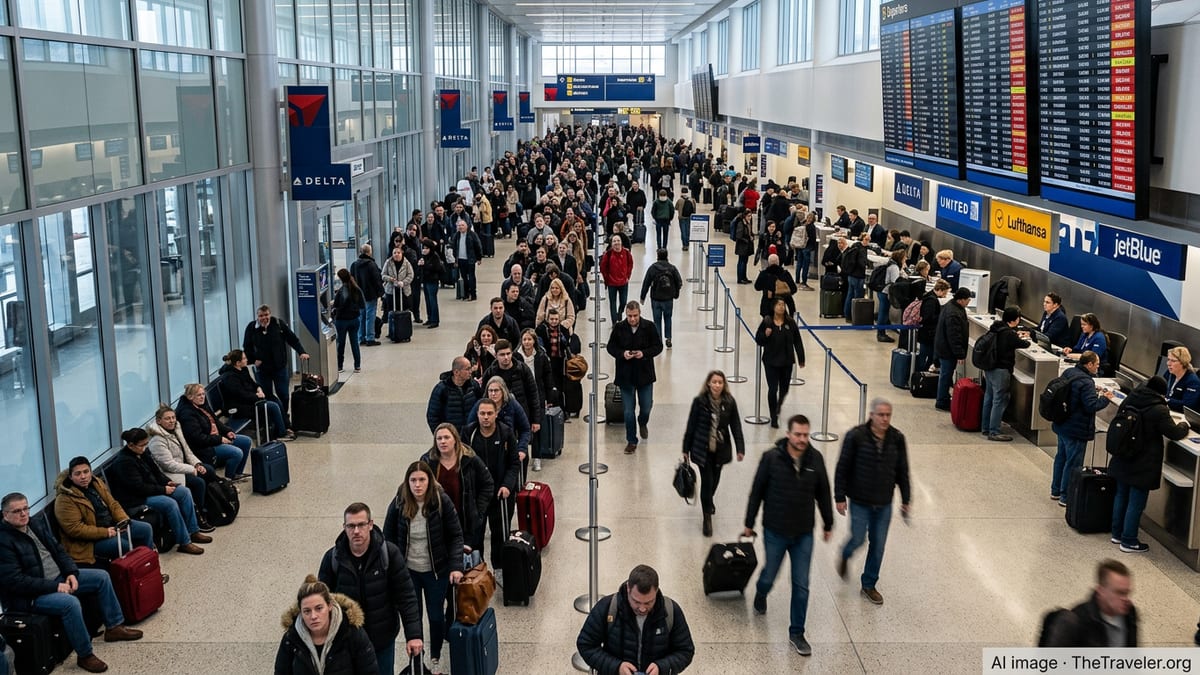
Air travel across the United States descended into confusion and frustration on Friday, November 13, after a rare nationwide ground stop halted departures, stranding passengers in airports from Boston to Sacramento and triggering thousands of delays and cancellations that are expected to reverberate through the weekend.
Get the latest news straight to your inbox!
Hours-long shutdown follows air traffic communications failure
Publicly available information shows that the Federal Aviation Administration ordered all departures paused nationwide on Friday afternoon, citing “extraordinary circumstances” and “reasons of safety” after serious communications problems emerged at multiple air route traffic control centers. The action affected both domestic and inbound international flights, effectively emptying large portions of U.S. airspace for several hours.
The stop began in the early afternoon Eastern time and was gradually eased in the evening, with airports such as San Francisco International and others reporting that the FAA had lifted the nationwide order by around 5:30 p.m. Pacific. Even as departures resumed, airport operators and carriers warned that it would take many hours to work through backlogs of aircraft and crews displaced by the abrupt halt in operations.
Reports indicate that it was the most sweeping U.S. flight grounding since a January 2023 FAA systems failure prompted a brief national pause in departures, and only the second since the shutdown that followed the September 11, 2001 attacks. Aviation analysts quoted in national coverage described the episode as a stark reminder of the vulnerability of the country’s aging air traffic infrastructure.
Early statements from federal transportation leaders and the Department of Homeland Security emphasized that there was no immediate evidence of a cyberattack or other “nefarious” action, though reviews of the outage and its root cause are still underway. Several outlets have reported a possible link to telecommunications or communications-system failures affecting more than one regional control center.
Terminals jammed as cancellations and delays mount
By early Friday evening, data from flight-tracking service FlightAware cited in national media showed more than 1,900 flights canceled and over 10,000 delayed within, into or out of the United States, with numbers climbing as airlines scrubbed remaining departures that could no longer be operated within crew duty limits or airport curfews.
Images from airports including Boston Logan, New York’s LaGuardia, Seattle-Tacoma, Orlando, and Sacramento showed departure boards lit almost entirely in red as “delayed” and “canceled” notices stacked up. Local coverage from California described passengers being asked to deplane and return to crowded gate areas after crews received word of the nationwide stop while aircraft were already taxiing for departure.
Regional airports were hit as well. An advisory from the Mobile Airport Authority in Alabama confirmed that the ground stop applied to all flights there, including United services, while coverage in Jacksonville, Florida and other mid-sized markets documented waves of cancellations as the afternoon wore on. With aircraft and crews out of position and overnight hotel capacity tightening near hubs, travelers increasingly faced rebookings stretching into late Saturday and Sunday.
At major connecting hubs such as Chicago, Denver, Atlanta and Dallas-Fort Worth, the disruption quickly cascaded into missed connections and marooned travelers sleeping in concourses. Airlines signaled through public advisories and social media posts that change fees were being waived in many cases, but also cautioned that seat availability would be constrained for several days on popular routes.
Knock-on impacts reach cruise ports and regional travel
The aviation disruption rippled well beyond airport fences. In New Orleans, a Mississippi River cruise ship accident on Friday that sent passengers and crew into the water complicated local response efforts when National Transportation Safety Board personnel were unable to fly in because of the ground stop, according to reporting from Associated Press. Investigators were forced to delay on-scene work while waiting for flights to resume.
Elsewhere, travelers connecting to rail and long-distance bus services reported missed departures and ticket-change costs as the timing of the ground stop overlapped with peak Friday evening travel. Some intercity bus operators reported heavier-than-usual demand on Friday night as stranded passengers sought alternative ways to complete regional journeys of a few hundred miles.
International itineraries into the United States were also affected. Coverage of the event noted that some transatlantic and transpacific flights already en route were allowed to continue but faced holding patterns or diversions as crowded hubs struggled to absorb arrivals with limited gate space. Other overseas departures bound for the United States were canceled outright or delayed at origin airports, leaving U.S.-bound passengers stuck in European and Canadian terminals.
The episode unfolded against a backdrop of already heightened complexity for some international fliers, following recent federal health-related requirements for passengers arriving from specific regions. While unrelated to Friday’s outage, these additional screening steps added to the perception among some travelers that international air journeys into the United States have become more fragile and subject to sudden change.
Uncertain cause spotlights aging systems and new technology
Published analysis in outlets such as the Washington Post, ABC News and The Atlantic highlighted how the latest event echoes previous technology-related failures within the national airspace system. Commentators pointed to the FAA’s reliance on a patchwork of legacy systems even as the agency rolls out new, more automated traffic-management tools intended to optimize routing and reduce congestion.
In the hours after the ground stop, federal transportation leaders publicly stressed that investigators had not yet found signs of a hostile attack, while also declining to rule out any possibilities until technical reviews are complete. Separate coverage referenced a recent FAA initiative to extend an artificial-intelligence-assisted traffic flow management program across U.S. airspace, though there is no confirmed link between that rollout and Friday’s communications issues.
Aviation experts interviewed in national and regional media argued that the scope and duration of Friday’s halt underscored systemic risks when key communications or data systems fail. Because air traffic control depends heavily on constant voice and data links between regional centers and aircraft, even partial outages in multiple facilities can make it impossible to guarantee safe separation between planes, triggering conservative decisions such as a nationwide ground stop.
Observers also noted that recovering from a full pause is inherently slow. Even once the technical trigger is resolved, controllers must meter departures carefully to avoid overwhelming airspace sectors and airport arrival streams, while airlines work to recreate complex daily schedules that assume constant aircraft movement. As a result, passengers can experience long-lasting disruption even when the original outage lasts just a few hours.
What stranded passengers are facing in the days ahead
For travelers caught in the middle of the disruption, the immediate concerns revolve around rebooking, refunds and basic needs like lodging and food. Airline public advisories compiled by news outlets on Friday indicated that major U.S. carriers, including United, Delta and American, introduced travel waivers allowing customers to change itineraries without additional fees for trips scheduled over several days surrounding November 13, provided they travel within a specified rebooking window.
However, reports from multiple airports suggest that limited seat availability will remain a challenge, particularly on heavily traveled transcontinental and leisure routes. With aircraft and crews pushed out of their normal rotations, some flights scheduled for Saturday and even Sunday are expected to be canceled proactively as airlines attempt to reset their operations.
Consumer advocates quoted in travel coverage are encouraging passengers to document out-of-pocket expenses incurred while stranded and to check the specific policies of their carrier, since U.S. regulations do not require airlines to compensate travelers for most delays that are classified as beyond the airline’s control. Some carriers voluntarily provide hotel or meal vouchers in severe disruptions, but practices differ widely.
Travel planners say the episode may also influence behavior going into the busy holiday period. Industry analysts anticipate that some passengers with time-sensitive connections, such as cruises, tours or major events, may build in additional buffer days or purchase more comprehensive travel insurance products that cover extended delays. For now, though, millions of travelers and the aviation system itself remain focused on the immediate task of recovering from one of the most disruptive U.S. ground stops in decades.