


More news on this day
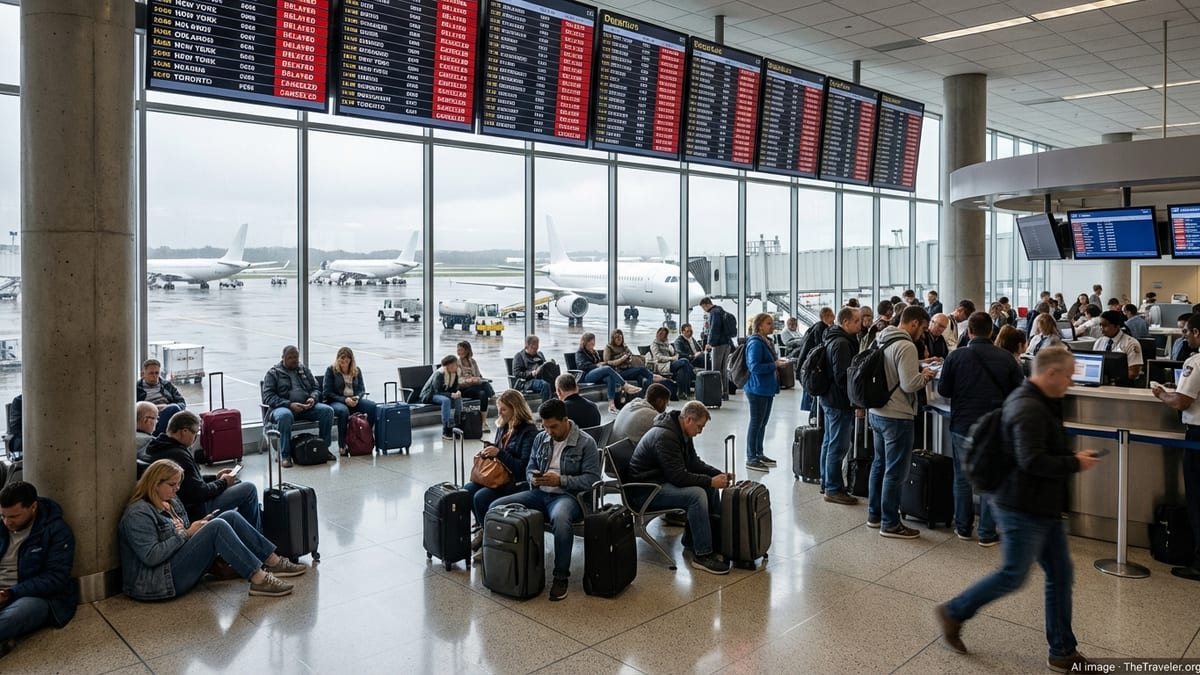
A rare nationwide ground stop ordered by the Federal Aviation Administration on Friday brought departures at airports across the United States to a standstill, leaving passengers stranded in crowded terminals and on parked aircraft for hours as airlines worked to recover from cascading delays and cancellations.
Get the latest news straight to your inbox!
Rare Nationwide Halt Disrupts Friday Travel Rush
Publicly available information from the Federal Aviation Administration and major news outlets indicates that the agency ordered the nationwide ground stop on Friday, November 13, after a significant communications failure affected multiple air traffic control centers. Departures were halted at all U.S. airports for several hours, pausing the movement of thousands of flights during one of the busiest travel periods of the week.
Coverage from outlets including the Associated Press, The Washington Post and network television stations describes a systemwide disruption linked to outages in communications and radar feeds between air route traffic control centers. The situation was described in FAA advisories as arising from “extraordinary circumstances” and “for reasons of safety,” language that signaled the seriousness of the event to airlines and airports nationwide.
Flight-tracking service data cited in multiple reports shows that by late afternoon more than 9,000 flights within, into or out of the United States had been delayed and close to 1,000 had been canceled. Airports from Los Angeles International and San Francisco International to Chicago O’Hare, Atlanta, Charlotte and the New York area reported waves of disruptions as departure boards flipped from on-time to delayed within minutes.
The scale of the interruption made the ground stop one of the most extensive since the aftermath of the September 11, 2001 attacks and a nationwide halt in January 2023, when a malfunction in another critical FAA system temporarily halted departures. Aviation analysts quoted in published coverage noted that events on this scale are exceedingly rare in the modern U.S. air travel system.
Scenes of Gridlock and Frustration at Major Hubs
From coast to coast, terminals quickly filled with stranded travelers as the order rippled through the network. Reporting from the Los Angeles Times described crowded concourses at Los Angeles International Airport, where passengers waited in long lines to rebook after more than 1,000 delays were recorded across the country in the early hours of the disruption. Travelers there described sprinting between gates in search of alternatives as flights were repeatedly pushed back.
At San Francisco International Airport, local coverage from the San Francisco Chronicle highlighted packed gate areas and departure boards filled almost entirely with delayed flights as ground operations paused. Airline staff and airport volunteers were shown helping confused passengers interpret rolling schedule changes while aircraft remained parked at gates and on taxiways awaiting clearance to depart.
Regional television outlets in cities such as Charlotte, Minneapolis and Chicago reported similar scenes of congestion. In Charlotte, local news indicated that hundreds of departures were delayed or canceled, with some travelers opting to leave the airport altogether and seek hotel rooms as the timing of the system’s recovery remained unclear through the afternoon and early evening.
In several airports, passengers reported via social media and to local broadcasters that they sat on aircraft for multiple hours while crews waited for updated departure slots. Others were held in security queues or check-in lines as airlines temporarily paused baggage acceptance until the extent of the ground stop became clearer.
Travelers Scramble to Salvage Weekend Plans
The timing of the ground stop created immediate knock-on effects for weekend plans. Reports from regional and national outlets indicated that business travelers missed meetings, families were forced to cut short or extend vacations, and students attempting to reach college campuses or return home for the weekend scrambled to find alternative itineraries.
Sports coverage from the Associated Press and other outlets detailed particular challenges for professional and college teams trying to reach games scheduled for Saturday and Sunday. Several NBA and NHL clubs, along with college football teams, were reported to be stuck on tarmacs or in terminals while league officials assessed whether schedules could be maintained once flights resumed.
Travel journalists and consumer advocates noted in published commentary that passengers whose flights were canceled were largely dependent on each carrier’s rebooking policies and seat availability. With planes already heavily booked for mid-November weekend travel, some travelers reported being offered itineraries that did not depart until late Saturday or Sunday, particularly on longer-haul transcontinental routes.
Because the disruption originated in the national airspace system rather than at individual airlines, analysts pointed out that carriers were dealing with constraints across entire route maps. Even airports far from the initial communications issues experienced ripple effects as aircraft and crews were left out of position for subsequent flights.
What Is Known About the Cause So Far
As of Saturday, November 14, publicly available statements and reporting indicate that investigators are still examining the precise cause of the outage. Coverage in national outlets such as the Associated Press and The Guardian cites federal briefings describing problems with communications links and radar feeds between regional air traffic control centers, possibly connected to ongoing upgrades to the system’s underlying technology.
Recent technology reports have highlighted longstanding modernization efforts within the FAA, including the replacement of older copper communications lines and legacy hardware with fiber optic networks and newer servers. Separate incidents earlier in the fall involving damaged fiber near major hubs such as Houston and outages affecting facilities in Philadelphia and New Jersey have already drawn attention to the vulnerability of key data links in the air traffic system.
Security officials referenced in published coverage emphasized that, based on information available Friday evening, there was no evidence that the outage was the result of a cyberattack or deliberate interference, although a final determination had not yet been released. Instead, early indications described the problem as a technical failure that triggered safeguards within the air traffic control network and led to the conservative decision to halt departures until communications were stabilized.
Aviation experts quoted in newspapers and on broadcast networks compared the event to the January 2023 disruption tied to the FAA’s Notice to Air Missions system, noting that both incidents underscore the complexity of modernizing a vast, continuously operating infrastructure that handles tens of thousands of flights per day.
Ongoing Recovery and Advice for Affected Passengers
By late Friday night, the FAA had lifted the nationwide ground stop and departures gradually resumed, according to live update pages maintained by several national broadcasters. Even after the order was lifted, airlines continued to warn of residual delays and cancellations into Saturday as aircraft and crews were repositioned and airport congestion slowly eased.
Airport advisories and airline statements urged passengers with upcoming flights to monitor their carrier’s mobile apps, text alerts or customer service channels for real-time updates before heading to the airport. Given the scale of the disruption, some travelers whose flights were operating on Saturday still encountered gate changes, shorter connection windows and altered routings as airlines attempted to restore normal schedules.
Travel analysts writing in national outlets suggested that passengers stranded overnight ask about options such as meal vouchers or hotel discounts, which may vary by airline and the nature of the disruption. Consumer guidance also encouraged travelers to retain receipts for necessary expenses if they plan to pursue reimbursement through travel insurance or credit card protections, though coverage terms differ widely.
With federal data showing that air traffic in the United States routinely involves more than 40,000 daily flights, the ground stop served as a reminder of how quickly a single point of failure in the national aviation system can affect millions of people. As investigations continue, travelers and industry observers alike are watching for clearer answers on what went wrong and whether additional safeguards will be introduced to reduce the risk of another nationwide standstill.