


More news on this day
Heavy disruption at Amsterdam Schiphol is rippling across some of the world’s busiest air corridors this weekend, with passengers stranded on routes linking Europe, Africa and North America as airlines battle congestion, equipment issues and wider network strains.
Get the latest news straight to your inbox!
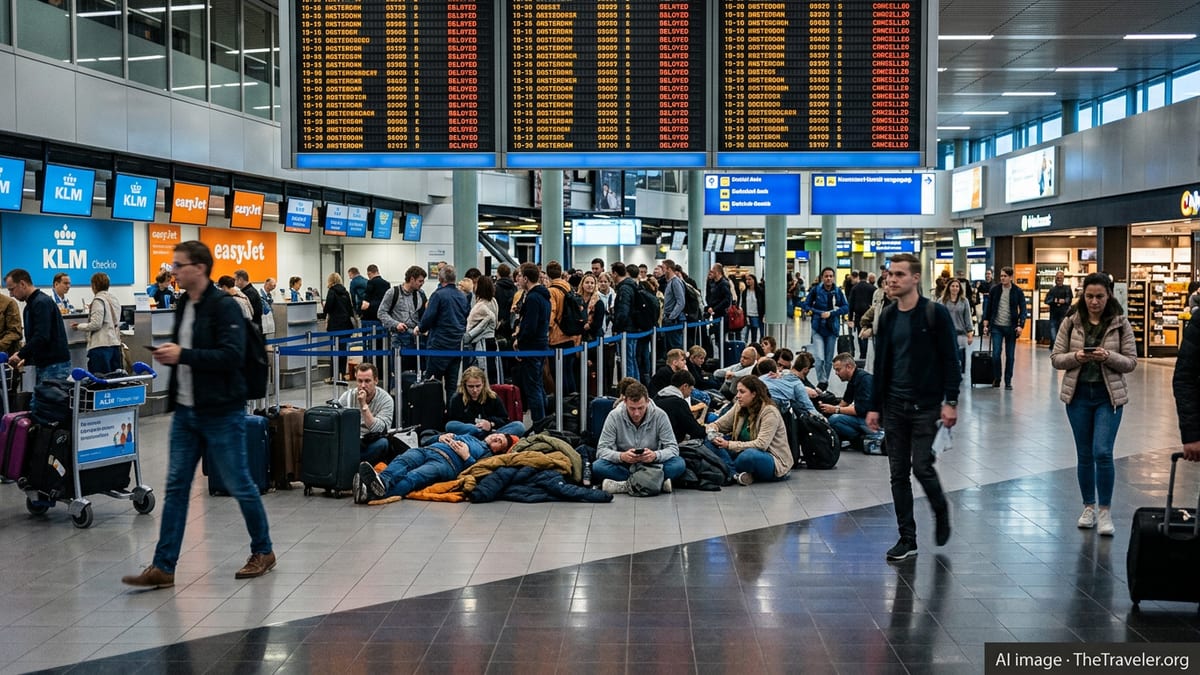
Major Hub Under Strain as Delays Outnumber Cancellations
Amsterdam Schiphol, one of Europe’s primary transfer hubs, has again become a pinch point in a wider bout of aviation disruption affecting multiple countries. Recent coverage of European operations indicates that more than a thousand flights across the continent have been delayed in a single day, with Schiphol cited alongside other congested hubs such as London Heathrow and major Scandinavian and French airports.
Reports describe a pattern in which airlines attempt to keep aircraft moving by operating delayed services rather than cancelling outright. While this approach can limit the number of outright cancellations, it has produced extended knock-on delays that cascade through busy hubs like Schiphol. As late-arriving aircraft and crews fall out of position, connection banks are disrupted and transfer passengers miss onward flights.
Publicly available analysis of recent performance also highlights the cumulative impact of earlier disruption this year, including winter weather, air traffic control constraints and regional security concerns that forced schedule changes on routes through Amsterdam. Those earlier problems left airlines with less slack in their networks, making the system more vulnerable when fresh bottlenecks emerge.
Industry evaluations of Schiphol’s recent winters further underscore how combinations of severe weather and operational decisions can quickly spill over into large numbers of stranded passengers. Independent assessments cited by the airport and its main carrier have pointed to widespread delays and long waits for rebooking during past storms, prompting new commitments to joint planning and passenger support.
Key Routes Hit: Europe, Africa and North America
The latest round of disruption has left travelers on several strategically important routes stuck in Amsterdam or facing uncertainty about onward journeys. Coverage focused on the Dutch hub points to congestion and schedule changes affecting services within Europe, as well as long haul links to Africa and North America.
One report on Sunday highlighted that a cluster of flights operated or marketed by KLM, Kenya Airways and United Airlines saw cancellations and significant delays, with passengers left waiting at Schiphol and at overseas departure points. The affected services include connections between Amsterdam and Nairobi and beyond into the African network, as well as transatlantic links that feed large North American hubs.
Earlier in the season, published information showed KLM suspending or trimming services to several destinations in the Middle East and Gulf region while also cancelling more than 150 European flights from its Schiphol base over a period of weeks. Those schedule reductions, combined with present-day congestion, have narrowed options for rerouting travelers when new problems arise.
Alongside the direct flight cancellations, disruptions on surface transport have compounded the impact for some passengers. Recent Dutch media reports described a lightning strike that halted rail services between Amsterdam, Utrecht and Schiphol, temporarily cutting or limiting train links used by tens of thousands of airport passengers on a typical weekday. With both air and rail under strain, travelers have reported longer end-to-end journeys and greater risk of missed connections.
Stranded Passengers Face Long Queues and Limited Options
For individual travelers, the operational picture translates into long lines at transfer and service desks, overnight stays and complex rebookings. Online accounts and forum discussions from recent months show passengers stuck at Schiphol for days after waves of cancellations, particularly when disruption coincides with peak travel periods or severe weather.
Some travelers report being automatically rebooked by airlines, sometimes onto itineraries leaving one or two days later or via indirect routings. Others describe needing to repeatedly refresh airline apps, stand in customer service queues or seek assistance by phone in order to secure a new journey. In cases where hotel rooms near the airport quickly sell out, stranded passengers recount sleeping in terminal seating while waiting for the next available seat.
Baggage handling has emerged as another pressure point. Earlier episodes of disruption at Schiphol this year were followed by complaints of bags delayed for days, with tracking devices indicating luggage remained at the airport while owners continued their trips or remained stuck in the terminal. Although airlines emphasize that systems are in place to trace and forward baggage, surges of misrouted or delayed bags can take days to clear.
Passenger advocates note that while European air travel rules provide rights to care, refunds and in some cases compensation, the practical process of claiming assistance can be slow when thousands of travelers are affected simultaneously. Online discussions describe travelers waiting weeks for reimbursement decisions, particularly after multi-day disruptions centered on Schiphol.
Airlines and Airport Adjust Operations to Contain Fallout
In response to recurring episodes of severe disruption, both Schiphol and its primary carriers have publicized efforts to strengthen their resilience plans. The airport and KLM have outlined a joint approach to winter conditions, including upgraded de icing capacity, refined staffing plans and enhanced coordination intended to reduce large-scale cancellations when snow or ice returns.
Airlines are also using more proactive schedule management, cancelling selected flights in advance or consolidating services when forecasts or capacity constraints signal potential bottlenecks. Publicly available airline advisories show flexible rebooking policies for affected itineraries, including options to change travel dates or, in some cases, request refunds when flights are cancelled or subject to substantial delays.
Digital tools are playing a growing role in how disruption is handled. KLM and its partners encourage customers to rely on apps and online portals for real time updates, self service rebooking and claims. These systems can reduce pressure on airport counters when they function smoothly, but they also create frustration when backlogs or technical issues prevent travelers from confirming alternatives quickly.
For Schiphol itself, maintaining stable operations has become a strategic priority as the airport continues to rebuild traffic. After previous summers marked by staff shortages and long security lines, and winters affected by storms, the current wave of delays underlines how vulnerable global connections remain to local shocks at major hubs.
What Travelers Can Expect in the Coming Days
With busy summer schedules approaching, industry observers suggest that the pattern seen this weekend at Schiphol may recur if weather, airspace restrictions or technical incidents coincide with peak demand. High aircraft utilization leaves limited room for recovery when flights run late, particularly at transfer hubs that rely on tightly banked connections.
Published guidance from airlines encourages passengers to monitor their bookings closely in the 24 to 48 hours before departure, use airline apps to receive disruption alerts, and allow extra time for connections through congested hubs. Where possible, some experts recommend building in longer connection windows at Schiphol and other major European airports during this period of heightened operational stress.
For now, available information indicates that delays remain more prevalent than outright cancellations, meaning most flights are eventually departing, albeit behind schedule. However, as the latest disruptions have shown, even a relatively small number of cancellations on trunk routes can leave hundreds of travelers stranded when there are few spare seats elsewhere in the network.
Passengers planning to travel via Amsterdam in the coming days are being urged, through publicly available advisories and travel alerts, to stay informed about changing conditions and to be prepared for extended journey times if congestion continues at Schiphol and other key hubs.