


More news on this day
Hundreds of travelers were stranded in Athens on June 14, 2026, as flights operated by SAS and KLM were grounded amid broader disruptions affecting Greek airspace and key European hubs.
Get the latest news straight to your inbox!
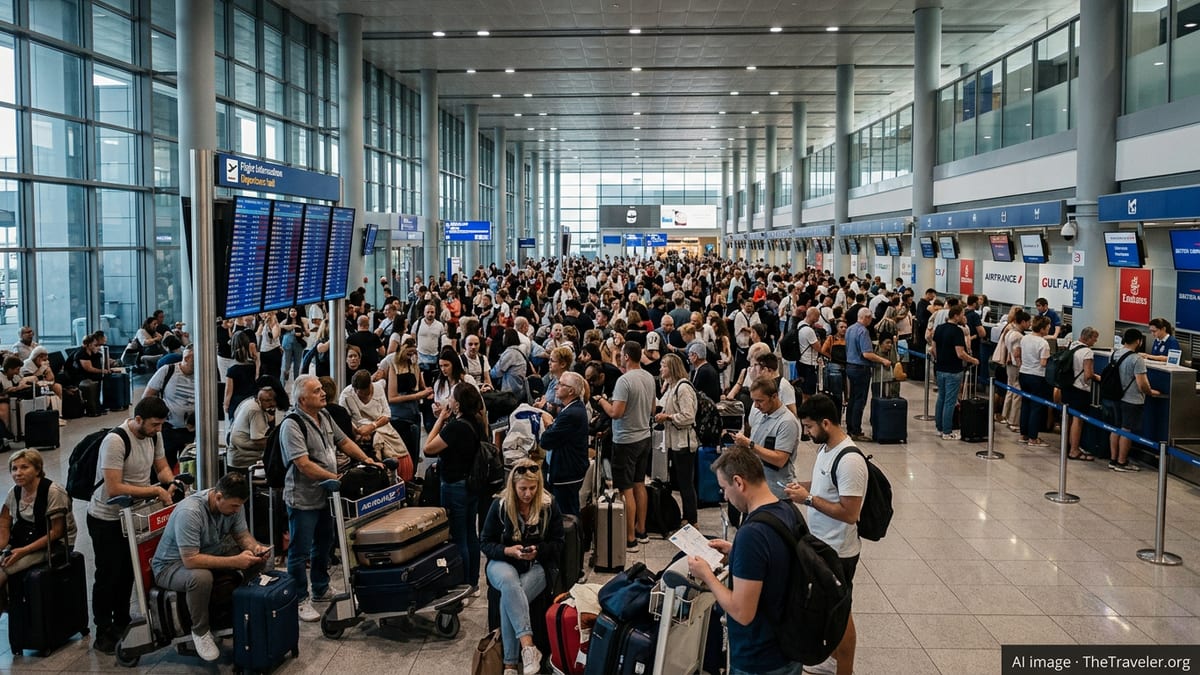
Grounded Flights Leave Passengers Stuck in Athens
Flight disruption data and local media reports indicate that services operated by Scandinavian carrier SAS and Dutch airline KLM to and from Athens were among those affected after Greece temporarily closed its airspace on June 14, 2026. The move followed a serious radio communication failure that forced air traffic authorities to restrict operations, cutting capacity at Athens International Airport and halting many inbound services.
According to publicly available information, more than 90 flights were affected at Athens, with additional knock-on disruption reported at other Greek airports. While some departures were later allowed to operate under strict limits, a number of international flights, including connections operated or marketed by SAS and KLM, were cancelled outright or diverted away from the Greek capital.
Travelers arriving at the terminal on Sunday reported widespread confusion as departure screens updated to show cancellations and long delays across European routes. Many passengers connecting onward to Northern Europe found themselves without clear alternatives, as airlines struggled to source spare aircraft and crew while the airspace restrictions remained in place.
Ground handling capacity was also strained, with long queues reported at ticket desks and service counters. Passengers faced extended waits to be rebooked and to secure hotel rooms or meal vouchers, particularly those on evening departures that could no longer operate before the nightly curfew.
Broader European Disruptions Hit SAS and KLM Networks
The disruption in Athens came on top of wider scheduling pressures for both SAS and KLM across Europe. In recent weeks, SAS has already been navigating a series of cancellations on long haul services such as its Copenhagen to Mumbai route, where travelers have reported repeated last minute flight removals and uncertainty over regulatory approvals.
KLM, meanwhile, has faced periodic operational challenges at Amsterdam Schiphol, one of Europe’s busiest hubs. Regional coverage from the Netherlands and passenger reports describe periods of significant congestion, staffing constraints and weather related delays that have prompted the carrier to trim parts of its short haul operation and consolidate flights on busier days.
These existing pressures reduced the resilience of both airlines’ networks when Greece’s airspace issues emerged. Once Athens began limiting arrivals and departures, it became more difficult to reroute passengers through alternative hubs on the same travel day, especially on heavily booked early summer services to and from popular Mediterranean destinations.
As a result, passengers booked on SAS and KLM itineraries involving Athens often faced overnight delays or were told that the next available rebooking options would be several days later. For some, particularly those with non flexible tickets or separate onward arrangements, this meant unexpected extra costs for accommodation and alternative transport.
Airspace Closure and Limited Reopening Create Chaos
Reports from Greek and international outlets state that the immediate trigger for Sunday’s disruption was a failure affecting radio communications used to manage aircraft over Greek territory. As a precaution, Greek airspace was temporarily closed, forcing inbound flights to divert to neighboring countries such as Turkey or return to their points of origin.
Athens International Airport subsequently confirmed that departures were being gradually resumed under a strict cap of around 35 aircraft per hour, far below normal peak capacity for a busy June weekend. Inbound traffic, however, continued to face restrictions for hours, creating mismatches between arriving and departing aircraft and disrupting crew rotations.
For airlines like SAS and KLM that rely on tightly timed networks and connections, even a short period of airspace closure has cascading effects. Aircraft and crews that were due to arrive in Athens for return services remained out of position, while passengers on diverted flights missed their onward connections back to Scandinavia and the Netherlands.
Operational updates show that some carriers opted to cancel later rotations outright rather than operate heavily delayed flights that would further disturb schedules the following day. This left many travelers in Athens waiting for replacement services, while others remained stuck at transit airports across Europe when their onward legs to Greece were removed from the schedule.
What Stranded Passengers Can Expect in Support
Information from Athens International Airport and European consumer guidance highlights that airlines have an obligation to inform passengers about their rights when flights are cancelled, significantly delayed or subject to denied boarding. That includes displaying notices at check in and boarding gates and providing written details of assistance and compensation rules.
Under European passenger protection rules, travelers whose flights are cancelled are generally entitled to a choice between rerouting at the earliest opportunity, rerouting at a later date convenient to them, or a refund of the unused portion of their ticket. The air carrier responsible for the cancelled segment is also expected to provide care in the form of meals, refreshments and, where necessary, hotel accommodation and ground transport between the airport and lodging.
Whether additional financial compensation applies in events linked to airspace closures or air traffic control failures can depend on the circumstances and legal interpretation in each case. Consumer organizations often advise affected travelers to retain boarding passes, booking confirmations and receipts for extra expenses, and to submit written claims directly to the airline once travel is completed.
For passengers stranded in Athens on SAS or KLM services, this typically means registering disruption details through the airlines’ official digital channels or customer service desks and monitoring for rebooking notifications. Some travelers may also be able to secure alternative routes on partner carriers within alliances, though availability is often limited when a large regional disruption affects multiple airlines at the same time.
Ongoing Ripple Effects for Summer Travel Plans
Operational updates from European carriers show that the disruption in Greek airspace on June 14 came as airlines were already operating at high load factors for the early summer season. Popular leisure routes to and from Athens, the islands and other Mediterranean destinations are heavily booked, leaving limited slack in schedules to absorb sudden cancellations.
Industry analysts note that events such as national airspace closures, airport staffing shortages or technical issues with navigation systems can have effects that last several days, as aircraft and crews are repositioned and backlogs of stranded passengers are cleared. Airlines sometimes respond by proactively cancelling a portion of flights in subsequent days to stabilize operations.
Travelers with upcoming bookings on SAS, KLM and other European carriers involving Athens are being encouraged by public information channels to monitor their reservations closely and to allow extra time for connections. Some consumer advocates suggest booking longer layovers when possible and avoiding tight same day transfers between separate tickets during periods of heightened disruption risk.
For those already caught in the latest wave of cancellations, the priority remains securing confirmed onward travel and documenting their experience for any future claims. With summer demand building and aviation networks under strain, the Athens disruption serves as another reminder of how quickly a technical failure in one part of Europe can leave passengers stranded far from home.