


Seattle–Tacoma International Airport (SEA) handles tens of millions of passengers a year, and its parking options have evolved quickly in response. What used to be a simple choice between “short term” and “long term” has become a mix of general garage parking, reserved spaces, and a famously busy pickup scene. This practical guide walks you through how parking at SEA works now, with current options, realistic prices, and concrete strategies to save time and money.
Get the latest updates straight to your inbox!
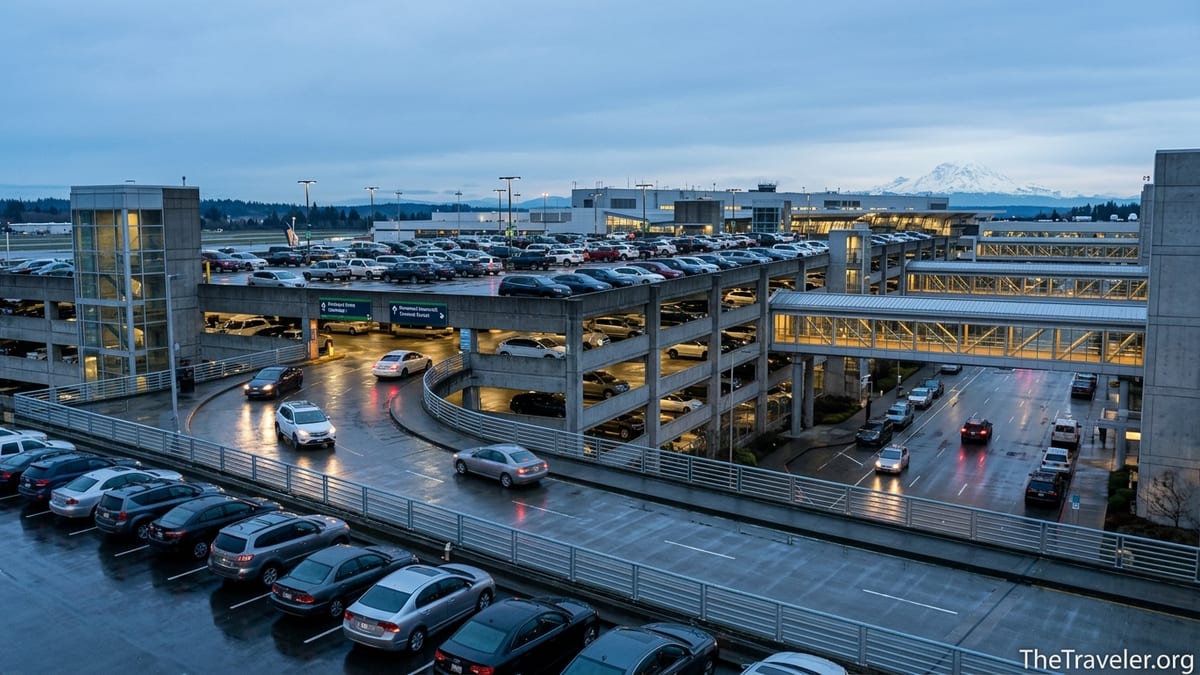
How Parking at SEA Works Today
SEA’s main parking is concentrated in a single, massive garage directly connected to the terminal by skybridges on Level 4. Travelers can park here for anything from a one-hour pickup to a multi-week trip. Unlike many big airports, there is no separate off-site airport-run lot; the Port of Seattle focuses its official parking operations in this central structure, supplemented by a reservation-only area on one floor.
For years, SEA promoted “Terminal Direct” parking on the upper floors of the garage at a premium price, but that product has been discontinued. The airport now emphasizes General Parking across most levels of the garage and a Reserved Parking section on Level 4, which lets you pre-book a space in advance. This shift is designed to simplify choices and better manage demand in a garage that routinely fills during holidays and summer travel.
To understand your options, it helps to think in three buckets: drive-up General Parking in the garage, pre-booked Reserved Parking on Level 4, and short-stay pickup and drop-off using either the terminal drives, the garage, or the nearby cell phone lot. Third-party off-airport lots and hotel packages add more options for budget-conscious travelers, but they involve shuttles rather than a direct walk to the terminal.
Because pricing and policies can change, it is wise to double-check details with the Port of Seattle shortly before you travel. However, the structure of SEA’s parking system has remained fairly consistent: centralize most parking in the garage, use reservations to guarantee availability on one level, and rely on the cell phone lot and curbside rules to keep traffic flowing at arrivals and departures.
General Parking in the Main Garage
General Parking is the standard drive-up option in SEA’s eight-level garage. It is open to all travelers on a first-come, first-served basis with no reservation required. The garage is attached to the terminal by covered walkways on Level 4, so once you park you can usually reach the ticketing lobbies or security checkpoints in five to ten minutes on foot, depending on your airline and how far from the elevators you find a space.
Rates are comparable to other large West Coast airports, with hourly pricing for quick visits and a capped daily maximum for longer stays. A common real-world pattern is someone paying roughly one hour of parking, for example around the cost of a quick coffee and snack, to come inside and meet an arriving relative or escort an elderly parent to the security checkpoint. That modest fee buys much less stress than circling the terminal loop during peak traffic.
General Parking is particularly convenient for trips of a long weekend to about a week. A traveler leaving Friday morning and returning Monday afternoon might pay a few days of the daily maximum, which can be competitive with off-airport lots once you factor in shuttle time and tips. For stays of 10 days or longer, many locals start comparing garage costs with off-site operators and hotel park-and-fly packages, which often undercut the on-airport rates while adding a shuttle ride of 5 to 15 minutes each way.
SEA’s garage uses color-coded zones and lettered rows, but it is still easy to forget where you parked after a red-eye return. A simple, concrete habit is to snap a quick photo of the level, color, and row number, like “Level 6, Yellow, Row U,” as soon as you step out of your car. This small step can save 20 minutes of wandering at midnight in drizzly Seattle weather.
Reserved Parking: Guaranteeing a Space on Level 4
Reserved Parking is SEA’s answer to travelers who want the certainty of a guaranteed space in the garage, especially during peak seasons like summer, Thanksgiving, and school breaks. Located on Level 4, the same level as the terminal pedestrian bridges, this area operates on a reservation-only basis. You pre-book online, receive a QR code by email, and scan it at a dedicated entry lane on arrival to access the reserved section.
In practice, this means that even when the rest of the garage feels crowded, a traveler with a reservation can drive directly to the reserved floor without wondering whether they will be forced into an off-airport lot at the last minute. SEA encourages booking at least several days in advance for peak periods, and many repeat travelers now reserve their parking at the same time they purchase flights. For a family flying to Hawaii over spring break, locking in a Level 4 spot can be worth the extra planning.
Pricing for Reserved Parking is typically higher than standard drive-up General Parking, reflecting the guaranteed availability and prime location on the same level as the terminal walkways. However, periodic promotions and online discounts can narrow this gap. A realistic scenario might be a business traveler who values predictability enough to pay a bit more per day, especially when flying home on a tight schedule and wanting the shortest possible walk from baggage claim to their car.
Reserved Parking also reduces friction at the entry gates. Because your QR code handles both entry and exit, there is no need to pull a paper ticket or pay at a kiosk; the system simply records your stay according to the reservation. For frequent users, this can make the airport experience feel closer to using a private garage, with less fumbling for tickets or credit cards at the barrier.
Pickup, Drop-off, and Using the Cell Phone Lot
SEA’s terminal loop for pickups and drop-offs can be one of the most stressful parts of the airport. The departure and arrival drives often clog during the early morning rush and evening wave of inbound flights. Curbside stopping is tightly controlled: you are allowed to pull in long enough to actively load or unload passengers and bags, but lingering at the curb or waiting for a text is not permitted and may draw the attention of traffic officers.
The official solution is the SEA Cell Phone Lot, located just off the Airport Expressway near South 170th Street. The lot has around 200 spaces, free Wi-Fi, and is signed clearly from the main approach roads. Drivers wait there until their arriving passenger calls or messages that they have collected luggage, then drive the short distance to the baggage claim exit doors for a quick curbside pickup. The lot is reserved for short stays, with a time limit of about 20 minutes and rules requiring drivers to stay with their vehicles.
In reality, the cell phone lot can become heavily congested at peak times, especially late evenings when multiple large jets arrive within a short window. Local residents often plan around this by asking arriving friends or family to be completely ready at the curb before leaving the cell phone lot. For example, a driver might wait for the “I’m outside Door 26 on lower arrivals” text before exiting, which can cut down on the time spent in the terminal loop.
When the cell phone lot is full or traffic exiting it is backed up, many drivers choose to use the garage instead for quick pickups. Paying for one hour of General Parking, then meeting your passenger inside at baggage claim or at the exit of the skybridge on Level 4, can be far more relaxing than fighting for curb space on the arrivals drive. For elderly relatives, families with small children, or anyone carrying lots of luggage, this inside meet-up is often the safest and most comfortable option.
Cost-saving Strategies and Off-airport Alternatives
Because garage rates at SEA are on the higher side, frequent travelers and long-stay vacationers often look for ways to cut costs. One straightforward strategy is to compare pre-booked Reserved Parking with third-party off-airport lots and hotel park-and-fly deals. While Reserved Parking commands a premium over drive-up General Parking, promotional online rates at independent lots can start noticeably lower per day, especially for stays of a week or more.
For example, a family heading to Europe for 12 days in July might find that an off-airport operator along International Boulevard offers a secure surface lot or covered garage plus shuttle service every 10 to 15 minutes, at a total cost that undercuts the on-airport garage by a meaningful margin. The tradeoff is the added time and complexity of riding a shuttle, which can feel burdensome on early morning departures or late-night returns.
Another common tactic is pairing a pre-flight hotel night with long-term parking. Many SeaTac-area hotels advertise sleep-and-park packages that include one night’s stay plus 7 to 14 days of parking in their lot and shuttle transfers to the terminal. For travelers coming from cities like Tacoma, Olympia, or Bellingham, driving up the night before and staying near the airport can reduce morning stress while effectively bundling accommodation and parking into a single cost.
Even if you decide to park in the official garage, you can still save by matching the product to your needs. Travelers who value predictability and proximity may prefer Reserved Parking on Level 4, while those focused purely on keeping costs down might choose drive-up General Parking but avoid peak holiday weekends when rates and demand are highest. For truly short stays, such as a same-day business hop to Portland, the convenience of the garage may outweigh the limited savings of an off-airport lot once you factor in shuttle time and potential delays.
Practical Tips for a Smooth Seattle Airport Parking Experience
Regardless of where you park, a few simple habits can make SEA much easier to navigate. First, build extra time into your schedule, particularly for early morning flights between 6 a.m. and 9 a.m. and evening departures from 4 p.m. to 7 p.m. During these windows, lines at the security checkpoints and congestion at the terminal drives can lengthen travel time by 30 minutes or more. Arriving early ensures that an unexpected delay finding a space in the garage or exiting the cell phone lot does not put your flight at risk.
Second, communicate clearly with the people you are dropping off or picking up. If you are collecting an arriving traveler, agree on a specific door number or landmark outside baggage claim and confirm whether they will have checked luggage. Passengers with only carry-on bags can often reach the curb 15 to 20 minutes sooner than those waiting at the carousels, which changes when you should leave the cell phone lot.
Third, consider accessibility and weather. Seattle’s fall and winter months bring heavy rain and short daylight hours, and the garage provides covered access to the terminal that can be especially valuable for travelers with mobility challenges. Choosing Reserved Parking or General Parking close to elevators on Level 4 can minimize exposure to the elements. For elderly relatives or anyone with limited mobility, meeting inside the terminal or at the skybridge entrances avoids the chaos and curbside jostling of the arrivals drive.
Finally, think about your return trip as you park. If you expect to land late at night after a long-haul flight, choosing a space near the main elevator banks, even if it takes an extra minute to find, will feel worth it when you are tired and just want to get home. Locals often favor the same side of the garage as their usual driving route back, whether that is south toward Tacoma and Olympia or north toward downtown Seattle and the Eastside, to simplify the exit and reduce time spent on the airport loop roads.
The Takeaway
Parking at Seattle–Tacoma International Airport is no longer a one-size-fits-all decision. The large on-site garage offers General Parking for most travelers and a reservation-only section on Level 4 for those who want guaranteed space within a short walk of the terminal. Meanwhile, the cell phone lot and terminal drives manage the churn of pickups and drop-offs, with the garage itself serving as a comfortable backup when curbside traffic is intense.
For short trips of a few days, the convenience of the garage often justifies the cost, especially if you value a weather-protected walk and a simple, ticketless exit. For longer vacations, comparing Reserved Parking with off-airport lots and hotel packages can yield real savings, particularly for families or groups traveling together. Whatever you choose, a bit of advance planning, clear communication with passengers, and realistic expectations about peak travel times go a long way.
By understanding how SEA’s parking system works and matching the available options to your budget and priorities, you can transform a traditionally stressful part of air travel into a predictable, even routine step in your journey. When your return flight touches down and you know exactly where your car is waiting, the last few miles home from the airport feel a lot more pleasant.
FAQ
Q1. What is the difference between General Parking and Reserved Parking at SEA?
General Parking is drive-up, first-come parking throughout most levels of the main garage, while Reserved Parking is a section on Level 4 that you must pre-book online to guarantee a space and use a QR code for entry.
Q2. Is Terminal Direct parking still available at Seattle–Tacoma International Airport?
No. The airport has phased out the separate Terminal Direct product that once offered premium spaces on the upper floors. Travelers now choose between General Parking in the garage and Reserved Parking on Level 4.
Q3. How much time should I allow to find parking at SEA before my flight?
On normal days, arriving 2 to 3 hours before departure usually provides enough time to park, walk to the terminal, and clear security. During peak travel periods or early morning and evening rush hours, adding an extra 30 minutes for parking and traffic is wise.
Q4. Where is the SEA cell phone lot and how does it work?
The cell phone lot is just off the Airport Expressway near South 170th Street, a few minutes’ drive from the terminal. Drivers wait there for arriving passengers to call or text that they are ready at the curb, then leave the lot for a quick pickup on the arrivals drive, observing a short time limit and staying with their vehicles.
Q5. Can I wait at the terminal curb for someone arriving on a flight?
Not for long. The terminal curbs at SEA are intended only for active loading and unloading, and traffic officers may ask you to move along if you are idling or waiting for a phone call. For true waiting, use the cell phone lot or park in the garage.
Q6. Is it cheaper to park off-airport than in the SEA garage?
Often, yes, especially for trips longer than a week. Off-airport lots and hotel park-and-fly packages frequently offer lower daily rates than the on-airport garage, but they require shuttle rides and a bit more time and coordination.
Q7. How close is Reserved Parking on Level 4 to the terminal?
Reserved Parking is on the same level as the pedestrian walkways that connect directly to the terminal. In many cases, the walk from your car to the airline check-in counters can take only a few minutes, depending on your space and airline.
Q8. What is the best option for picking up elderly relatives or travelers with limited mobility?
Parking in the garage, ideally near elevators on Level 4, and meeting your passengers inside the terminal or at the skybridge entrances is usually the most comfortable and least stressful choice for travelers who move more slowly or need assistance.
Q9. Do I need a reservation to park at SEA?
No reservation is required for General Parking in the main garage. However, if you want the guaranteed space and dedicated entry of Reserved Parking on Level 4, you must pre-book online and arrive with your confirmation QR code.
Q10. What should I do if the cell phone lot is full when I arrive?
If the cell phone lot is full, consider looping around once or, if timing allows, parking in the main garage for an hour to wait and meet your passenger inside. Avoid stopping on the shoulders of nearby roads, which is unsafe and not permitted.