


Seattle-Tacoma International Airport, commonly called Sea-Tac or SEA, sits about 15 miles south of downtown Seattle. After a long flight, figuring out how to get to your hotel in the city can feel like one more hurdle. This guide walks through every major option from the airport to downtown as of mid-2026, with realistic travel times, typical costs, luggage tips and advice on who each option is best for.
Get the latest updates straight to your inbox!
Overview: Choosing the Right Transfer From Sea-Tac
Most visitors staying in central Seattle are headed for the downtown core around Westlake, Pike Place Market, the convention center, or nearby neighborhoods like Belltown and Pioneer Square. From Sea-Tac, you can reach this area by Link light rail, taxi, Uber or Lyft, shared shuttle, private transfer, or rental car. Public transit is usually the best value, while taxis and ride shares are the simplest point to point options, especially late at night or with heavy bags.
Traffic on Interstate 5 can vary widely. In light traffic, a taxi or car service can cover the trip in about 20 to 30 minutes. In the afternoon rush, especially on weekdays, that same ride can stretch to 45 minutes or more. Light rail takes about 38 minutes from SeaTac/Airport Station to central downtown regardless of traffic, which makes it appealing during busy periods or large events.
Costs can range from roughly the price of a coffee on the Link light rail to ten times that for a private transfer or premium car service. Because taxi and ride share pricing in Seattle has changed several times in recent years, it is wise to treat all prices as approximate and check live estimates once you land. Think in ranges instead of exact numbers.
Before you choose, consider four key questions. What time of day are you arriving. Where exactly is your hotel. How much luggage do you have and can you comfortably roll it for 5 to 10 minutes. Finally, how important is saving money versus minimizing stress. Your answers will usually point clearly toward one or two best options.
Link Light Rail: The Budget Friendly Workhorse
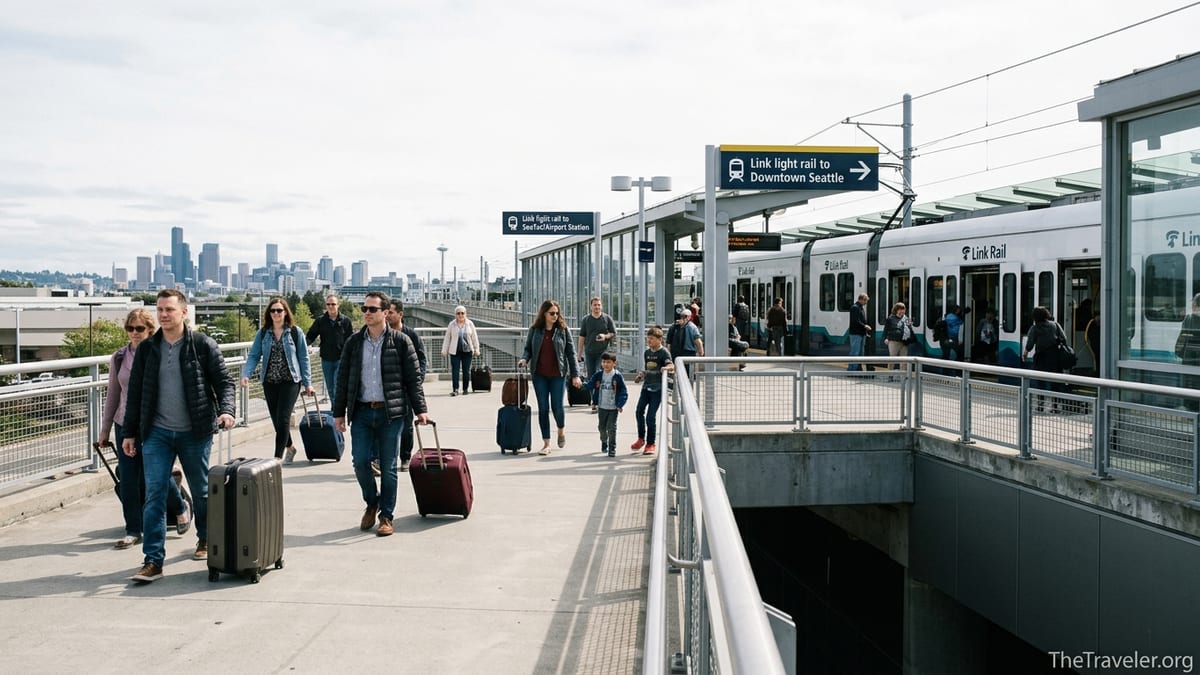
Sound Transit’s 1 Line, commonly called Link light rail, runs directly from SeaTac/Airport Station to downtown Seattle with trains all day and into the late evening. The trip from the airport to the main downtown zone around Westlake takes about 38 minutes. Trains typically run every 8 to 15 minutes, with slightly less frequent service early in the morning and later at night.
To reach the station, follow the overhead signs in the terminal for “Link Light Rail.” You cross a covered pedestrian bridge to the parking garage and then follow escalators or elevators up to the station level. Most travelers can walk from the baggage claim area to the platform in about 5 to 10 minutes. For anyone with mobility issues, there are elevators and staff can usually point you in the right direction.
Fares are relatively low and charged per trip, and recent changes mean pricing within the central part of the line is simple and flat. At the ticket machines, you can pay with a credit card or cash. For several rides over a couple of days, buying a reloadable ORCA transit card often makes sense, because it works on buses and some regional services as well. Children, seniors and some other groups may qualify for discounted pricing.
With luggage, light rail is manageable for most people. Train cars have open areas where you can stand with a suitcase, and there are no steps inside the car. The main drawback is at the downtown end. Hotels around Westlake, the convention center and Pike Place Market are often a 5 to 10 minute walk uphill from Westlake or University Street stations. If you have multiple large bags or are traveling with young children, that last stretch can be tiring, especially in winter rain. In that case, some travelers ride the train downtown and then take a short taxi or ride share for the final few blocks.
Taxi: Simple and Direct, Especially With Luggage
Traditional taxis remain a straightforward way to get from Sea-Tac to downtown, particularly if you are tired, arriving late at night, or carrying bulky luggage. Official airport taxis line up on the third floor of the parking garage. After you exit baggage claim, follow signs for “Ground Transportation” and “Taxis,” then take the escalator or elevator up. Uniformed curbside agents help direct you to the right vehicle.
Taxi prices in Seattle are regulated by the city, and historically there have been flat rates between downtown and the airport. However, regulations have evolved, and not all trips are covered by a simple fixed fare. In practice, travelers in 2025 and 2026 report a mix of arrangements, including flat rates advertised by certain companies within defined downtown zones and metered fares elsewhere. As a result, it is wise, when you get to the front of the line, to ask the driver clearly whether your ride to your specific hotel will be on the meter or a flat rate and what that flat rate covers.
For a typical ride between Sea-Tac and a hotel near the convention center or Pike Place Market, many visitors end up paying somewhere in the range that you would expect for a 20 to 30 minute urban taxi trip in a major U.S. city once base fare, distance, time, airport fees and a normal tip are included. Traffic and routing can nudge the final total up or down. If your hotel is in neighborhoods beyond the core, like Capitol Hill, Queen Anne or the University District, the fare will be higher than for the most central zone.
For families or groups of three or four adults with large checked bags, taxis often end up being competitive with or even cheaper than multiple ride share seats or a hotel shuttle, particularly when you value door to door convenience. You avoid hauling luggage through the airport parking structure or up downtown hills, and you know exactly where you will be dropped off. For solo travelers on a tight budget, however, the taxi fare can feel steep compared with the cost of Link light rail.
Uber, Lyft and App Based Ride Shares
Uber and Lyft both operate at Sea-Tac, and their pickup zones are separate from the regular curb. After collecting your bags, follow airport signs for “Rideshare” or “App-Based Transportation.” You typically cross into the parking garage and follow color coded pillars to the right level. The apps will give detailed instructions once you set the airport as your pickup location, and they will tell you which row to meet your driver in.
Pricing for ride shares is dynamic. At quiet times, a standard UberX or Lyft ride to a hotel near Westlake can be comparable to or slightly cheaper than a taxi, especially if you do not have heavy traffic. At peak times, during large events, bad weather or late at night when fewer drivers are available, surge pricing can push fares much higher. It is not unusual for a short downtown trip to double in price during these busy windows, and sometimes the app price may jump again between the moment you first check and the moment you actually book.
Ride shares suit travelers who are comfortable with smartphone apps and want to see a price estimate and route in advance. They can be particularly cost effective for two or three people splitting a ride, or for those staying slightly outside the core downtown zone where a flat rate taxi would not apply. With large parties or extra luggage, consider selecting a larger vehicle category, such as UberXL, which may cost more but makes the ride more comfortable.
The main tradeoffs are predictability and pickup logistics. At busy times, you may see a “10 to 15 minute” estimated pickup time stretch as drivers finish previous trips. It can also be harder to spot your car in the crowd of nearly identical sedans and SUVs. Sending a quick text to your driver with a detail like “we are by column G, wearing red jackets” can save a few minutes of confusion.
Shared Shuttles and Hotel Transfers
Several companies run shared shuttle services between Sea-Tac and downtown hotels, convention venues and cruise terminals. Names and exact offerings change over time, but a common pattern is a per person fare that is lower than a taxi if you are traveling alone and higher if you are traveling as a family of four. The shuttle may stop at multiple hotels along the way, making total travel time dependent on how many people are booked on your run that hour.
One example is a downtown airporter style service that picks up passengers from designated loading zones in the parking garage and drops them at major hotels and the convention center. In recent seasons, typical pricing has often been quoted in the high teens to low twenties in U.S. dollars per person one way, with discounts for children or round trip bookings. Some services recommend or require advance reservations, particularly during peak summer cruise months from May to October.
Hotel operated shuttles from Sea-Tac to downtown are less common than at many smaller airports, because the distance is longer and the city has strong public transport. A few large hotels, especially those catering to conference groups, occasionally arrange private or semi-private shuttle buses. If you are traveling for a meeting or convention at places like the Seattle Convention Center, Hyatt Regency or major waterfront hotels, it is worth checking your pre-arrival information to see if group transfers are included.
Shuttles are best for solo travelers who prefer not to navigate trains, or for cruise passengers who like the reassurance of a prebooked vehicle that knows exactly which pier they are heading to. The tradeoffs include less privacy, potential waits while the shuttle fills, and longer door to door times when several stops are involved. Travelers with very tight schedules are usually better served by a taxi or ride share.
Private Cars, Black Cars and Limousines
For those who prioritize comfort and predictability over cost, private transfer services and black car operators serve Sea-Tac throughout the day. These range from simple sedans booked through national transfer companies to local limousine services offering SUVs and larger vehicles for groups. Many allow you to arrange the ride days or weeks in advance and track your driver by phone or app on arrival.
Pricing for private transfers varies by company and vehicle type, but you can expect to pay more than a standard taxi or ride share for the same route. On the other hand, you gain the assurance that someone will meet you even if your flight is delayed, and many services include some level of flight tracking. For business travelers arriving late on Sunday night before Monday meetings, or for families landing after a long international flight with small children, that reliability can feel worth the premium.
In practical terms, your driver will usually meet you either at the designated “Pre-Arranged Ground Transportation” area in the parking structure or, for higher end services, inside the terminal at an arrivals meeting point. Clarify this in advance so you know whether to walk to a curbside zone or look for a sign with your name. If you are traveling with a lot of luggage or specialized equipment, mention it when booking so the provider can ensure the vehicle has enough cargo space.
Private transfers also make sense for groups of five or more, where a larger van spreads the cost across several people. For example, a family traveling for an Alaska cruise and bringing several suitcases may find that a private van is not much more expensive per person than buying several seats on a shared shuttle, yet significantly more convenient.
Renting a Car: When It Makes Sense
Seattle is not an ideal city for driving and parking in the dense downtown core. Hotel parking can be expensive, and local drivers often prefer to rely on transit and ride shares when staying in the central city. That said, a rental car can be the right choice if your plans include side trips to places like Snoqualmie Falls, Mount Rainier, Woodinville wine country or the Olympic Peninsula soon after arrival.
The airport’s rental car facility is located off site and reached by dedicated shuttle buses. After leaving baggage claim, follow signs to the rental car shuttles at the far end of the terminal. Buses run frequently and the ride to the consolidated rental center takes around 5 to 7 minutes. Once there, you proceed to your chosen company’s counter or pickup area.
From the rental center, the drive into downtown follows a similar pattern to taxis, usually 20 to 30 minutes in light traffic and longer at rush hour. Toll lanes are not as central a factor here as in some other U.S. cities, but you should still ask your rental company about how they handle tolls and whether any electronic toll transponders are included. As always, take a careful look at the total price, including airport surcharges and parking at your hotel, before deciding that a car is your best option.
For many purely urban visits of two or three days, the combination of Link light rail plus occasional taxis or ride shares is cheaper and less stressful than picking up a car on day one. If you do choose to rent, consider delaying pickup until the day you leave the city center for the mountains or coast. You can then ride light rail downtown on arrival, enjoy a car free stay, and collect the vehicle later from a downtown rental office.
Comparing Cost, Time and Luggage Friendliness
Putting all the options side by side helps clarify what suits different kinds of trips. Link light rail is almost always the cheapest way into downtown in pure dollar terms, especially for solo travelers or couples. It offers predictable travel time around 38 minutes from station to station, regardless of freeway traffic. The tradeoff is the need to walk from the station to your hotel, often up a hill, which can be challenging with heavy suitcases or in bad weather.
Taxis and ride shares cost more per trip but bring you directly to your hotel lobby. In real terms, many visitors in recent seasons report taxi or ride share totals that are reasonable for a major U.S. city airport transfer, especially outside peak congestion. Costs can rise considerably, however, when ride share surge pricing kicks in or when traffic is unusually heavy. For a family of four, the per person cost gap between a taxi and light rail shrinks, making the convenience of door to door service more compelling.
Shared shuttles sit in the middle on both price and experience. A solo traveler might pay roughly half of what a taxi would cost but should budget more time to allow for multiple hotel stops. For couples or small groups, the math may tilt back toward ride shares or taxis unless the shuttle offers a special group rate. Private transfers and black car services are typically the most expensive options, but they deliver consistency and comfort many business and high value leisure travelers appreciate.
Luggage is the deciding factor more often than many people expect. If you have one rolling carry on and a backpack, Link plus a short walk is easy. If you are managing two large checked bags each for an Alaska cruise, and especially if your hotel sits on a steep side street, the extra cost of a taxi, ride share or private van often feels justified the moment you see the incline outside the station.
The Takeaway
If you are arriving in daylight or early evening, staying near the downtown core and traveling light, Link light rail is usually the smartest choice. It is inexpensive, reliable in travel time, and frequent enough that you do not need to plan around a timetable. Many seasoned visitors make a habit of heading straight for the light rail station as soon as they retrieve their bags.
For late night arrivals, days with heavy rain, or trips with multiple large suitcases, a taxi or ride share buys considerable comfort for a reasonable premium, especially when shared among two or three travelers. Business visitors who value certainty and families arriving from long haul flights may find that a prebooked private transfer is worth the extra cost for peace of mind.
Shuttles and rental cars serve more specific needs. Shared shuttles work best for solo travelers who prefer not to navigate transit or apps and who are not in a rush. Rental cars come into their own for itineraries that leave the city soon after arrival, such as a drive to the national parks or wine regions.
Whichever option you choose, build in a little extra time when planning your arrival, especially if you are connecting to a cruise departure or important meeting. With a clear sense of your priorities around price, time and luggage, getting from Seattle-Tacoma International Airport to downtown Seattle can be straightforward and low stress.
FAQ
Q1. What is the cheapest way to get from Sea-Tac to downtown Seattle.
The lowest cost option for most travelers is the Link light rail, which offers a simple flat fare within the central part of the line and takes about 38 minutes to reach downtown stations.
Q2. How long does the Link light rail take from the airport to downtown.
From SeaTac/Airport Station to central downtown stations like Westlake, the ride is roughly 38 minutes, not including the 5 to 10 minute walk from baggage claim to the station.
Q3. Is it safe to take light rail from Sea-Tac at night.
Trains are generally well used and patrolled, but as in any large city, it is wise to stay aware of your surroundings, keep valuables close and sit near other riders, particularly late at night.
Q4. Should I tip taxi and shuttle drivers in Seattle.
Yes. For taxis, ride shares and shuttles, a tip of around 15 to 20 percent of the fare is customary when service is good, with a bit more if the driver helps with heavy luggage.
Q5. Do I need to book a shuttle or private transfer in advance.
For shared shuttles and private cars, advance booking is strongly recommended, especially during summer cruise season, major events or holidays, when same day availability can be limited.
Q6. Is a rental car recommended if I am only staying downtown.
Usually not. Downtown parking is expensive, traffic can be dense, and most attractions are reachable on foot or by transit. Light rail plus occasional taxis or ride shares is often easier and cheaper.
Q7. Can I use the same transit card on buses and light rail.
Yes. The regional ORCA card works on Link light rail, most King County Metro buses and several regional services, which makes it handy if you plan to use public transit more than once.
Q8. What is the best option for travelers with a lot of luggage.
For multiple large suitcases, a taxi, ride share or private van is generally more comfortable than light rail, since you avoid lifting bags on and off trains and walking uphill downtown.
Q9. How far in advance should I allow from landing to reaching downtown.
In typical conditions, plan around 90 minutes from scheduled landing to downtown. This allows for taxiing, immigration on international flights, baggage claim and the journey itself.
Q10. Which option is best for cruise passengers heading to the port.
Cruise passengers often choose taxis, ride shares or prearranged shuttles that go directly from Sea-Tac to the appropriate pier, since this avoids changing from light rail to another vehicle with heavy bags.