


Seattle-Tacoma International Airport, branded as SEA Airport, can feel like a maze the moment you roll your suitcase off the carousel and try to call an Uber or Lyft. Rideshare pickups are not at the curb outside baggage claim, prices can spike during busy times, and late-night arrivals raise reasonable safety and budget questions. This guide walks you step by step from baggage claim to the exact rideshare pickup area, explains how pricing works in the Seattle region, and outlines reliable alternatives if Uber or Lyft are too expensive or hard to find.
Get the latest updates straight to your inbox!
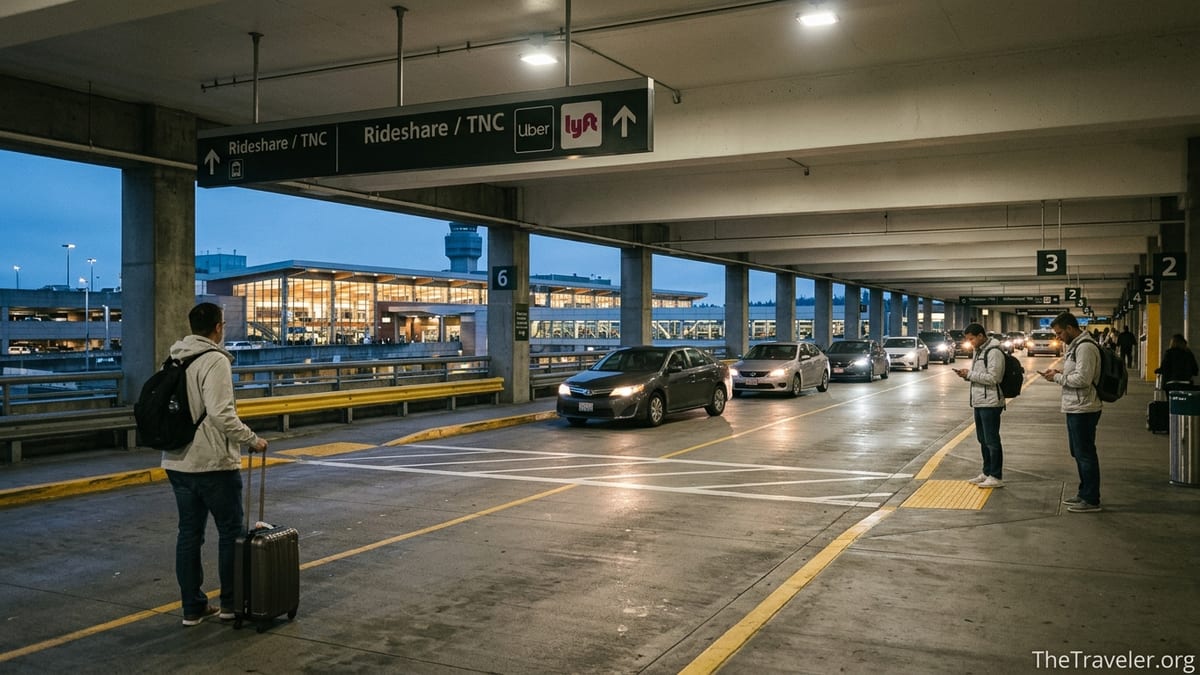
Understanding How Rideshare Works at SEA Airport
SEA Airport is one of the busiest hubs on the West Coast, serving the entire Seattle metro area and much of Washington State. Uber and Lyft are fully authorized to operate here, but they must follow Port of Seattle rules that keep them away from the curb directly outside baggage claim. That means you will not meet your driver outside the sliding doors where family and hotel shuttles pull up. Instead, nearly all app-based rideshare pickups are consolidated in a dedicated zone inside the main parking garage.
For most travelers, this centralization is a good thing. The garage pickup zone is covered, clearly signed, and monitored by airport staff, which makes it less chaotic than a curb packed with buses, hotel shuttles, and private vehicles. It also gives drivers a predictable place to find arriving passengers, which can shorten actual pickup time once a ride is confirmed in the app. The trade-off is that you must walk a few minutes from baggage claim, and the route is confusing if you are expecting a typical curbside pickup.
Uber and Lyft both display “SEA” or “Seattle-Tacoma International Airport” as the pickup location when you open the app after landing. In many cases, the app will automatically suggest the official rideshare zone on the third floor of the parking garage as your pickup point. It is important to pay attention to this location. If you drop the pin in the wrong spot along the terminal drive, your driver might not be able to legally stop there, which can lead to cancellations or long waits while you both try to find each other.
Standard rides like UberX and classic Lyft are directed to the same general pickup area, while certain premium services can sometimes pick up closer to the terminal itself. Even then, those pickups are usually at designated doors on the baggage-claim level rather than at random spots along the curb. Always follow the exact meeting point shown in your app to avoid confusion.
Walking Directions to the Uber & Lyft Pickup Zone After Baggage Claim
Once you collect your luggage at SEA, your first task is to head toward the parking garage. At ground level, baggage claim at SEA runs parallel to the terminal drives. Overhead signs point to “Parking,” “Ground Transportation,” and “Skybridges.” Your target is one of the skybridges that connect the terminal to the main parking structure. From nearly any baggage carousel, look for signs for “Parking Garage” and follow arrows toward the skybridges rather than exiting straight to the curb.
Most arriving passengers will reach the rideshare zone via Skybridge 3 or Skybridge 4, which are roughly in the middle of the baggage claim hall. When you reach the skybridge entrance, you will pass through a set of doors and find yourself in an enclosed walkway with moving sidewalks. This walkway leads directly into the airport’s multi-level parking garage. Continue straight across the skybridge until you reach the garage, then follow overhead signs for “Ground Transportation Plaza,” “Rideshare,” or “TNC/Rideshare.” These signs are typically in bright colors and may mention Uber and Lyft by name.
From the skybridge, you will need to go down to Level 3 of the garage, which is where the rideshare pickup area is located. Look for escalators or elevators marked for Level 3 or “Ground Transportation Plaza.” If you are traveling with heavy luggage or a stroller, elevators are usually the most convenient. Once you reach Level 3, you will see a large open area with numbered stalls or lanes. This is the official TNC/Rideshare pickup zone. The airport marks the area with “App-Based Rideshare” or “Uber / Lyft” signage, and lanes are typically numbered so that you and your driver can agree on a specific stall.
A practical example can help visualize the walk. If you arrive on a mid-morning flight from Los Angeles and pick up your suitcase at Carousel 12, you might see a sign directing you to Skybridge 4. You follow the sign into the skybridge, ride the moving walkway into the garage, take an escalator down to Level 3, and immediately see “Rideshare / TNC” in big letters above an open plaza. You open your preferred app, confirm the pickup point as “SEA Airport Rideshare Pickup – Level 3 Garage,” and then message your driver that you are waiting near Stall 18. The entire walk from baggage claim to the pickup zone usually takes about 5 to 10 minutes at a relaxed pace.
What to Expect When You Request Uber or Lyft at SEA
Once you are in or approaching the rideshare zone, open the app of your choice and confirm that your pickup location is pinned to the official rideshare area. Uber and Lyft both highlight this spot with language like “Rideshare pickup – 3rd floor parking garage” or “Ground Transportation Plaza.” If the app tries to place your pin along the airport drives instead, manually drag it to the rideshare area label before requesting your car. Doing this minimizes the risk that your driver will be sent to a location the airport does not allow for pickups.
Pricing can vary widely depending on the time of day, day of the week, and major events in the region. For a midafternoon ride in moderate traffic, a standard UberX or Lyft ride from SEA to a downtown Seattle hotel might be around a few dozen dollars, sometimes in the 40 to 60 dollar range. During peak periods such as Sunday evenings, weekday rush hours, or cruise ship days in summer, surge pricing can push that same ride closer to 80 or 90 dollars or more. Travelers have reported scenarios where a lower Queen Anne trip, normally a half-hour drive, was quoted above 70 dollars at the height of demand.
Wait times are also sensitive to demand. On a typical weekday evening, you might see estimated arrival times of 5 to 10 minutes for both Uber and Lyft. However, during very busy weekends, large conventions, or severe weather, estimated waits of 15 to 20 minutes at the rideshare zone are not unusual. The advantage of SEA’s system is that drivers queue for airport pickups in a dedicated staging area; once they clear that queue and drive into the garage, they are committed to serving one of the passengers waiting on Level 3. That setup usually leads to more predictable arrivals than relying on drivers roaming the city.
When your driver is approaching, check the license plate and vehicle description carefully before getting into the car. Because the pickup area can have dozens of cars moving through the lanes, it is easy to mistake another silver SUV for yours. If you are unsure, ask the driver who they are picking up and confirm that they use your name correctly. This is especially important late at night when the area can feel quieter and you may be tired after a long flight.
Managing Surge Pricing and Saving Money on Airport Rides
Seattle is known for relatively high rideshare prices compared with many other U.S. cities. At SEA, those costs can spike even further when multiple large flights land at once or when cruise passengers flood the airport. Surge or “prime time” pricing in Uber and Lyft reflects periods when demand for rides outstrips the supply of drivers. In practice, this can turn a typical 50 dollar airport-to-downtown ride into a 90 dollar or higher journey within minutes.
If pricing looks unreasonable, one common strategy is to wait 10 to 20 minutes and refresh the apps. When a wave of travelers finishes booking rides and drivers have had time to complete a first round of trips, prices often come down. For example, a traveler arriving on a Sunday evening might initially see a 95 dollar quote to Capitol Hill. After grabbing a coffee in the terminal and checking again 20 minutes later, the same ride might drop to 65 dollars as new drivers enter the queue and demand stabilizes.
Another tactic is to combine public transit with a shorter rideshare hop. The SEA Airport light rail station is connected to the terminal via a pedestrian walkway. If you ride light rail north to a station such as Tukwila International Boulevard or a neighborhood station in Seattle proper, you can often request an Uber or Lyft from there at a significantly lower price than from the airport itself. Travelers have reported cutting their total door-to-door rideshare costs by taking light rail to an intermediate stop and then calling a car from a residential area instead of the airport garage.
Those traveling on a tight budget might also compare app-based rides with flat-rate taxis or pre-booked car services, especially during known busy windows such as weekday 4 to 7 p.m. or Saturday mornings in cruise season. Even if the base UberX price appears lower, surge pricing and airport fees can quickly erase any savings. It is sensible to check at least two options in real time before committing, particularly for longer trips to suburbs or to cities such as Tacoma, Bellevue, or Everett.
Taxi, Transit, and Other Alternatives to Uber and Lyft
Uber and Lyft are popular at SEA, but they are far from your only option. Traditional taxis operate under agreements with the Port of Seattle and often use a combination of metered and zone-based pricing. For example, many taxi operators advertise approximate flat rates in the 50 dollar range for trips between the airport and downtown Seattle hotels, with higher fixed amounts for destinations like Tacoma or Bellevue. While final prices can vary, the key advantage of a flat-rate taxi is predictability: you know what you will pay before the car pulls away from the curb, without worrying about dynamic surge multipliers.
The airport’s taxi queue is typically located on the same parking garage level where rideshare operates, or along established ground transportation areas clearly signed as “Taxi.” If Uber and Lyft quotes seem unusually high, it is worth walking to the taxi stand and asking an attendant or driver for an approximate fare to your destination. Some travelers report that during heavy surge periods, a regulated taxi from the official queue can be significantly cheaper than an UberX for trips into central Seattle.
Public transit provides another solid alternative, especially for solo travelers or anyone comfortable with luggage on a train. Sound Transit’s 1 Line light rail runs directly from SEA Airport station into downtown Seattle and beyond, with adult fares typically just a few dollars. The ride to central stations like Westlake or University Street takes around 35 to 40 minutes in normal conditions, and trains run at regular intervals from early morning into late evening. From many downtown hotels, the walk from a central light rail station is manageable, or you can connect to a short bus or inexpensive rideshare ride.
For groups or families, pre-booked private car services and airport shuttles can be cost-effective. Several companies offer fixed-price transfers between SEA and popular cruise terminals, downtown hotels, or tech hubs on the Eastside. For example, a family of four heading from SEA to a hotel near Pike Place Market might compare one large UberXL quote at surge pricing with a pre-arranged van service that charges a flat fee. Once you factor in luggage, child seats, and peace of mind, a pre-booked service can be the better value, particularly during peak visitor seasons.
Late-Night Arrivals, Safety, and Reliability
Arriving at SEA after 11 p.m. or in the early hours of the morning can be stressful if you are not sure how transportation works. The good news is that Uber and Lyft operate at all hours, and drivers are usually available late at night, especially for trips to common destinations like downtown Seattle, Capitol Hill, or airport-area hotels along International Boulevard. However, wait times can be less predictable, and prices may still reflect demand from late-night flights or special events.
For late-night arrivals, it is especially important to follow signs into the well-lit rideshare pickup area in the parking garage rather than waiting alone on a quiet stretch of curb. The Level 3 TNC/Rideshare zone has lighting, security cameras, and periodic patrols from airport staff, which can feel safer than more isolated parts of the terminal drives. If you are traveling alone, keep your phone handy, share your trip status with a friend or family member via the app, and verify your driver’s vehicle and identity before getting in.
If you land very late, such as after 1 a.m., consider building some flexibility into your plan. In the rare event that rideshare coverage is thin or pricing is uncomfortably high, you can fall back on a traditional taxi from the airport queue, which often runs later than some shuttle options. Many airport hotels on International Boulevard also operate 24-hour or extended-hours shuttles. If your destination is an airport hotel, check their shuttle schedule before you travel so you do not pay for an unnecessary rideshare ride at midnight when a free bus is available.
Travelers heading to outlying suburbs or further destinations at night should weigh cost against safety and rest. For instance, if you arrive on a delayed evening flight and need to get to Olympia or Bellingham, consider whether an overnight airport hotel plus a daytime bus or train might be safer and cheaper than a long, costly rideshare ride in the early hours. Seattle’s regional transit network offers multiple daytime options that pair well with a short local ride from the airport.
Real-World Scenarios: From Carousel to Curb
To make this more concrete, imagine you are a business traveler landing from Chicago at 6 p.m. on a Wednesday. You collect your roll-aboard at baggage claim, follow signs to Skybridge 3, and cross into the parking garage. On Level 3, you open Uber and see a quote of around 70 dollars to a hotel in downtown Seattle, with a 7-minute pickup time. Lyft shows a similar price. You walk past the rideshare lanes to the taxi stand and ask an attendant about the fare. They indicate a flat rate in the 50 dollar range to most downtown hotels. In this scenario, the taxi likely offers better value and gets you into town with less exposure to surge pricing.
Now consider a budget traveler arriving from Denver on a Saturday afternoon in summer, when cruise passengers are returning through SEA. At the rideshare zone, UberX shows 90 to 100 dollars to Capitol Hill. Instead of paying that, the traveler walks back across the garage, follows signs to the SEA light rail station, and pays a few dollars for a ride into downtown. From there, a short neighborhood Uber or a 15-minute bus ride completes the journey for a fraction of the original surge price.
For a late-night example, imagine a student landing from an international flight at 11:30 p.m. They are heading to an apartment in south Seattle, about a 20-minute drive away. In the rideshare zone, Uber and Lyft both quote around 45 to 55 dollars, with cars arriving in less than 10 minutes. The student checks the light rail schedule and sees that trains are still running but with longer gaps. Because they have two heavy suitcases and are unfamiliar with the city at night, they decide that the rideshare price is reasonable compared with the complexity of using transit. They share their trip status with a roommate, confirm the license plate, and are home shortly after midnight.
These scenarios illustrate how important it is to stay flexible and compare options in real time. Seattle’s combination of rideshare, taxis, and transit allows you to adjust your plan based on your budget, comfort level, and the specific conditions you face when you walk out of baggage claim.
The Takeaway
Navigating Uber and Lyft pickups at Seattle-Tacoma International Airport becomes far less stressful once you know that nearly all rideshare pickups happen in the dedicated zone on Level 3 of the parking garage. From baggage claim, your priority is to follow signs to the parking skybridges, cross into the garage, and drop down to the Ground Transportation Plaza where the TNC/Rideshare area is located. From there, you can confidently request your ride, confirm its stall number, and verify your driver.
Because Seattle’s rideshare prices can be high, especially during peak demand, it pays to compare options. Check both Uber and Lyft, glance at the taxi stand, and consider whether light rail or an airport shuttle might make more sense for your budget and schedule. Build a few extra minutes into your arrival plan so you can make these comparisons calmly instead of feeling rushed into the first option you see.
With a bit of advance knowledge and a willingness to adapt, you can turn SEA’s complex ground transportation scene into a straightforward part of your trip. Whether you are heading downtown for a business meeting, catching a cruise, or returning home to a neighborhood outside the city, understanding how the rideshare system works at SEA helps you save money, reduce stress, and start or end your journey on the right foot.
FAQ
Q1. Where exactly do Uber and Lyft pick up at Seattle-Tacoma Airport?
Uber and Lyft pickups are located in the Ground Transportation Plaza on Level 3 of the main parking garage. From baggage claim, follow signs to the parking garage via the skybridges, then go down to Level 3 and look for the TNC/Rideshare area with numbered stalls.
Q2. How long does it take to walk from baggage claim to the rideshare pickup area?
Most travelers take about 5 to 10 minutes to walk from baggage claim to the rideshare zone, depending on which carousel they arrive at and how quickly they move. The route involves following signs to the skybridges, crossing into the parking garage, and then taking escalators or elevators down to Level 3.
Q3. Can I meet my Uber or Lyft at the curb right outside baggage claim?
No. SEA Airport rules do not allow standard Uber and Lyft pickups at the curb immediately outside baggage claim. You need to walk to the designated rideshare pickup area in the parking garage, unless your app specifically confirms a premium service pickup at a baggage-level door.
Q4. How much does an Uber or Lyft usually cost from SEA to downtown Seattle?
Typical prices for a standard ride from SEA to downtown Seattle can often fall in a broad range from around 40 to 60 dollars during normal demand. During busy periods with surge pricing, the same trip can climb toward 80 or 90 dollars or more, so it is wise to compare prices with taxis and transit when you land.
Q5. What can I do if Uber and Lyft prices are very high because of surge pricing?
If prices are surging, you can wait 10 to 20 minutes to see if fares drop, compare quotes between Uber and Lyft, check the cost of a taxi from the airport queue, or use light rail for part of the trip and request a shorter rideshare ride from a station away from the airport.
Q6. Are taxis a better option than rideshare at SEA?
Taxis can be a better value during heavy surge periods, especially for trips to downtown Seattle, because many operators use approximate flat rates that are not affected by dynamic pricing. It is worth asking at the taxi stand what a ride to your destination will cost before deciding between taxi and rideshare.
Q7. Is it safe to use Uber or Lyft late at night at SEA Airport?
The official rideshare pickup area on Level 3 of the garage is well lit and monitored, making it a safer choice than isolated curb areas. For late-night rides, share your trip status with a contact, verify the driver and vehicle details, and wait in the designated area where there are other travelers and staff.
Q8. Does public transit connect SEA Airport to downtown Seattle?
Yes. The SEA Airport light rail station connects directly to downtown Seattle and several neighborhoods beyond. Fares are usually just a few dollars, and travel time to central stations is roughly 35 to 40 minutes. Many travelers use light rail to save money, then connect to a short bus or rideshare ride.
Q9. How do I avoid confusion when meeting my driver in the rideshare zone?
Confirm that your app’s pickup point is set to the official rideshare area, note your stall or lane number, and send a quick message to your driver with that detail. When the car arrives, double-check the license plate and ask the driver who they are picking up before getting in.
Q10. Are there good options if I need to travel from SEA to a distant city late at night?
For long late-night trips to distant cities, compare the cost of a long rideshare ride with alternatives like staying at an airport hotel and using daytime buses or trains. This approach can be safer and more economical, especially if rideshare prices are high or driver availability is limited overnight.