


More news on this day
Flights at several UK airports faced fresh delays on Monday after a technical problem hit the country’s air traffic control provider, marking a second disruption in less than two weeks and renewing pressure on the aviation system just as autumn travel demand ramps up.
Get the latest news straight to your inbox!
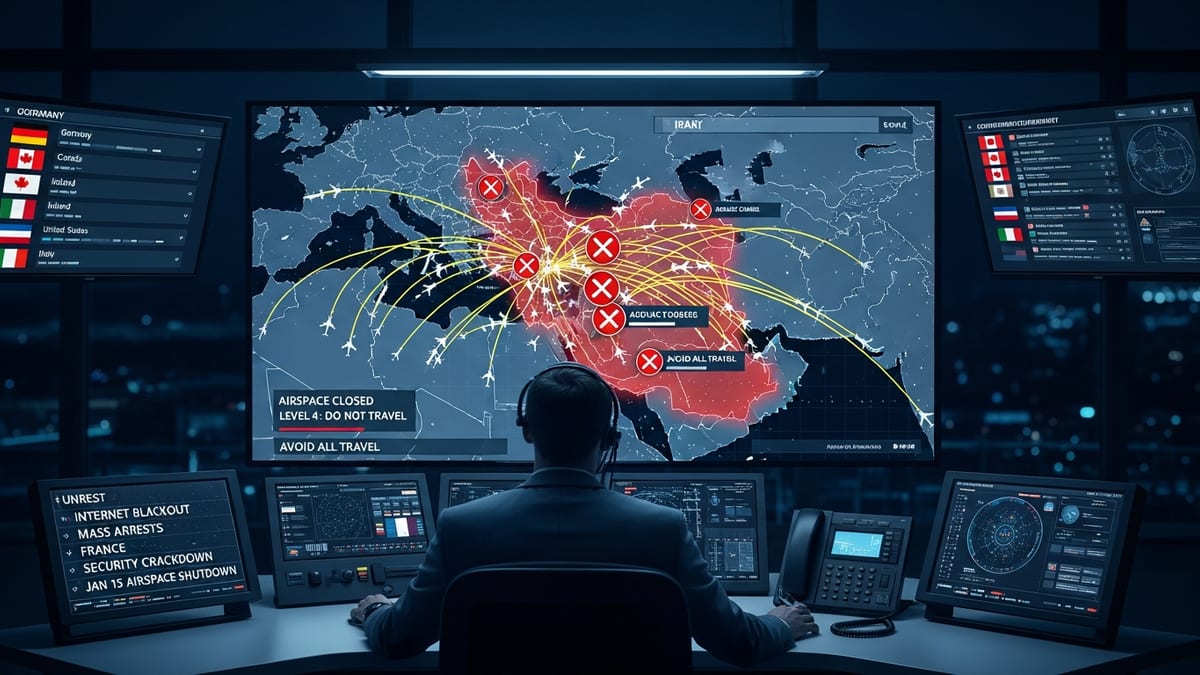
What happened on September 21 and where delays were felt
Published coverage indicates the latest issue affected air traffic control services in parts of the UK, with delays reported in Northern Ireland, Scotland and northern England. NATS, the UK’s main air navigation service provider, described the disruption as a technical problem and indicated it was separate from the earlier nationwide incident in September.
Unlike the earlier episode that forced widespread cancellations, Monday’s disruption appeared more localized, but it still rippled through schedules because air traffic management constraints can slow departures and arrivals even far from the affected control area. When capacity is reduced, airlines often face knock-on impacts: aircraft and crews end up out of position, and later rotations can be delayed across the network.
Airlines and airports moved to manage the immediate effects by warning passengers to expect delays and to check their flight status before traveling. For travelers, the practical reality is that even a short-lived technical issue can produce hours of disruption once departure slots are missed and airports become congested.
Context: the September 8 outage that led to mass cancellations
The renewed disruption comes shortly after a much larger failure on September 8, when a technical issue disrupted UK airspace and contributed to the cancellation of more than 2,000 flights in and out of the country, according to published reporting. The resulting passenger backlog took more than two days to clear, with travel plans for hundreds of thousands of people disrupted.
NATS has published a preliminary report describing the September 8 failure as a software defect that corrupted flight data extremely quickly, prompting restrictions that lasted about six hours while the system was restarted and flight data reloaded. Coverage of the report also emphasized that the problem centered on flight plan processing, and that the disruption was operational rather than safety-related.
The September 8 incident amplified scrutiny already hanging over UK aviation after previous disruptions in recent years. Reporting has pointed to earlier high-profile air traffic control incidents, including a major flight plan processing outage in August 2023 and a radar-related disruption in July 2025, which together have shaped ongoing debate about system resilience during peak travel periods.
Why repeated ATC disruptions create outsized travel chaos
Air traffic control is a system-of-systems: flight plan processing, communications, surveillance inputs, and coordinated procedures with airports and airlines. When one component degrades, controllers can safely manage traffic by reducing the number of aircraft in the sky or spacing flights farther apart, but that safety-first approach reduces capacity, quickly creating queues on the ground and in the air.
Even when a technical problem is resolved within hours, the recovery phase can be longer than the initial incident. Aircraft may have missed departure windows, inbound flights may land late and block gates, and crew duty-time limits can force additional cancellations. Those compounding effects help explain why disruptions can linger well into subsequent days.
For passengers, the pain is often felt in missed connections, rebookings onto already-full flights, and overnight accommodation needs. And because airlines operate dense schedules, a concentration of delays at one or two control centers can cascade into disruptions far beyond the immediately affected region.
Passenger rights and what travelers can do now
UK and EU-style passenger protections generally distinguish between delays and cancellations that are within an airline’s control and those caused by extraordinary circumstances. After the September 8 NATS disruption, the UK Civil Aviation Authority published guidance underscoring that when flights are cancelled, airlines must offer affected passengers the choice of a refund or rerouting, including rerouting at the earliest opportunity or at a later date, depending on the passenger’s preference and circumstances.
Separate from cash compensation, airlines typically still have “duty of care” obligations when disruptions occur, which can include meals, hotel accommodation when an overnight stay becomes necessary, and transport between the airport and accommodation, depending on the situation. Travelers dealing with Monday’s delays may find that entitlements depend on whether the disruption results in a cancellation, the length of delay, and the carrier’s policies and communications.
For immediate trip planning, travelers can reduce stress by checking flight status before leaving for the airport, keeping documentation of delay notifications and expenses, and exploring rebooking options early if a flight begins slipping. If a trip is time-sensitive, it can help to look at alternative routings through different hubs, but availability may be limited when network disruptions stack up across multiple airports.
Pressure builds on resilience as airlines demand changes
The second issue in quick succession is intensifying calls for improvements to the reliability of air traffic infrastructure. Published coverage indicates some airlines have demanded urgent action following the new disruption, arguing that repeated failures carry significant operational and financial consequences.
The UK government has also requested an independent review into the September 8 disruption to examine what happened and to assess how well NATS is set up to deliver a resilient service in the future, according to publicly available information from the UK Civil Aviation Authority.
For travelers, the key near-term question is whether the September 21 problem proves to be a contained incident or a sign of deeper fragility. With two disruptions in under two weeks, the industry’s focus is likely to remain on system redundancy, testing practices, and the ability to restore normal operations quickly without widespread knock-on cancellations.