


More news on this day
Regional Rail service in Philadelphia is gradually resuming after an overnight SEPTA train derailment near North Philadelphia station triggered widespread suspensions, lengthy delays and crowded trains across the commuter network on Wednesday.
Get the latest news straight to your inbox!
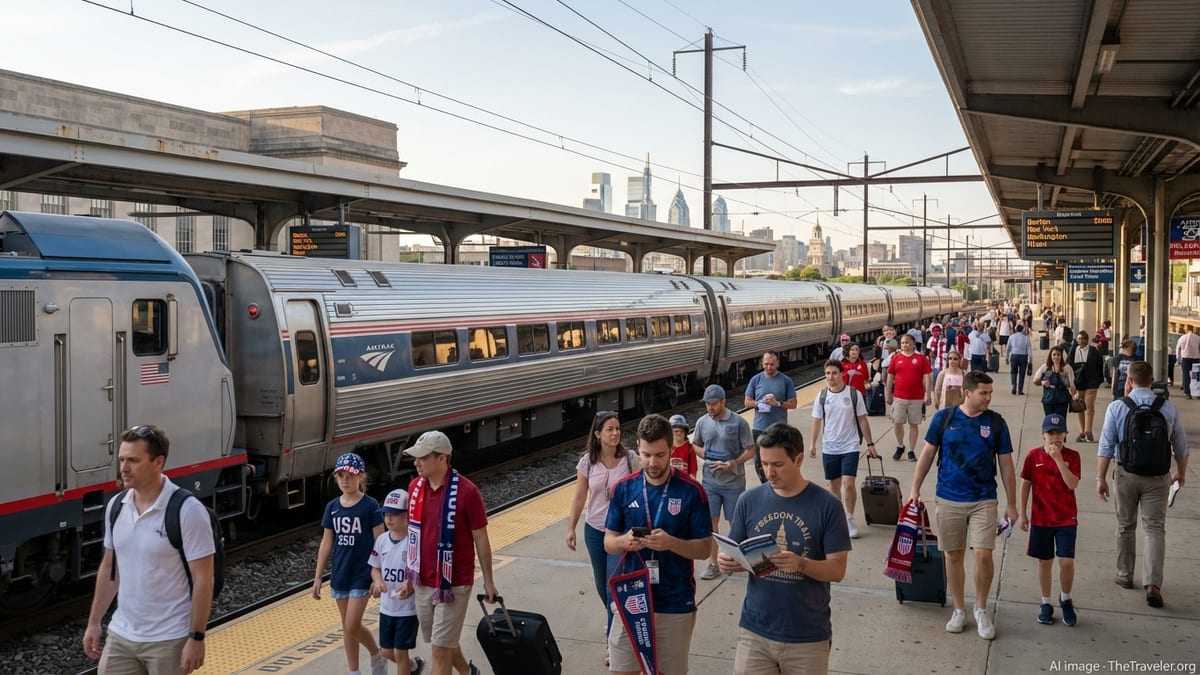
Trains Back on the Move After Overnight Chaos
Published coverage indicates that crews worked through Wednesday to re-rail cars, inspect track and restore signals at a major junction in North Philadelphia, where a Manayunk–Norristown Line train left the tracks shortly after midnight on July 1. The derailment did not lead to serious injuries, but it immediately disrupted one of the busiest choke points on the system, affecting almost every Regional Rail line at the height of the morning commute.
By late in the day, publicly available information from transit alerts and local news reports showed that suspended services were starting to run again, first with limited or modified schedules and then with more frequent trains as the evening peak approached. Riders were advised to expect residual delays and crowding, particularly on lines that had been detoured or short-turned while the junction remained partially blocked.
According to published coverage, initial suspensions on the Manayunk–Norristown, Chestnut Hill East and Fox Chase lines began to ease once track inspections cleared alternate routes and dispatchers could begin threading trains through the affected area at reduced speeds. Other lines that had been operating with serious delays, including Paoli–Thorndale, Lansdale–Doylestown and Trenton, began reporting more typical headways, although exact departure times remained fluid into the evening.
Service restoration efforts continued into the night as maintenance teams completed repairs and system checks, with rail watchers in the region reporting a gradual return to normal patterns on real-time tracking apps and station departure boards.
Key Junction Disruption Ripples Across the Network
The derailment occurred at or near the North Philadelphia junction where several SEPTA Regional Rail routes and Amtrak’s Northeast Corridor infrastructure intersect. Transit analysts note that this location is a critical node for both inbound and outbound movements, meaning even a single stranded train can quickly create a domino effect across multiple corridors.
Reports indicate that in the hours after the incident, dispatchers were forced to hold inbound trains outside Center City and turn others short of their usual terminals to prevent gridlock. Some trains that typically run through the core to opposite lines were reportedly terminated at 30th Street, Suburban or Jefferson stations, requiring passengers to transfer to other services or use the subway system to complete their trips.
Local coverage described morning conditions that included packed platforms, trains leaving passengers behind and riders shifting en masse to the Broad Street Line and Market–Frankford Line as alternatives. Social media posts from commuters also pointed to long queues at bus stops serving neighborhoods that suddenly lost rail access for several hours.
As the day progressed and more tracks were returned to service, SEPTA’s Regional Rail operations were able to unwind the backlog of delayed trains. However, the concentration of traffic through a single junction meant that it took much of the day for the broader network to stabilize, even once the derailed train had been cleared.
Temporary Suspensions, Workarounds and Rider Guidance
Throughout the disruption, publicly available alerts and local reports showed that SEPTA recommended riders consider subway lines and selected bus routes as alternatives while Regional Rail frequencies were sharply reduced. In some cases, additional staff were deployed at key transfer hubs such as Fern Rock Transit Center to direct passengers between modes and answer questions about altered service patterns.
Initial suspensions reportedly affected entire branches, including all Manayunk–Norristown Line service and portions of the Chestnut Hill East and Fox Chase lines. Other routes operated on what was described as a “modified timetable” with irregular headways, making it difficult for daily commuters and visitors to anticipate departure times without checking live tools.
Published coverage highlighted that outbound evening riders faced lingering complications even after service technically “resumed.” Some trains skipped intermediate stops to make up time, while others were combined to maximize capacity. Travelers heading to events or connecting to long distance services were urged to leave extra time and verify their train status shortly before departure.
By late evening, transit advisories suggested that most lines were back in operation, though with cautions that delays of 15 to 30 minutes could persist and that some late-night departures might still be subject to last-minute adjustments.
Safety Checks and Ongoing Investigation
While service has largely been restored, attention is now turning to the circumstances that led to the derailment and what it may signal for the aging infrastructure that supports Regional Rail in and around Philadelphia. Recent public documents from federal investigators and previous safety reviews have underscored the need for consistent inspection regimes and proactive maintenance on heavily used commuter rail corridors.
According to earlier rail safety reporting, the combination of high traffic volumes, complex interlockings and shared use with intercity and freight trains can intensify wear on tracks and switches at junctions like North Philadelphia. Any future official investigation is expected to examine conditions on the ground, the performance of track components and any recent work that might have affected the area.
Local transit advocates have pointed to the derailment as another reminder of the region’s dependence on a single integrated set of rail chokepoints, arguing that redundancy and modernization projects are essential to prevent systemwide disruptions from isolated incidents. Publicly available commentary also notes that the event unfolded during a period of heightened attention on SEPTA’s reliability as the agency prepares for major regional events and ongoing ridership recovery.
For now, with tracks reopened and trains once again passing through North Philadelphia, Regional Rail passengers are being urged by transit alerts and local media to continue monitoring schedules closely. While the most severe impacts have eased, the derailment’s aftershocks on rider confidence and long-term planning are likely to remain part of the conversation around Philadelphia’s rail network.