


More news on this day
Passengers at Amman’s Queen Alia International Airport faced fresh disruption on May 26 as a cluster of seven key flight cancellations by regional carriers upended travel plans across routes to Cairo, Kuwait City, Sharjah, Dubai and beyond.
Get the latest news straight to your inbox!
Cluster of Regional Routes Hit on a Busy Travel Day
Publicly available flight-status data for May 26 show an unusual concentration of cancellations affecting departures from Queen Alia International Airport on some of its most heavily used regional routes. Services involving Royal Jordanian, Kuwait Airways and Air Arabia were among those impacted, with flights linking Amman to Cairo, Kuwait City, Sharjah and Dubai either scrubbed outright or removed from departure boards late in the planning cycle.
Information from live tracking portals indicates that a Royal Jordanian service between Amman and Kuwait City scheduled for May 26 was cancelled, mirroring earlier disruptions on that city pair in recent weeks. Separate listings on Queen Alia’s own departures and arrivals pages also showed at least one same-day cancellation on the Amman to Cairo corridor, traditionally one of the airport’s busiest short-haul links.
Low-cost and hybrid carriers serving the wider Gulf also appeared in the day’s disruption pattern. While Air Arabia continues to market frequent connections between Amman and its hub at Sharjah, monitoring of May 26 movements pointed to cancellations on at least one Sharjah-bound service, with knock-on effects for passengers connecting onward to destinations in South Asia and the wider Middle East.
Flights to and from Dubai, including services operated by Gulf network airlines and regional partners, were likewise affected. Previous disruptions at Queen Alia in March and April focused heavily on the Amman to Dubai and Amman to Doha markets; the latest cancellations suggest that the pattern of instability on key Gulf routes has not fully resolved, even as schedules have been rebuilt.
Passengers Left Stranded as Rebooking Options Narrow
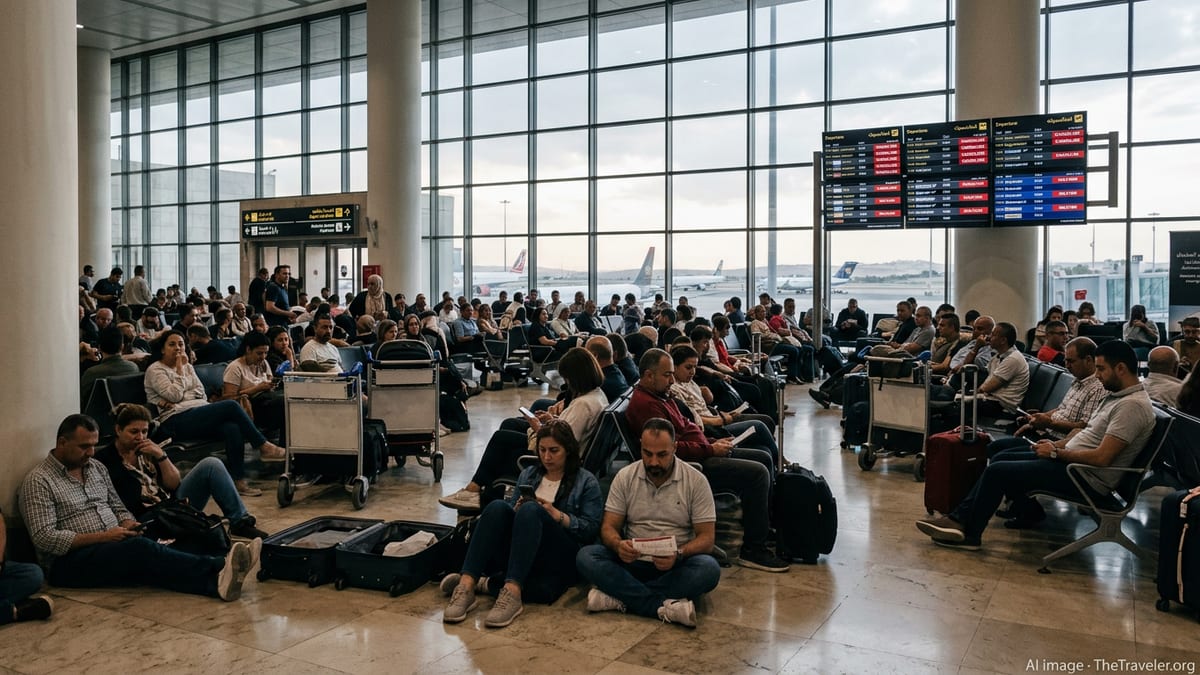
The immediate effect of Sunday’s cancellations was visible in crowded departure halls and customer-service desks at Queen Alia, according to accounts on social platforms and traveler forums tracking Middle East aviation. With seven high-demand flights removed from the schedule on a single day, same-day rebooking options within the region quickly thinned, particularly for passengers headed to onward long-haul connections.
For travelers bound for Cairo and Kuwait City, the loss of individual Royal Jordanian and Kuwait Airways frequencies reduced flexibility on routes that normally offer several daily choices across multiple airlines. Some Egypt-bound passengers reported being moved to later flights or rerouted via alternative hubs such as Doha or Riyadh when inventory allowed, while others described being offered travel on the following day.
Those holding tickets on Sharjah and Dubai services operated by Air Arabia and Gulf carriers faced a similar squeeze. Because many budget airlines operate fewer daily rotations and maintain stricter fare rules, passengers hit by day-of-departure cancellations often encountered limited rebooking windows and tighter eligibility for complimentary hotel accommodation or meal vouchers, based on public discussions of current policies.
Travelers connecting through Amman from Europe or North America were particularly exposed. As previously reported in regional coverage of Queen Alia’s operations, even a small number of cancellations on high-traffic regional spokes can strand transit passengers who have already completed long-haul legs and must now wait for space on a dwindling number of onward flights.
Ongoing Regional Pressures Behind Jordan’s Flight Disruptions
The latest cancellations arrive against a backdrop of continuing operational strain across Middle Eastern airspace since late winter. Earlier waves of disruption at Queen Alia in March saw dozens of flights cancelled or delayed in a single day, as airlines adjusted routings and crew plans in response to evolving security considerations and shifting overflight permissions in parts of the region.
Operational notices circulated in April and May by travel-management firms and tour operators have highlighted Jordan’s particularly exposed position. Amman serves as a key junction between the Levant, the Gulf and North Africa, meaning that disruptions originating in neighboring countries can quickly cascade into schedule changes and cancellations at Queen Alia as airlines rebalance networks and prioritize certain trunk routes.
Publicly available updates on airline operations into Jordan also show that some carriers have recently curtailed or reshaped services involving Amman and Kuwait City, sometimes using secondary airports in Saudi Arabia as temporary substitutes. These adjustments have helped maintain a basic level of connectivity between Jordan and the Gulf, but they have also introduced further complexity into schedules and left less margin to absorb last-minute operational shocks.
For low-cost operators such as Air Arabia and other budget brands in the region, tight aircraft utilization and lean turnaround times leave limited flexibility when upstream delays or airspace restrictions emerge. That dynamic has been cited in earlier analyses of Middle Eastern aviation as a key factor amplifying the impact of even isolated cancellations on passenger flows.
Advice for Travelers Using Amman as a Transit Hub
Travel advisories from regional travel agencies and consumer groups in recent weeks have urged passengers using Queen Alia as a starting point or connection hub to build extra resilience into their plans. With day-to-day schedules still susceptible to adjustment on routes to Cairo, Kuwait City, Sharjah, Dubai and other nearby hubs, same-day connections involving separate tickets are currently viewed as higher risk.
Passengers are being encouraged to monitor their bookings closely in the 24 to 48 hours before departure, using both airline apps and live airport departure boards where available. In several recent incidents at Queen Alia and other regional airports, cancellations were first reflected on third-party trackers and airport websites before formal notifications were widely distributed to affected travelers.
Public information from airlines and regulators also stresses the importance of understanding fare conditions and passenger-rights frameworks in advance. Depending on the ticket type, point of sale and routing, those caught by short-notice cancellations may be entitled to rebooking on the next available flight, travel vouchers or cash refunds. Travel-insurance policies that cover missed connections and extended delays can provide an additional financial buffer where airline compensation is limited.
For now, the seven cancellations recorded at Queen Alia on May 26 stand as another indication that flight operations in and around Jordan remain in a period of elevated volatility. While most departures continue to operate as planned, travelers heading toward Cairo, Kuwait City, Sharjah, Dubai and other regional gateways are likely to benefit from an extra measure of flexibility and contingency planning.