


More news on this day
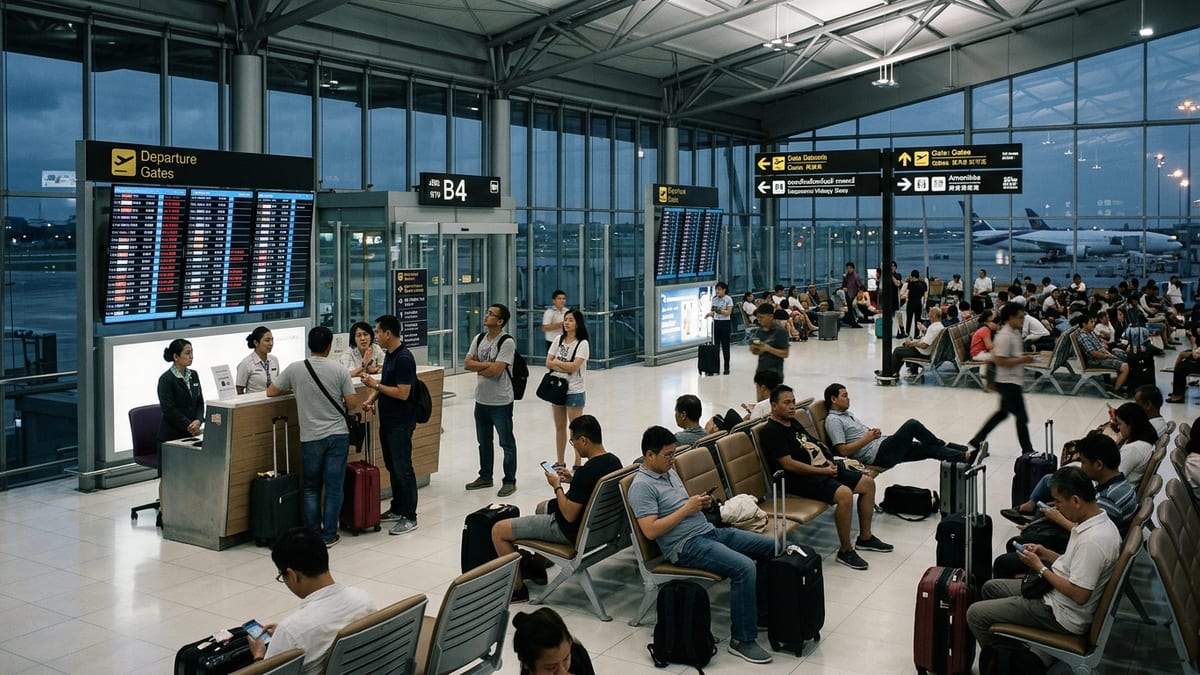
Travel plans for hundreds of international passengers were thrown into disarray on May 26 as Shanghai Pudong International Airport recorded at least 30 cancellations and nearly 300 delays, with disruptions affecting services operated by China Eastern, Shenzhen Airlines, Air China, Delta Air Lines and United Airlines that connect China with major US hubs in California, Illinois and New York.
Get the latest news straight to your inbox!
Ripple Effects From Shanghai to Key US Gateways
Publicly available flight-status boards for Shanghai Pudong on May 26 show a heavily disrupted operating day, with dozens of services either cancelled outright or running significantly behind schedule. The impact is most pronounced on long-haul and connecting traffic, where a delayed arrival into Shanghai can quickly jeopardize onward departures to North America and beyond.
Several China Eastern departures and arrivals into Pudong are listed with extended delays, including long-haul services that feed connections to the United States. Flight-tracking platforms indicate late running on China Eastern’s transpacific services linking Shanghai with New York, a key route for travelers heading to and from the US East Coast, compounding the pressure on already limited US–China capacity.
The knock-on effects are being felt at major American gateways. Disrupted Shanghai operations are spilling over to airports in California, Illinois and New York, where China Eastern, Air China, Delta Air Lines and United Airlines operate a mix of nonstop and codeshare services linking Pudong with cities such as Los Angeles, San Francisco, Chicago and New York City. Passengers on both sides of the Pacific are facing missed connections, involuntary overnights and rebookings onto alternative routings.
Although Shanghai Pudong handles a large volume of domestic and regional services, its role as a primary international hub for China Eastern and a key Chinese gateway for US carriers means that irregular operations can quickly propagate across hemispheres. Even a relatively small number of long-haul cancellations can leave hundreds of travelers stranded or significantly delayed on any given day.
Chinese Carriers Shoulder the Brunt of Schedule Strain
Data compiled over recent months shows that Shanghai Pudong remains a central hub for China Eastern and a significant operation point for Air China and Shenzhen Airlines. Performance metrics published for Air China at Pudong highlight a pattern of moderate delays for a notable share of flights, underlining how tightly wound schedules can be vulnerable when conditions deteriorate.
On May 26, multiple China Eastern flights into and out of Pudong were recorded as delayed or rescheduled, including services that act as feeders for transpacific connections. Tracking tools also list Shenzhen Airlines domestic departures from Shanghai with timing changes, which can cause passengers to miss international links when itineraries are sold as through journeys on shared codes.
The complexity of interlocking networks means Air China and Shenzhen Airlines are affected even beyond their own metal. Many flights between Chinese cities list codeshares among these carriers, so a disruption to one aircraft rotation can cascade across several airlines’ timetables. In practice, a missed inbound to Pudong can quickly lead to a shortage of available airframes for afternoon and evening departures, amplifying the day’s disruption.
Travel discussion forums in recent weeks have chronicled an uptick in schedule changes, late-notice cancellations and rebookings on Chinese carriers operating through Shanghai. While individual experiences vary, the volume of anecdotal reports points to a system operating close to its limits, where adverse weather, air-traffic control restrictions or internal operational decisions can tip a routine day into widespread irregular operations.
Delta and United Passengers Face Missed Connections
The disruption is not confined to Chinese airlines. According to publicly available schedules and codeshare listings, Delta Air Lines and United Airlines both rely on partnerships out of Shanghai to feed passengers to and from US gateways. Delta’s long-standing cooperation with China Eastern, and United’s codeshare ties with Air China on select routes, create a web of shared itineraries that are highly sensitive to delays at Pudong.
Route-level data and airline timetables show Delta and United operating limited but strategically important services between the United States and Shanghai, while also placing codes on partner-operated flights within China. When a China Eastern or Air China leg from a secondary Chinese city into Pudong is delayed, passengers booked on Delta or United tickets for onward flights to California, Illinois or New York can find themselves stranded at the hub.
For US-bound travelers, the timing of Shanghai departures is particularly critical. Many long-haul flights to North America are scheduled in tightly bunched evening or late-night banks. A rolling delay pattern during the day can push departure times beyond permitted crew duty limits or airport curfews, increasing the likelihood of cancellations or forced overnight stays. With relatively few alternative nonstop options between China and the United States compared with pre-pandemic levels, seats on later flights can be scarce.
Passenger accounts shared online over recent months describe scenarios where China-based segments are cancelled or significantly delayed, leaving travelers to negotiate rebookings across multiple carriers. Reports indicate that re-accommodation can involve complex routings, longer travel times and, in some cases, additional nights in transit hubs such as Shanghai, Tokyo or Seoul when same-day alternatives are unavailable.
Underlying Pressures: Capacity Caps and Operational Constraints
Analysts tracking US–China aviation recovery note that the bilateral market remains far below its pre-2020 size, constrained by government-agreed limits on weekly frequencies. Industry commentary highlights that a small pool of allotted flights must cover demand across major city pairs such as New York, Los Angeles, San Francisco, Chicago, Beijing and Shanghai, leaving limited slack in the system when irregular operations occur.
Separate reports on Chinese aviation performance in 2026 point to a combination of air-traffic control restrictions, crew-rest requirements and aircraft utilization pressures at major hubs, including Shanghai Pudong and Beijing Capital. During peak travel periods and busy operating days, such structural constraints can increase the likelihood of flight consolidations and late-notice cancellations when disruptions emerge.
Published guidance from travel and consumer resources emphasizes that airline apps and websites may lag during mass disruption events, prompting passengers to seek updates from multiple channels. This pattern has been echoed in recent online discussions about flights involving China Eastern, Air China and their partners, where travelers have described learning of cancellations only after attempting to check in or receiving same-day notifications.
With Shanghai Pudong acting as both a domestic connector and an international superhub, small schedule tremors quickly translate into major delays. The confluence of constrained transpacific capacity, complex codeshares and stringent operational rules means that a day of 30 cancellations and nearly 300 delays at this single airport can echo across continents, affecting journeys far beyond China’s borders.
What Travelers Can Expect in the Coming Days
While the current disruption focuses on May 26 movements, the structural factors behind it suggest that passengers traveling through Shanghai in the near term should remain prepared for potential changes. Airlines are likely to continue fine-tuning schedules, swapping aircraft and consolidating under-booked services as they balance demand, route authorities and operational requirements.
Travel advisories from airlines and booking platforms commonly recommend that passengers reconfirm flight status frequently in the 24 hours before departure, particularly on itineraries that involve a Shanghai transit or connections onto US-bound legs. In the present environment, same-day schedule shifts, aircraft changes and revised departure times remain a realistic possibility.
For travelers bound to or from California, Illinois and New York, the current wave of irregular operations at Shanghai Pudong underscores the importance of leaving generous connection windows, especially when itineraries involve separate tickets or cross-airline combinations. With limited redundancy in the US–China market, a missed connection at Pudong can translate into a delay measured in days rather than hours.
Industry observers expect that as airlines gradually rebuild capacity between China and the United States, some of today’s bottlenecks may ease. Until then, Shanghai’s role as a tightly scheduled hub means that any spike in cancellations and delays will continue to reverberate along the transpacific corridor, reshaping travel plans from Shanghai all the way to the coasts and heartland of the United States.