


More news on this day
American Airlines is uncorking a fresh selection of premium California wines in its flagship cabins this spring, positioning an upgraded inflight wine experience as a small but strategic comfort for travelers navigating a year of persistent flight delays, diversions and crowding across major hubs.
Get the latest news straight to your inbox!
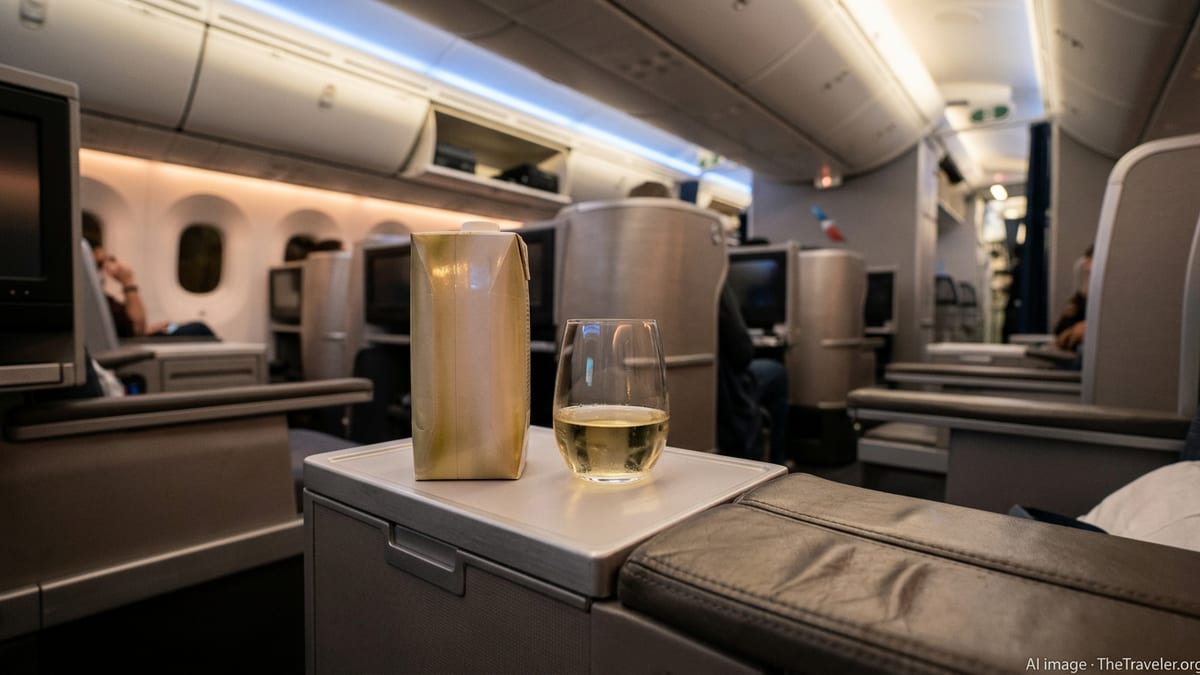
New California Wine Lineup Takes Off in Flagship Cabins
Beginning May 13, 2026, American Airlines is introducing a focused roster of California wines across select Flagship First and Flagship Business routes, according to the airline’s latest product announcement. The new labels, drawn from established Napa and Sonoma producers as well as Paso Robles, are being poured on both international long haul and transcontinental services as part of what the carrier describes as the first phase of a broader refresh to its wine program.
On international Flagship First and Flagship Business flights, passengers are being served Truchard Vineyards Chardonnay and Decoy Cabernet Sauvignon, both California wines with wide retail distribution and strong brand recognition. On premium transcontinental routes, including services linking New York, Los Angeles and San Francisco, the lineup features Migration Chardonnay and Justin Cabernet Sauvignon. Publicly available information indicates that these wines were selected for their performance at altitude, with an emphasis on fruit-forward styles and balanced acidity that remain expressive in a pressurized cabin.
The rollout places California producers at the center of American’s premium wine identity, aligning the inflight experience more closely with one of the airline’s largest domestic markets. Travel and aviation coverage notes that the carrier’s wine program has been recognized repeatedly in recent years, including honors in 2024 for its North American onboard selection. The new list is positioned as a continuation of that strategy, rather than a radical reset.
American has framed the move as customer-driven, pointing to feedback that places inflight dining and beverage quality among the most visible differentiators between carriers at the front of the cabin. While the individual bottles typically occupy a mid-tier retail price bracket, industry commentary suggests that consistency, logistics and brand familiarity are now as important as luxury labels when airlines assemble wine portfolios at scale.
Comfort in a Year of Disruptions
The decision to spotlight premium California wines comes as airlines, including American, face another year of operational strain. Global travel continues to be disrupted by a combination of factors, from lingering aircraft delivery delays to staffing constraints, congested airspace and recurring weather volatility at major U.S. hubs. Publicly available aviation performance data and traveler reports for the first half of 2026 highlight elevated levels of delays, missed connections and crowding in terminals during peak periods.
In that context, American’s latest wine initiative is emerging as one element in a broader effort to make time spent onboard feel more like a refuge from airport uncertainty. The airline has already detailed a suite of upgrades rolling out across its premium cabins, including refreshed menus, redesigned amenity kits and new bedding on more than 300 international and transcontinental flights starting around the Memorial Day travel surge. The enhanced wine list is described in corporate materials as a core part of this premium push.
Analysts note that while improved wine offerings do not address structural reliability issues, they can influence how disruptions are perceived by passengers who ultimately make it onboard. A well-executed dining service, paired with recognizable regional wines, can help soften the experience for travelers who have already navigated long security lines, weather holds or rolling gate changes. In competitive terms, these touches also signal to high-yield customers that the airline is willing to invest in the details of the journey, even as it contends with the same macro challenges affecting rivals.
Traveler sentiment shared across aviation forums and social channels reflects a split response to such enhancements. Some frequent flyers view upgraded wines and amenities as welcome signs that carriers are listening after years of cutbacks. Others see them as cosmetic improvements that must be matched by more reliable schedules, faster recovery from disruptions and clearer communication during irregular operations. For American, the California wine rollout will be judged in that wider operational context.
Wider Premium Strategy Across Cabins
The California-focused wine list is closely tied to a larger repositioning of American’s premium proposition. Over the past two years, the carrier has announced a new generation of long haul business class suites, incremental growth in the number of premium seats on key domestic and international aircraft, and expanded buy on board and complimentary offerings in economy. The airline’s most recent product updates describe a multi-year plan to increase premium seating capacity while layering in more curated food and beverage choices.
Within that framework, the wine program plays both a symbolic and practical role. The selection is meant to echo restaurant trends that favor approachable, well-reviewed labels over exclusive bottles with limited supply. Trade coverage of airline beverage strategies notes that carriers are increasingly leaning on partnerships with established wineries and sommeliers to balance cost, availability and customer expectations in an environment where global supply chains remain unpredictable.
American’s published materials emphasize that wines for First, Business and Premium Economy cabins undergo a formal evaluation process to ensure they pair with the carrier’s menus and perform under cabin conditions. The latest California additions build on an award winning program that previously highlighted a mix of Old World and New World producers. For now, the California roster is being positioned as a showcase, though aviation industry speculation suggests the airline may continue rotating labels as it refines its premium identity.
In the main cabin, alcohol remains available for purchase on most domestic flights over 250 miles, including beer, wine and spirits, with some long haul routes offering complimentary beer and wine. While the flagship California wines are reserved for the front of the aircraft, the overall message in American’s communications is that food and drink are central to how the airline intends to differentiate itself from low cost competitors, particularly as economic uncertainty shapes discretionary travel choices.
Competitive Pressure in the Sky
American’s move to spotlight California wines arrives amid a broader arms race in onboard beverage programs. In the last two years, several major carriers have announced notable upgrades to their wine and champagne lists in premium cabins, according to coverage in business and lifestyle media. United Airlines has detailed expanded partnerships with boutique wine brands and upgraded sparkling wine for its Polaris business class, while Delta Air Lines has publicized a curated list shaped with input from wine experts and a mix of high profile and lesser known producers. International carriers such as Singapore Airlines and Emirates have likewise drawn attention with limited release champagnes and extensive cellar style programs.
Industry reporting indicates that wine remains one of the most consumed alcoholic drinks at altitude, often outpacing beer and spirits in premium cabins. Even as broader global wine consumption has softened in some markets, demand in aviation appears resilient, in part because travelers associate a glass of wine with relaxation and a sense of occasion. As airlines compete for corporate contracts and high spending leisure travelers, the quality and storytelling around onboard wine selections have become tools of brand differentiation.
For American, leaning into California allows the airline to tap into the reputation of one of the world’s most recognized wine regions while reinforcing its own network strength along the West Coast and on transcontinental corridors. The choice also aligns with a wider hospitality trend that foregrounds local or regional products, even in global contexts. Observers note that if the current program performs well, it could encourage American and its competitors to further localize wine and food offerings on routes tied to specific culinary regions.
At the same time, some aviation commentators question whether mid-priced California labels can truly be described as premium in a market where certain rivals pour prestige champagne and wines that retail at significantly higher price points. Online discussions among frequent flyers frequently juxtapose American’s selections with those of European and Middle Eastern competitors. How the new list is perceived may hinge less on retail value and more on how consistently it is catered, presented and integrated into the overall inflight service.
Signal of What Comes Next for Passengers
While a new set of California wines will not resolve runway bottlenecks or aircraft shortages, it offers a window into where American is placing its customer experience bets during a volatile travel period. The airline’s investment in curated food and beverage, including its updated wine program, sits alongside new entertainment options, connectivity improvements and cabin redesigns that are scheduled to phase in across the fleet over the next several years.
For travelers, the practical impact will be most visible on long international and flagship transcontinental flights, where extended meal services give wines more opportunity to stand out. Passengers booked in premium cabins on these routes this summer are likely to be among the first to sample the new lineup at scale, even as they continue to navigate crowded terminals and weather affected schedules.
How far initiatives like American’s California wine program can move the needle on overall satisfaction remains an open question. Customer surveys and loyalty program data in the coming seasons will offer a clearer view of whether enhanced soft product touches translate into higher ratings and repeat bookings in the face of persistent operational friction.
For now, the message to passengers is straightforward. Even as global travel remains unpredictable, airlines are betting that a more polished experience in the air, complete with recognizable regional wines, can take some of the sting out of modern air travel. In American’s case, the latest answer to turbulence on the ground is being poured from bottles that draw their character from the vineyards of California.