


More news on this day
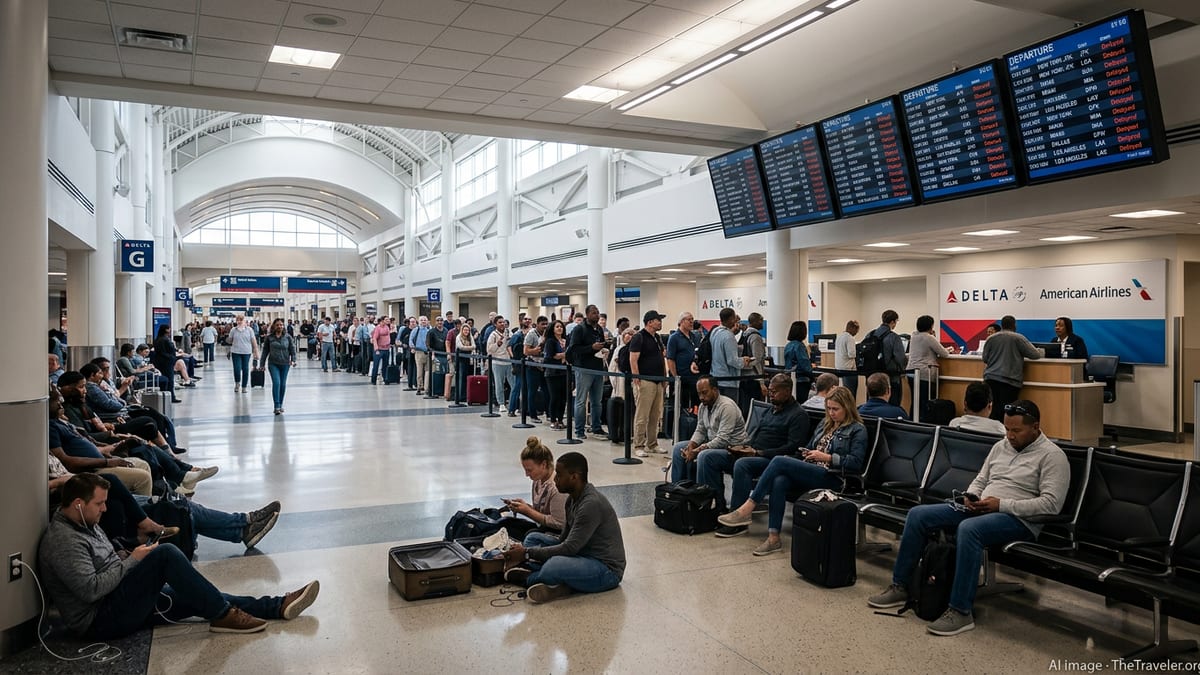
Summer thunderstorms moving across North Carolina have triggered repeated disruptions at Charlotte Douglas International Airport in recent weeks, leaving passengers stranded overnight and exposing ongoing strains across the U.S. air travel system.
Get the latest news straight to your inbox!
Ground Stops Snarl Operations at Busy Southeast Hub
Charlotte Douglas International Airport, one of the nation’s busiest hubs, has seen several rounds of severe weather this July, including thunderstorms that prompted a formal ground stop on July 10. Publicly available flight tracking and local broadcast coverage show that departures were temporarily halted that afternoon as storms moved directly over the airfield, forcing crews to suspend ramp work and leaving aircraft waiting for clearance to depart.
While weather-related pauses are routine during the summer storm season, the timing of this latest system intersected with one of the busiest travel periods of the year. Airport planning documents and recent media reports indicate that roughly 1.6 million passengers were expected to pass through Charlotte between late June and early July, heightening the impact of even short operational interruptions.
When a ground stop is in effect, flights bound for Charlotte can be held at their origin airports, while planes already on the ground may be kept at gates or in holding areas until it is safe to resume ramp activity. That cascade can leave connecting travelers stuck in the terminal for hours, with limited options when evening departures begin to back up.
Stranded Passengers Face Long Waits and Limited Rebooking Options
Accounts shared on social platforms and travel forums in late July describe passengers arriving in Charlotte only to find their onward flights delayed or canceled as storms built along key East Coast corridors. In one widely discussed case involving a connection through Charlotte, a traveler reported deplaning after an extended delay on the ground, waiting in a customer service line for several hours and ultimately being rebooked days later after severe weather affected the route.
Such experiences highlight the vulnerability of connecting passengers when storms disrupt a major hub late in the day. Once crews time out, aircraft reach their daily utilization limits and other airports along a route encounter their own weather constraints, same-day alternatives can quickly disappear. Travelers report that overnight accommodation and meal assistance can be limited when airlines classify disruptions primarily as weather related, leaving many to sleep in gate areas or pay out of pocket for nearby hotels.
Publicly available data from federal aviation dashboards show that Charlotte regularly handles hundreds of daily arrivals and departures in midsummer, many of them tight connections. When even a portion of those flights are delayed or canceled because of lightning or low visibility, customer service desks and rebooking channels can become overwhelmed, extending wait times and frustration for travelers already stranded at the airport.
Severe Weather Patterns Intensify Summer Travel Disruptions
Forecast discussions from the National Weather Service for the Charlotte area in late July describe a pattern of extreme heat and strong thunderstorms, driven by humid air and frontal boundaries moving across the Southeast. These conditions can lead to sudden wind shifts, heavy rain and lightning in the vicinity of Charlotte Douglas, all of which can trigger operational restrictions.
Weather agencies caution that severe thunderstorms not only affect visibility on approach and departure, but also pose risks on the ramp, where personnel, fueling activities and baggage operations are exposed to lightning. As a result, airlines and airport operators routinely suspend outdoor work when storms move within a defined radius, even if runways remain technically open. For passengers, that can mean crews are unavailable to load bags, push back aircraft or guide planes to gates, effectively freezing movement across the airfield.
Historical records and safety investigations have long underscored the dangers of attempting arrivals and departures in the most intense storm cells around Charlotte. That legacy shapes a conservative approach to operations when radar indicates strong convective activity, contributing to the kind of prolonged, safety-first delays that have recently stranded passengers in the terminal.
Operational Strain Reveals Systemic Vulnerabilities
The recent disruptions at Charlotte Douglas reflect wider strains across the U.S. aviation network during peak travel season. Industry analysts and public commentary note that airlines are operating with tight schedules, high aircraft utilization and lean staffing, leaving little room to absorb weather shocks at major hubs.
Charlotte’s role as a connecting hub means a large share of travelers are passing through on itineraries that rely on short layovers. When storms force a ground stop or slow arrivals, those carefully timed connections can unravel, turning what might have been a one-hour delay into an overnight stranding. Passengers have reported difficulty securing seats on the next available flights, as many services depart close to full during summer.
Airport planning documents and recent meeting summaries indicate that Charlotte Douglas has been managing both construction impacts and shifting passenger patterns, with a growing mix of local and connecting traffic. While those changes are intended to support long-term growth, they can also add complexity in the near term, particularly when weather compresses operations into smaller windows.
What Travelers Can Do When Weather Brings Flights to a Halt
Consumer advocates and airline guidance materials emphasize that severe weather is one of the most challenging disruptions for both carriers and passengers, since safety considerations override scheduling concerns and compensation rules are more limited than in cases of controllable delays. Travelers connecting through hubs such as Charlotte Douglas are encouraged to build in longer layovers during storm-prone months and to monitor forecasts for both departure and arrival cities.
Publicly available airline policies typically advise passengers to enroll in mobile alerts, keep boarding passes accessible and use official apps or websites to explore same-day alternatives as soon as irregular operations begin. In some cases, carriers issue weather waivers that allow travelers to change flights in advance of an approaching system, reducing the likelihood of becoming stranded at a midpoint like Charlotte.
For those already caught in the terminal when storms roll in, travel experts suggest documenting expenses, checking whether travel insurance covers weather disruptions, and seeking out customer service via multiple channels, including phone and digital messaging, rather than relying solely on long in-person lines. While these steps cannot prevent delays when thunderstorms close in around Charlotte Douglas, they can help passengers navigate the aftermath of severe weather and reduce the personal and financial toll of an unexpected night at the airport.