


More news on this day
Severe weather across multiple US regions has triggered a fresh wave of air travel disruption, with 4,367 flights delayed and 210 cancelled in a single day, snarling schedules at major hubs and stranding passengers nationwide.
Get the latest news straight to your inbox!
Storm Systems Snarl Major Hubs
The latest disruption is tied to a series of strong storm systems sweeping through some of the country’s busiest air corridors, including the Northeast and portions of the Mid-Atlantic and Great Lakes regions. Thunderstorms, low clouds, and periods of heavy rain have reduced visibility and forced traffic management programs, slowing departures and arrivals at key airports.
Published coverage indicates that New York area airports, including John F. Kennedy International, LaGuardia, and Newark Liberty, have experienced rolling delays as lightning and intense downpours passed over the region. Similar conditions in recent weeks have prompted ground stops and extended tarmac waits as crews navigated rapidly changing weather conditions.
According to publicly available aviation data, the 4,367 delays represent a substantial portion of the day’s scheduled departures and arrivals within, into, or out of the United States. The 210 cancellations, while smaller in number, have had an outsized impact on travelers whose itineraries depend on tight connections through already congested hubs.
Meteorological reports suggest that the storm cells responsible for the latest disruptions are part of a broader pattern of active summer weather, with repeated rounds of severe thunderstorms and localized flooding affecting key aviation corridors over several days.
Airlines Struggle to Rebuild Schedules
Airlines have been working to absorb the operational shock, but the combination of high summer demand and constrained capacity has limited their ability to recover quickly. When severe weather forces temporary halts to arrivals or departures, aircraft and crews are left out of position, creating ripple effects that can persist long after storms move on.
Publicly accessible flight-tracking data shows that delays are concentrated at large connecting hubs, where a single cancellation or extended hold often cascades into missed connections and subsequent schedule changes. In some cases, aircraft originally assigned to late-night departures have been reassigned to earlier flights in an attempt to reduce backlogs, leaving customers on later services facing cancellations or significant rebooking challenges.
Industry analyses note that carriers are contending with a tight labor environment, especially among pilots, flight attendants, and ground staff. Even when weather improves, crew duty-time limits and the need for mandatory rest periods can prevent airlines from immediately resuming normal operations, forcing additional schedule adjustments.
Recent Department of Transportation data on prior months shows that extreme weather consistently ranks as one of the leading causes of delays and cancellations in the United States, often ahead of carrier-controlled issues such as maintenance or staffing. The latest numbers appear to follow that pattern, with weather listed as the primary factor behind the disruption.
Passengers Face Long Lines and Limited Alternatives
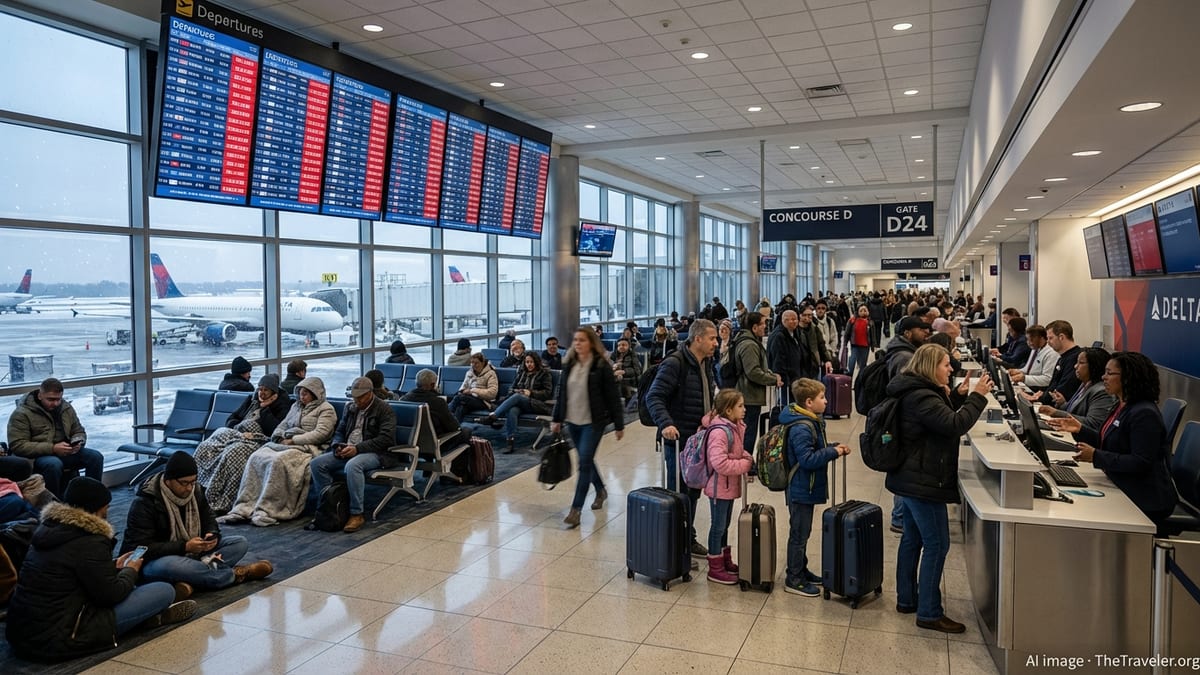
For travelers, the surge in delays and cancellations has translated into crowded terminals, extended waits at customer-service counters, and limited same-day alternatives. Reports from affected airports describe long lines at rebooking desks as passengers seek new flights, hotel vouchers, or meal assistance while they wait.
With many flights during the peak summer period already booked close to capacity, same-day re-accommodation has been difficult in some markets. Travelers on multi-leg itineraries, especially those connecting through busy hubs, have reported needing to accept substantially later departures or entirely different routings in order to reach their destinations.
Publicly available information from consumer advocates emphasizes that, in the United States, airlines are generally not required to provide cash compensation for weather-related disruptions. While some carriers offer meal vouchers, hotel discounts, or fee waivers for itinerary changes on a case-by-case basis, these measures are typically framed as customer-service gestures rather than obligations.
Travel advisers recommend that passengers monitor their flight status continuously on the day of departure, arrive early at the airport during periods of unstable weather, and consider booking longer connection times when traveling through storm-prone regions during summer months.
Regulators and Industry Track Growing Weather Impacts
The recent spike in delays and cancellations adds to a broader pattern of weather-driven volatility in US air travel. Transportation statistics compiled over the past several years show that extreme weather events, including severe thunderstorms, heat waves, and winter storms, have increasingly disrupted airline operations and pushed on-time performance lower on peak travel days.
Regulatory filings highlight ongoing discussions about how airlines communicate disruptions, especially when multiple causes such as weather, air traffic control constraints, and staffing issues intersect. Consumer groups argue that clearer, more consistent messaging would help travelers understand their options and better plan for extended disruptions.
Industry analysts also point to the vulnerability of aging air traffic control infrastructure during periods of intense weather. When storms force traffic to be rerouted around hazardous cells, controllers must meter departures and arrivals more conservatively, which can quickly translate into delays and cancellations at already busy airports.
Some carriers have expanded their use of flexible travel waivers in advance of forecasted severe weather, allowing passengers to move trips by a day or two without change fees or fare differences in certain conditions. Reports indicate that such policies, when announced early, can reduce airport congestion on the worst-affected days by spreading demand more evenly.
What Travelers Can Expect in the Coming Days
Forecasts suggest that unsettled weather may continue across portions of the eastern United States in the short term, raising the possibility of additional localized disruptions even as airlines work to stabilize operations. Afternoon and evening thunderstorms remain a particular concern during the summer months, especially at high-traffic hubs where minor slowdowns can quickly escalate.
Travel experts note that while the current tally of 4,367 delays and 210 cancellations is significant, it is not unprecedented for a peak summer travel day affected by severe weather. However, with overall passenger volumes trending higher than in previous years, each disrupted day now affects more travelers and puts more pressure on airline recovery efforts.
Passengers with upcoming trips are advised, according to widely shared guidance from travel organizations, to build flexibility into their plans where possible, including considering morning departures, avoiding tight connections through storm-prone hubs, and keeping essential items in carry-on bags in case of unexpected overnight stays.
As the busy travel season continues, the latest wave of weather-related disruption underscores the fragility of tightly wound airline schedules and the growing influence of severe weather patterns on day-to-day air travel across the United States.