


More news on this day
Five years after entering service in late 2021, the ultra luxury expedition ship Silver Endeavour is being highlighted across the industry for reshaping how travelers experience the polar regions, pairing advanced ice capabilities with an upscale small ship environment.
Get the latest news straight to your inbox!
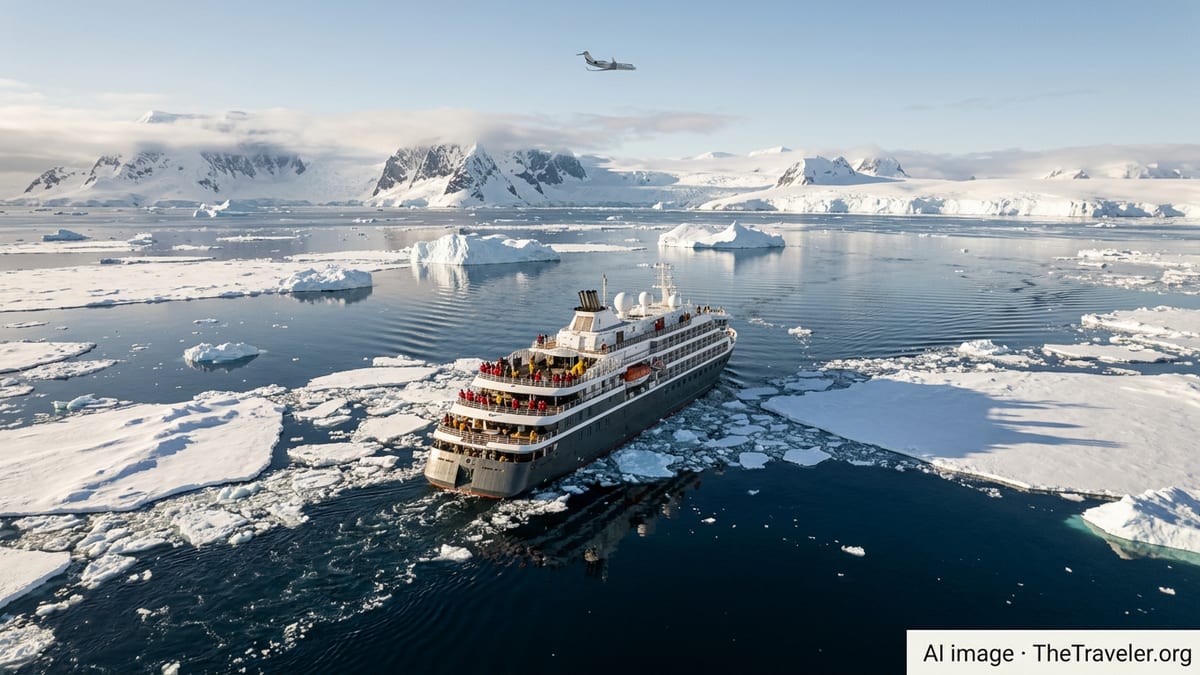
From Crystal Endeavor to Flagship Polar Expedition Vessel
Originally built as Crystal Endeavor and delivered in 2021 by MV Werften in Germany, the 200 guest vessel quickly drew attention for its high ice class and compact, yacht like profile tailored to remote cruising. After Crystal Cruises’ collapse, Royal Caribbean Group moved to acquire the ship for its Silversea brand in mid 2022, positioning it at the center of a growing focus on expedition products.
Renamed Silver Endeavour and transferred into the Silversea fleet later that year, the ship was promoted as one of the most luxurious expedition vessels afloat, with all suite accommodation, butler service and multiple dining venues packaged into a hull built for heavy ice conditions. Company information describes the ship as purpose designed for hard to reach destinations in both polar regions, highlighting its smaller size as a way to reach narrower channels and lesser visited landing sites.
Silver Endeavour began Antarctic operations in the 2022 to 2023 season, assuming voyages previously scheduled for the older Silver Explorer and giving Silversea a more modern flagship for its expedition division. Industry coverage at the time pointed to the acquisition as part of a wider consolidation of high specification expedition tonnage as demand for polar travel continued to rise following pandemic shutdowns.
Since then, the ship has become a reference point in discussions of luxury expedition cruising, regularly compared with vessels from competitors in terms of comfort, technical capabilities and price. Published reviews describe early sailings as combining challenging weather and ice conditions with a high level of onboard service, setting expectations for what guests could anticipate from subsequent seasons.
Expanding Seasons in Antarctica and the Arctic
Publicly available deployment data shows that Silver Endeavour has been operating an extended polar calendar, splitting its time between Antarctica and the Arctic with only brief repositioning periods. In southern summers, the vessel is scheduled on classic Antarctic Peninsula itineraries, Antarctic Circle voyages and fly cruise programs that bypass the Drake Passage, typically embarking guests via charter flights to King George Island.
During northern summers the ship pivots to the Arctic, offering sailings around Svalbard, Greenland and Iceland with an emphasis on wildlife viewing and remote fjords. Cruise schedules for 2026 list multiple departures from Longyearbyen and Tromso, with itineraries that include ice cruising, zodiac operations and visits to small settlements that cannot accommodate larger ships.
The dense seasonality is seen by analysts as a sign of strong demand for high end expedition experiences that do not sacrifice comfort. Surveys of available inventory for 2025 and 2026 show a mix of shorter Arctic voyages and longer combination routes that link different regions, indicating that Silversea is targeting both first time expedition guests and repeat travelers looking for more in depth exploration.
Some specialist tour operators promote Silver Endeavour on Antarctic programs that run from late spring through late summer in the Southern Hemisphere, highlighting the ship’s ability to push deeper into ice at the shoulder ends of the season. This is presented as a way to access colonies and landscapes that may be more challenging for conventional cruise hardware.
Technical Features Shaping the Onboard Experience
Silver Endeavour’s design is frequently cited as an example of how the expedition sector is moving toward higher comfort while retaining rugged capabilities. The ship carries an ice class PC6 rating, among the stronger classifications used in passenger shipping, which supports navigation through first year ice and challenging shoulder season conditions in both hemispheres.
The vessel uses advanced navigation, dynamic positioning and a fleet of zodiacs to support frequent off ship operations, while its relatively low guest capacity allows more flexible landing rotations. Industry reports emphasize that this combination enables a high ratio of time spent ashore or on the water compared with traditional cruise ships that are limited by passenger counts and environmental regulations.
Onboard, the configuration includes multiple restaurants, lounges, a spa and observation areas designed to keep guests connected to the surrounding landscapes. Reviews from recent Arctic and Antarctic seasons describe large windows, sheltered decks and heated outdoor spaces that make it easier to watch wildlife and ice formations in comfort, even in low temperatures and high winds.
These features are cited by travel advisors as a key selling point for travelers who may be hesitant about the harsher aspects of expedition cruising but still want close contact with polar environments. The ship’s luxury positioning and high crew to guest ratio are often contrasted with more minimalist expedition vessels that focus primarily on scientific programming and rugged operations.
Role in a Competitive and Evolving Expedition Market
Silver Endeavour’s five years of service have coincided with a rapid build up of new expedition tonnage worldwide, particularly in the polar sector. Shipyards and operators have introduced ice strengthened vessels for brands ranging from mainstream cruise companies to small specialist lines, all seeking to capture rising interest in remote destinations.
Analysts describe Silversea’s acquisition and deployment of Silver Endeavour as a strategic move to secure one of the most advanced hulls available and align it with an ultra luxury product already known to high spending travelers. The timing placed Silversea in a stronger position against competitors investing in their own polar newbuilds, including hybrid powered and LNG capable designs.
In this environment, Silver Endeavour functions as both a hardware showcase and a test case for how far the luxury model can be extended into expedition cruising. Pricing data and itinerary structures indicate that the ship often commands a premium relative to older vessels, yet it continues to feature prominently in recommendations by advisors focused on high end polar travel.
Observers note that the vessel’s schedule out to at least 2026 reflects confidence in continued demand, with itineraries opened early and promoted alongside other new ships in the Silversea fleet. The continuity of deployment across both poles suggests that the company views Silver Endeavour as central to its expedition identity, rather than a niche or short term experiment.
Heightened Focus on Sustainability and Destination Stewardship
As polar regions experience increasing visitor numbers, ships like Silver Endeavour are under growing scrutiny over their environmental footprint. Company statements position the vessel within broader sustainability initiatives at its parent group, emphasizing energy efficiency measures, emissions controls and adherence to international regulations governing operations in sensitive waters.
The ship operates within frameworks set by bodies such as the International Maritime Organization and regional guidelines for Antarctica and the Arctic, which limit discharge, regulate fuel types in certain areas and control wildlife approach distances. Industry briefings describe how expedition teams work within these rules while still delivering close up experiences through careful route planning and small group operations.
Travel advisors and specialist agencies increasingly frame Silver Endeavour’s itineraries in terms of low impact exploration, pointing to practices such as strict biosecurity protocols during landings and educational programming on board. The intent, according to this coverage, is to balance the commercial reality of high end tourism with messaging that encourages guests to see themselves as temporary visitors with responsibilities to fragile ecosystems.
Looking ahead, observers expect Silver Endeavour to remain part of discussions about how luxury and sustainability intersect in the polar cruise market. Its continued deployment across the Antarctic Peninsula, Svalbard and other high latitude regions will likely serve as a barometer of both traveler appetite for remote adventure and the industry’s capacity to manage that demand while safeguarding some of the planet’s most vulnerable environments.