


More news on this day
Black smoke was seen rising near Riyadh’s King Khalid International Airport over the weekend after overnight air-raid alerts in the Saudi capital and a Houthi claim of missile and drone attacks, sharpening concerns about flight disruptions and the wider security picture for travelers across the region.
Get the latest news straight to your inbox!
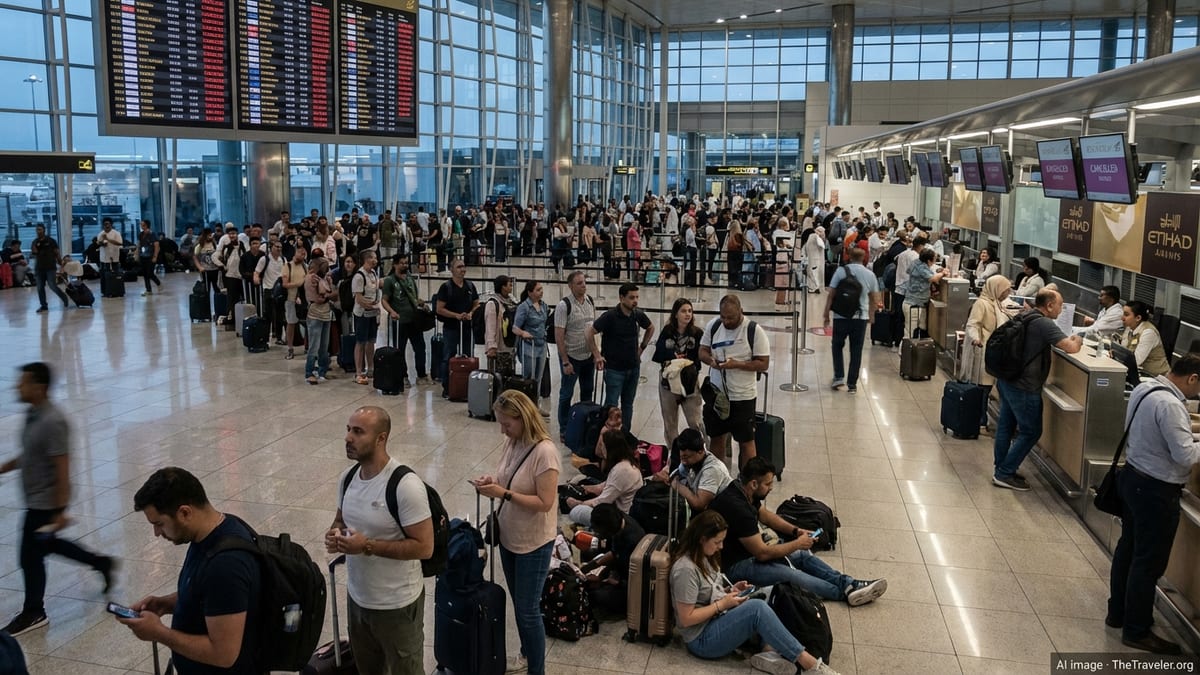
What happened near King Khalid International Airport
Published coverage on Saturday, September 19, 2026 described a visible plume of dark smoke in the vicinity of King Khalid International Airport, Riyadh’s main international gateway. The smoke appeared after residents reported hearing loud booms and after Saudi alerts warned of a potential aerial threat over the capital.
Multiple outlets carried Reuters-sourced reporting that the smoke appeared close to airport-related infrastructure, with some reporting specifically describing a fuel storage area near the airport. At the time of the initial images and videos circulating, public reporting did not consistently indicate a confirmed direct hit on passenger terminals.
State-linked and international reporting differed on the level of impact and what, if anything, was damaged. Some coverage described no immediate reports of casualties, while other reporting focused on the risk of escalation and the uncertainty that tends to follow fast-moving aerial incidents.
Houthi claims and Saudi air-defense messaging
In statements carried by major international media, Yemen’s Houthi movement claimed responsibility for attacks involving missiles and drones aimed at “sensitive sites” in Riyadh. Some reporting also referenced claimed strikes linked to energy infrastructure elsewhere in the kingdom, including the Red Sea port city of Yanbu.
Separately, Saudi messaging reported interceptions of an incoming threat toward Riyadh. The interplay between interception claims and visible smoke on the ground left an open question in initial hours about whether the smoke resulted from debris, a secondary fire, or a separate incident occurring around the same time.
The episode was widely framed as the first reported targeting of Riyadh in a renewed escalation in fighting involving the Houthis, adding to a broader pattern of drone and missile activity in and around Saudi territory that has periodically disrupted airspace operations in past years.
What travelers should know about flights and airport access
For travelers, the most immediate concern is whether airport operations are affected, either through temporary airspace restrictions, altered arrival and departure flows, or heightened security screening. In incidents involving air-raid alerts, even when flights continue, knock-on effects can include diversions, holding patterns, and delayed baggage and ground transport.
Because operational changes can occur quickly and may not be communicated uniformly across all channels, passengers scheduled to depart from or connect through Riyadh are generally best served by checking their airline’s flight status tools and app notifications close to departure time, and by monitoring airport advisories released through official channels.
Travelers transiting the Gulf should also be aware that disruptions do not always stay localized. If airspace management measures expand beyond Riyadh, hubs across the region can experience schedule ripples, especially for tight connections and overnight bank departures.
Regional security context and why it matters for tourism
The reported Riyadh incident unfolded amid wider Middle East tensions and a complex security environment that has already affected travel corridors, maritime routes, and insurance costs for carriers operating in and around the Red Sea and Arabian Peninsula. Even when attacks target military or energy sites, the proximity of airports and logistics corridors can heighten risk perception for travelers.
Saudi Arabia has invested heavily in tourism growth, including major events, large-scale entertainment projects, and expanded international air links. As a result, any high-visibility security episode near the capital’s main airport can have outsized effects on traveler confidence, even when commercial aviation infrastructure remains intact.
In practical terms, the largest near-term impact for visitors is often procedural: more stringent airport access rules, longer security lines, and last-minute changes to transport plans, particularly for passengers arriving late at night or departing early morning when alert systems are most likely to affect ground operations.
How to plan if you have imminent travel to Riyadh
Travelers with near-term itineraries to Riyadh may want to build extra buffer time for airport arrival and connections, and ensure their mobile number and email are correctly registered with the airline for operational alerts. Those on multi-city itineraries should consider flexible bookings where possible, especially for tightly timed onward flights.
For visitors already in the city, published guidance during similar episodes typically emphasizes staying attentive to local alerts and avoiding areas near an active incident until information stabilizes. Ground transportation and hotel operations generally continue, but traffic controls can shift quickly in response to emergency activity.
As of Sunday, September 20, 2026, publicly available reporting focused on the visible smoke, the Houthi claim, and Saudi interception messaging, while leaving some details about the specific source of the smoke and any resulting operational constraints to be clarified through subsequent updates.