


More news on this day
Vietnam’s long-awaited US$67 billion North–South high-speed railway has been assigned a new construction timetable, with publicly available planning documents and recent local coverage pointing to a revised start date in late 2027.
Get the latest news straight to your inbox!
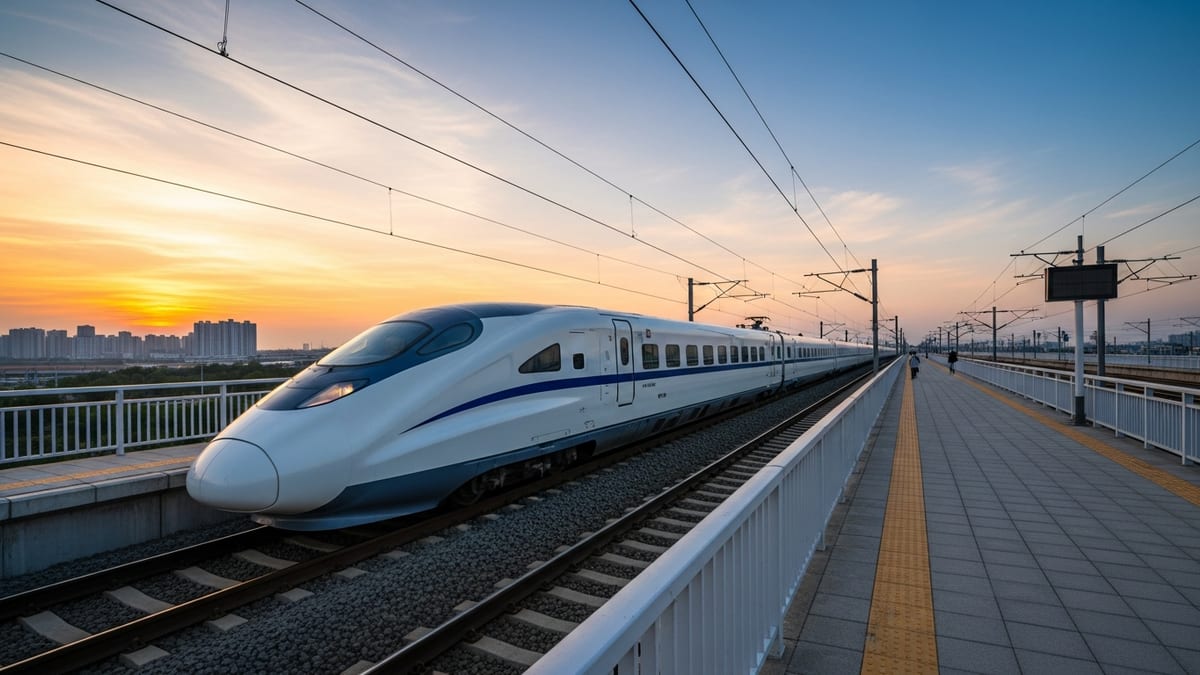
New Timeline Pushes Groundbreaking to Late 2027
Recent Vietnamese government publications and domestic media reports indicate that the first civil works on the North–South high-speed railway are now targeted for the end of 2027, rather than earlier windows that had ranged from late 2026 onward. The updated schedule frames December 2027 as the key month for starting construction on initial sections of the line connecting Hanoi and Ho Chi Minh City.
Coverage from Vietnam’s official portals and national press describes the late-2027 goal as the working milestone for breaking ground on priority segments near the two largest cities. This aligns with a broader planning corridor that anticipates preparatory work, feasibility studies and approvals running through 2025 to mid‑2027, followed by construction mobilization in the final quarter of 2027.
International business and infrastructure outlets also highlight the adjustment as a de facto delay to the project’s start, noting that earlier scenarios had suggested construction could begin as soon as late 2026. The shift consolidates expectations around a single, later date while maintaining the project’s strategic status within Vietnam’s long‑term transport plans.
US$67 Billion Flagship North–South Corridor
The high-speed railway is designed as a 1,500‑plus‑kilometer spine running between Hanoi in the north and Ho Chi Minh City in the south, with around 23 passenger stations and several freight facilities along the route. Published technical outlines describe the line as double‑track standard gauge, engineered for maximum speeds of about 350 kilometers per hour, cutting today’s north–south rail journey from more than 30 hours to roughly five and a half.
Pre‑feasibility work released by the Ministry of Transport and summarized by national news agencies places the overall investment at approximately US$67.34 billion, equivalent to about 1.7 quadrillion Vietnamese dong. Earlier studies have emphasized that the funding structure is expected to rely heavily on public investment, with central budget resources prioritized for land acquisition and key civil works.
Vietnamese and international research notes describe the project as one of Southeast Asia’s largest planned infrastructure programs, with projected consumption of millions of tons of steel and tens of millions of tons of cement. Analysts project that the sheer scale of construction will generate significant spillover benefits for domestic contractors, materials producers and engineering services during the build‑out period.
Feasibility Studies, Approvals and Phased Construction
The new late‑2027 target is closely tied to a detailed sequence of preparatory steps. Publicly available information shows that transport authorities are in the process of selecting a consultancy consortium to deliver a full feasibility study and front‑end engineering design for the entire corridor. According to English‑language Vietnamese media, authorities aim to have consultancy selection completed during 2026, with a mid‑term feasibility report due around June 2027.
This mid‑term report will underpin appraisals and investment policy consideration before main civil construction can proceed. Vietnamese planning documents indicate that national‑level approval of the investment policy is expected to be taken up by the legislature in an upcoming session, setting the legal and financial framework for the project’s first phase.
Recent directives also call for inter‑ministerial steering committees and specialized working groups focused on engineering standards, land clearance, resettlement and human‑resources development for high‑speed rail operations. These structures are intended to keep the pre‑construction timetable on track so that contractors can mobilize toward the end of 2027.
Tourism, Travel Times and Regional Connectivity
For travelers and the tourism industry, the revised schedule preserves the prospect of a transformational change in how visitors move along Vietnam’s coastal spine, though on a slightly longer horizon. Once operational, the high-speed line is expected to reduce Hanoi–Ho Chi Minh City journey times to a single‑digit number of hours by rail, offering a new alternative to air and long‑distance buses.
Intermediate stations will connect major tourist hubs and regional capitals, including key destinations that today rely heavily on short‑haul flights or overnight coaches. Travel and investment commentary commonly notes that the ability to move quickly between cities such as Hue, Da Nang, Nha Trang and Ho Chi Minh City by rail could encourage more multi‑stop itineraries and spread visitor spending more evenly across regions.
At the same time, the timeline shift to late 2027 underlines the complexity of delivering high‑speed infrastructure at national scale. Transport analysts observe that Vietnam is sequencing the project alongside parallel initiatives to expand expressways, develop urban metro lines and reinforce conventional railway links, all of which together are expected to reshape domestic and regional mobility over the 2030s.
Long-Term Horizon Toward the Mid‑2030s
While the construction start has moved to late 2027, the overall development horizon for the North–South high-speed railway still stretches into the next decade. Earlier pre‑feasibility materials cited by local media outline a target of completing core phases by the mid‑2030s, with some plans referencing 2035 as a central milestone for bringing the main corridor into operation.
The project is also embedded in Vietnam’s broader railway strategy running through 2045, which envisions not only the high‑speed spine but also new international links from northern Vietnam into China. Policy documents and specialist reports describe the North–South line as an anchor that could eventually connect with cross‑border high‑speed routes and expanded domestic networks.
For now, the latest adjustment to a late‑2027 groundbreaking crystallizes the near‑term roadmap: finalize studies, secure investment policy approval, and prepare the institutional and technical groundwork for one of the region’s most ambitious rail undertakings. If the revised timetable holds, the coming years will see Vietnam transition from planning to physical construction on a project that has been debated and refined for nearly two decades.
DTiNews: Vietnam targets December 2027 start for north-south high-speed railway
Construction Briefing: Vietnam delays US$67bn high-speed rail project
VietnamPlus: North–South high-speed rail price tag estimated at US$67.34 billion
Tuoi Tre / Saigon Times: Consultant selection and feasibility study timeline