


Across airports from Reykjavik to Kyoto, an increasingly familiar figure is rolling her carry-on toward the departure gate: a woman traveling alone, well past her twenties, calm, practiced and very clear that she is here by choice. Data from recent travel trend reports suggest that a growing share of solo travelers are women over 45, many of them in their fifties and sixties, choosing trips that fit their own timelines, budgets and energy levels rather than waiting for someone to join them. Yet most solo-travel advice still assumes a backpacking twenty-something. This piece looks instead at the lived wisdom of women who started, resumed or reinvented solo travel later in life, and what their experience can teach anyone considering a journey on her own terms.
Get the latest updates straight to your inbox!
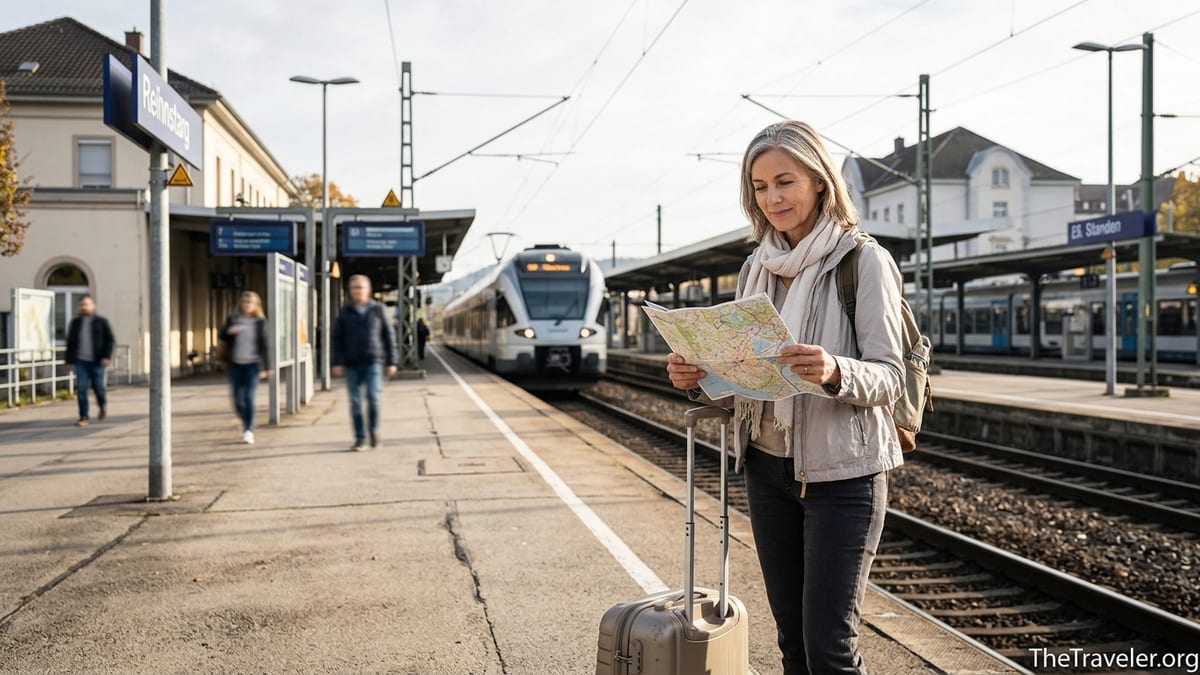
Why Women Beyond Their Twenties Are Owning Solo Travel
In recent years, travel advisors and tour operators from North America to Europe have noted a marked rise in solo travel among midlife and older women. Luxury agency networks and senior-focused brands describe solo clients who are predominantly women in their late forties and fifties, with many trips booked by recent empty nesters or retirees. An analysis published in early 2025 highlighted that solo travel is “especially popular among women 45 and older,” and that baby boomers now make up a majority of solo travelers, with women outnumbering men among them. While percentages vary by survey, the trend line is clear: the stereotype of the solo traveler as a twenty-two-year-old backpacker no longer matches the reality on the ground.
Behind those numbers sit very personal turning points. Some women describe booking a first solo trip after a divorce, redundancy or bereavement, when the usual travel companion is suddenly gone and the desire to keep living fully is urgent. A British traveler in her fifties told an interviewer that, after being widowed, she wrote a “life list” of more than a hundred experiences, then slowly ticked them off as a solo traveler across South America and Asia. Others hit fifty, realize invitations from coupled-up friends had slowed, and decide that waiting for a partner to be free means never going at all. In online communities, it is common to see posts from women who gave themselves a solo weekend in Paris or Lisbon for their fiftieth birthday, not as a consolation prize, but as a declaration of independence.
Age can also add practical advantages. Women in their thirties, forties and beyond are more likely to have a reliable income, a clearer sense of personal boundaries, and an ability to read situations that only comes from years of life experience. A woman in her late sixties writing about a group rail trip across Japan noted that she now trusted her instincts more than she did in her twenties; when a situation felt off, she left without second-guessing herself. That combination of financial agency and hard-won intuition makes later-life solo travel different in tone: less about proving something to others, more about aligning travel with your own needs and pace.
Mindset Shifts: From Proving Yourself to Pleasing Yourself
Many women who traveled alone in their twenties describe those early trips as tests of resilience: sleeping on night buses across Spain, stretching a hostel budget in Thailand, saying yes to every invitation. By their forties or fifties, the motivation has often shifted. One over-50 travel blogger writes that her thirties and forties were about “ticking off” destinations and bucket-list sights, whereas her fifties have focused on staying longer in fewer places, taking a cooking class in Bologna rather than rushing between capitals, or booking a week in a French village instead of trying to “do” Europe in ten days. The wisdom here is that you no longer need travel to prove how adventurous or low-maintenance you are; the point becomes depth over speed.
That shift also shows up in attitudes to comfort. A woman who did her first solo backpacking trip through the Netherlands, Spain and Portugal at fifty described starting in shared dorms to save money, then realizing that paying a bit more for a private room meant she actually enjoyed her days more. In 2026, a mid-range private room in a European city such as Porto or Valencia can often be found for the equivalent of 75 to 120 US dollars a night outside peak dates, especially if booked a few months ahead and slightly away from prime tourist squares. For a traveler used to business hotels, that might feel frugal; for someone used to hostels, it can feel like a revelation. The key lesson from women beyond their twenties is that comfort is not a moral failing. It is a tool that lets you travel farther and longer.
Expectations around social connection can evolve too. Younger solo travelers often talk about meeting people constantly, especially in hostel bars or on budget tours. Many women in their forties, fifties and sixties say they now choose when and how to be social, mixing independent days with curated company. Some build a loose network by joining local interest groups for an evening, such as a language exchange in Berlin or a walking tour in Kyoto, then retreat to solitude when they want it. Others deliberately book small-group trips run by companies that specialize in women-only departures or mature travelers, turning what might feel like loneliness into a chosen blend of solo time and community.
Safety, Savvy and the Advantage of Experience
Concerns about safety do not disappear with age, but many seasoned solo women argue that their life experience gives them an edge in navigating risk. They have decades of practice reading body language at work, handling street harassment, or negotiating boundaries in social situations, and they bring those skills on the road. A woman in her early fifties who regularly travels alone through Latin America wrote that the safety basics she follows now are the same she used in her twenties, but that her confidence and consistency make them easier: pre-booking airport transfers or knowing which local taxi apps are considered reliable, choosing centrally located accommodation, and trusting her instincts quickly when something feels off.
Technology has added another layer of control. Safety-focused apps allow travelers to share live locations with a trusted contact back home or send a pre-filled check-in message when they return to their room at night. Popular map apps let you download city maps offline and mark “safe” walking routes between your hotel, nearest metro station and late-night pharmacy. Many women over forty who did their first solo trips pre-smartphone now build a simple digital routine: keeping a screenshot of their hotel’s name and address in the local language, saving emergency numbers in their phone, and using secure digital wallets so that a lost card is an inconvenience rather than a crisis.
Real-world stories show how this plays out. In Europe, it is common for women traveling alone in their fifties to book arrival transfers through their hotel or a reputable car service when landing late at night, accepting the 40 or 50 euro fee as part of their safety budget rather than wrestling with an unfamiliar train system after a long-haul flight. In Southeast Asia, a sixty-something traveler who had never used ride-hailing apps at home described how she learned to rely on them in cities such as Bangkok and Ho Chi Minh City because they let her see the driver’s details, review price estimates in advance and avoid haggling curbside. These are small shifts, but they accumulate into a sense of control.
Designing Trips Around Energy, Health and Hormones
One of the most practical pieces of wisdom from solo travelers beyond their twenties is the importance of planning around your body, not around an idealized itinerary. Perimenopause, menopause, chronic conditions and simply being less excited about overnight buses all change how you move. Women in their forties often describe adjusting sleep schedules to manage hot flashes or insomnia while abroad: booking accommodation with effective air conditioning in humid destinations; packing breathable fabrics; and choosing midday indoor activities such as museums during heat waves in cities like Rome or Athens. Where a younger traveler might accept a stifling fan room in exchange for a lower price, an older solo traveler may see quiet, climate-controlled lodging as essential.
Health-related logistics become more central, but also more manageable with planning. A traveler with migraines or postural dizziness might book non-stop daytime flights where possible, pay extra for aisle seats to move easily, and build a rest day after long travel legs. One woman in her fifties who regularly crosses the Atlantic alone described a simple rule: on arrival day, she allows herself only three tasks, such as checking into her hotel, taking a short walk to get oriented, and having an early dinner; anything else she views as a bonus. That kind of self-imposed softness can be the difference between loving a destination and writing it off as “too exhausting.”
Destinations themselves can be chosen with bodies in mind. Cities with efficient public transit and pedestrian-friendly centers, like Copenhagen, Vienna or Seoul, allow you to do much of your exploring at a strolling pace rather than marching along highways or relying on unfamiliar driving rules. Beach destinations such as Costa del Sol in Spain or the Algarve in Portugal combine accessible sea promenades with frequent local buses or trains, so a traveler with creaky knees can still enjoy daily movement without tackling steep hills. Women who are managing autoimmune conditions or fatigue often report that slower, shoulder-season stays of two to three weeks in one place are more sustainable than ambitious multi-country tours.
Money, Time and the Power of Midlife Autonomy
Solo travel later in life often sits at the intersection of time and money in a way that is unfamiliar to younger travelers. Women in their thirties may have demanding jobs but limited annual leave. By their fifties or early sixties, some find themselves with more flexible schedules, either through remote work, consultancy roles or retirement, but with a sharper sense of financial boundaries. Instead of a single expensive two-week holiday per year, they might take several shorter, strategically planned trips: a long weekend in Montreal timed around off-peak airfare sales, a ten-day shoulder-season visit to Italy when accommodation prices drop by a third, or a two-week home swap with another solo traveler that eliminates lodging costs entirely.
Realistic budgeting is one of the quiet strengths of experienced women travelers. Rather than aiming for the lowest nightly rate, they often budget around value and safety. A woman in her mid-fifties planning a solo trip to Japan might allocate the equivalent of 80 to 130 US dollars per night for business hotels near major train stations, knowing that this price point usually brings clean rooms, 24-hour front desks and access to well-lit neighborhoods. For food, she may choose a mix of supermarket picnics and mid-range restaurants, treating herself to the occasional fine-dining experience when it feels meaningful, such as a kaiseki dinner in Kyoto or a tasting menu in San Sebastián. The wisdom is less about frugality and more about clarity on what matters personally.
There is also a growing ecosystem of travel products and services designed with older solo women in mind. Insurance providers increasingly offer plans that cover pre-existing conditions if purchased within a set window after booking, something many midlife travelers leverage to protect long-haul trips. Tour companies have launched women-only departures to destinations like Morocco, Vietnam or Peru that combine private rooms with group logistics, ideal for those who prefer not to handle every detail themselves. Even mainstream cruise lines have begun adding more single-occupancy cabins to their ships, recognizing that many passengers are traveling without a partner but do not want to pay double-occupancy surcharges.
Connection Without Compromise: Community for Mature Solo Women
A consistent theme among women who travel alone beyond their twenties is the search for connection that does not require surrendering autonomy. Online, that has given rise to communities and networks specifically for older solo female travelers, where a woman in her sixties planning her first solo train journey through Scandinavia can receive tips from someone who did the same route the previous summer. On discussion boards geared to women over fifty, you frequently see comments from those who are newly divorced or widowed seeking reassurance that they are not “too old” to travel alone. The responses often come from women in their sixties and seventies who are already booking their next trips to places like Vietnam, Scotland or South Africa.
Offline, many of these connections turn into real-world meetups or shared itineraries. Some US-based women form small travel circles that start with local dinners and day trips, then expand into international journeys, such as a week-long hiking base in the Scottish Highlands combined with a city stay in Glasgow. Others join women-centered travel clubs that match solo travelers for cabin shares on small-ship cruises or arrange small group tours through countries like Italy or Japan where language barriers and logistics can be daunting alone. A recurring insight from these networks is that traveling solo does not have to mean traveling lonely; the goal is freedom to choose your company, not an obligation to be alone at all times.
At the same time, many older solo travelers learn to embrace solo moments more fully. An American woman who celebrated her fiftieth birthday with a long weekend alone in Paris wrote about initially dreading dinners for one, only to discover the pleasure of reading a book at a corner bistro table or lingering over dessert without negotiating the bill with anyone else. Another, who spent three and a half weeks driving alone across her home country, reflected that the unstructured conversations she had with café owners, fellow hikers and guesthouse hosts were richer precisely because she was not paired off. The wisdom here is that intimacy and connection can come from brief, sincere encounters rather than permanent travel partners.
The Takeaway
Solo female travel beyond the twenties is not a lesser or belated version of the gap year narrative. It is its own, often richer, chapter. The women leading this quiet revolution in airports and train stations around the world are not trying to replicate their younger selves. They are making different calculations: weighing comfort more heavily, protecting their energy, and setting boundaries that reflect decades of knowing what feels right. Their stories show that courage does not always look like leaping onto a night bus in a country where you do not speak the language; sometimes it is simply refusing to postpone joy until someone can come with you.
For a woman in her thirties stretched between work and caregiving, or in her fifties facing an emptying nest or unexpected singlehood, this is the invitation: you do not have to wait for ideal circumstances or perfect confidence. Start with a small test trip, perhaps a solo weekend in a nearby city or a short guided tour where the logistics are shared. Pay attention to what feels good and what does not, and adjust. Build a safety routine that becomes second nature. Allow yourself comfortable beds and slow mornings. Let your age be an asset, not an apology. The wisdom of women who have already done this is clear: the world does not belong only to the young, and your passport does not come with an expiration date on adventure.
FAQ
Q1. Am I too old to start solo traveling if I am over 40 or 50?
You are not too old. Many women begin solo travel in their forties, fifties or sixties, often after life changes such as divorce, bereavement or an empty nest, and find that their age gives them confidence and perspective rather than holding them back.
Q2. How can I ease into solo travel if I am nervous about going completely alone?
A practical approach is to start with a short, familiar-feeling trip: a weekend in a nearby city, a domestic rail journey, or a small-group tour where you have your own room but share logistics and day trips with others, so you experience independence with a safety net.
Q3. Which destinations are good first choices for older solo female travelers?
Many women recommend cities and regions with reliable public transit and a reputation for safety, such as parts of Western Europe, Japan, Canada or coastal Portugal and Spain, where it is easy to navigate without a car and everyday tasks like using trains or buying groceries feel straightforward.
Q4. How should I think about safety as a woman traveling alone later in life?
The fundamentals are similar at any age: stay aware of your surroundings, secure your valuables, be cautious with alcohol and trust your instincts, but women beyond their twenties often add small systems like pre-booked airport transfers, sharing itineraries with a trusted contact and staying in central, well-reviewed accommodations.
Q5. Is it more expensive to travel solo as an older woman?
Solo travel can be more costly because you are not splitting rooms, but many women manage this by traveling in shoulder seasons, choosing mid-range lodgings near transit, using public transport instead of taxis when practical, and prioritizing comfort where it matters most, such as safe locations and good sleep.
Q6. What if I feel lonely or awkward eating alone?
Feeling awkward at first is common, but it usually eases with practice; some women bring a book or journal to dinner, choose counter seating or cafés where solo diners are common, or mix solo meals with occasional food tours or cooking classes to add social moments without giving up independence.
Q7. How do health issues or menopause affect solo travel plans?
Many women adapt by planning around their bodies: booking flights at kinder times of day, allowing rest days after long journeys, choosing accommodation with reliable air conditioning or elevators, and pacing activities so that symptoms like hot flashes, joint pain or fatigue are managed rather than ignored.
Q8. Are there travel companies or groups specifically for older solo women?
Yes, there is a growing ecosystem of tour operators, cruise lines and online communities that focus on women over forty or fifty, offering women-only group departures, roommate-matching options or spaces where mature solo travelers can share tips, itineraries and sometimes even home swaps.
Q9. How can I explain my decision to travel alone to friends or family who worry?
Many women find it helpful to share concrete plans, such as where they are staying, how they will move around, and what safety steps they are taking, and to frame the trip as a thoughtful, informed choice that brings them joy and growth rather than as a reckless escape.
Q10. What single piece of wisdom do experienced solo travelers beyond their twenties most often share?
A recurring theme is not to wait for perfect circumstances or the right companion; start small, learn from each journey and let your trips grow with your confidence, because time is finite and your stories are worth collecting now, not someday.