


More news on this day
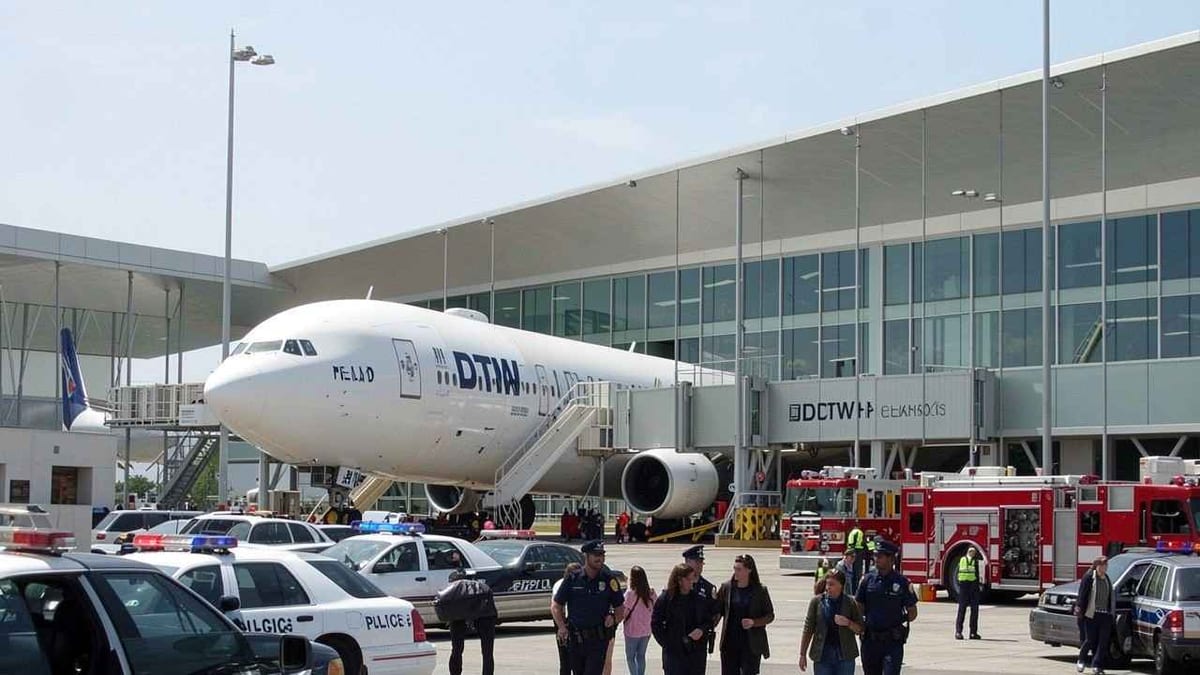
Passengers traveling on Southwest Airlines Flight WN3189 from West Palm Beach to Baltimore on July 20 faced unexpected disruption when the Boeing 737 MAX 8 diverted to Raleigh-Durham International Airport, prompting missed connections and last-minute itinerary changes for travelers across the network.
Get the latest news straight to your inbox!
What Is Known About Flight WN3189 on July 20
Publicly available flight-route data show that Southwest Airlines operates Flight WN3189 on the West Palm Beach to Baltimore corridor, typically scheduled in the morning on July 20, 2026. The service, operated by a Boeing 737 MAX 8, connects two key leisure and business markets, with Baltimore Washington International serving as a major East Coast base in the airline’s network.
On July 20, the flight did not complete its planned nonstop routing to Baltimore and instead diverted to Raleigh-Durham International Airport. Live tracking and schedule tools reflected an unscheduled stop in North Carolina, indicating that the aircraft broke off its usual northbound track along the U.S. East Coast and repositioned to the Research Triangle region before continuing or rerouting.
At the time of the diversion, nationwide operational summaries pointed to localized constraints in the U.S. airspace system, including potential weather and traffic-management initiatives affecting mid-Atlantic airports. While these system-wide overviews do not single out individual flights, they provide important context for why an aircraft might be rerouted away from its planned destination.
As of the latest information, there has been no detailed public technical breakdown of the specific trigger for WN3189’s diversion, such as a confirmed onboard mechanical issue or a single defined weather cell. The incident is being understood within the broader pattern of day-of-operations adjustments that U.S. carriers routinely make in response to a mix of safety, weather, and congestion factors.
Possible Factors Behind the Raleigh-Durham Diversion
When a flight such as WN3189 diverts from Baltimore to Raleigh-Durham, the decision is typically influenced by a combination of operational and safety considerations. Common drivers include deteriorating weather at the destination, runway or airspace congestion, and aircraft performance checks that crews prefer to address on the ground at an alternate airport rather than continue into a more constrained environment.
Raleigh-Durham has become an important alternate for East Coast operations, with a long runway, multiple parallel taxiways, and the capacity to handle larger narrowbody aircraft like the Boeing 737 MAX 8 on short notice. Its location between Florida and the mid-Atlantic makes it a logical diversion point for flights encountering complications close to the end of their northbound sector.
Flight disruption analysts point out that even when Baltimore appears open and functioning, the combination of thunderstorms, holding patterns, and arrival metering programs can prompt airlines to send certain flights to alternates to avoid extended airborne delays. In some cases, a diversion can be the quickest route to refueling, crew reassessment, and a more predictable onward plan for passengers.
Another factor that can shape decisions on a route like West Palm Beach to Baltimore is the broader schedule of the specific aircraft. A diversion can be used to reposition the jet to an airport where maintenance staff, spare parts, or better onward connectivity are available, balancing safety with the need to minimize disruption across the rest of the day’s flying program.
Impact on Passengers and Knock-on Delays
For travelers aboard WN3189, the immediate impact of the diversion was additional time on the ground at Raleigh-Durham, uncertainty about arrival into Baltimore, and the risk of missed onward flights. Given Baltimore’s role as a connection point in Southwest’s network, even a relatively short diversion can ripple into a series of rebookings and overnight stays for those with tight itineraries.
Industry research into delay propagation in the U.S. airport network shows that an unscheduled stop often has effects beyond the original flight, as crews and aircraft arrive late for subsequent sectors. That dynamic can lead to rolling delays later in the day, affecting passengers who may never realize that their own departure time was impacted by an earlier diversion on a different route.
Travelers on this routing may also experience secondary disruption at the baggage carousel or in ground transportation plans. If the aircraft ultimately continues to Baltimore after a diversion, bags typically remain onboard, but any decision to terminate the flight at the diversion point can require offloading luggage, re-tagging, and manual intervention by airport staff, which lengthens total travel time.
For those connecting beyond Baltimore, the practical consequences range from being moved to later same-day flights to receiving hotel and meal support when overnight stays become necessary. These outcomes depend on space available on alternate services and the timing of the disruption relative to the rest of the day’s schedule.
What Affected Travelers Can Do Next
Passengers disrupted by a diversion like that of WN3189 have several immediate steps available to manage their plans. The most effective first move is to use the airline’s mobile app or website to monitor updated flight status, gate information, and any automatically rebooked itineraries. These tools often refresh more quickly than airport display boards and can show alternative same-day routings via other cities.
At the airport, travelers can seek help at self-service kiosks where available to print new boarding passes or confirm revised routes. These kiosks sometimes allow customers to move to different same-day options without needing to wait in longer lines, which can be significant when a diversion affects multiple flights and cabins are full at the height of the summer travel period.
Those with onward connections outside the United States, important events, or nonrefundable ground bookings at their destination may wish to document the disruption carefully, including boarding passes, screenshots of updated times, and receipts for meals or hotels purchased out of pocket. Such documentation can be useful later when requesting travel credits, partial refunds, or assistance from travel insurance providers.
Travel experts also recommend staying flexible about routings into and out of Baltimore and other mid-Atlantic airports during days with active weather and heavy traffic. Considering alternatives such as Washington-area airports or adjusting departure times outside peak congestion windows can sometimes reduce the risk of being caught in the kinds of cascading delays that lead to diversions.
Broader Pattern of Summer Disruptions on U.S. Routes
The experience of WN3189 fits into a broader pattern of summer 2026 disruptions affecting North American air travel. Seasonal thunderstorms, high travel demand, and tight airline staffing and fleet utilization have combined to create an operating environment in which even small disturbances can have amplified consequences for passengers.
Federal reporting on daily air traffic conditions has highlighted repeated days with ground stops, flow-control measures, and reroutes at major hubs across the mid-Atlantic and Northeast. In this context, a single diverted flight becomes part of an intricate system of tactical decisions made by airlines and air traffic managers attempting to keep the network moving while prioritizing safety.
Historical studies of delay propagation in the U.S. airspace system underscore that diversions are often used as a pressure-release tool, helping to prevent more severe congestion later in the day. While this approach can be frustrating for those on the affected aircraft, it can play a role in limiting the total number of cancellations and extensive rolling delays across the network.
For travelers planning upcoming trips along the busy Florida-to-mid-Atlantic corridor, this latest diversion serves as a reminder to build cushion time into itineraries, especially when making tight same-day connections. Choosing earlier departures, avoiding the last flight of the night on critical legs, and monitoring forecasts and system-status summaries on the day of travel can all help reduce the risk that an unexpected diversion will derail time-sensitive plans.