


More news on this day
Hundreds of SpiceJet passengers departing from Delhi’s Indira Gandhi International Airport faced hours of uncertainty on September 19, 2026, after a check-in disruption and other operational issues delayed several flights and left travelers stranded across terminals.
Get the latest news straight to your inbox!
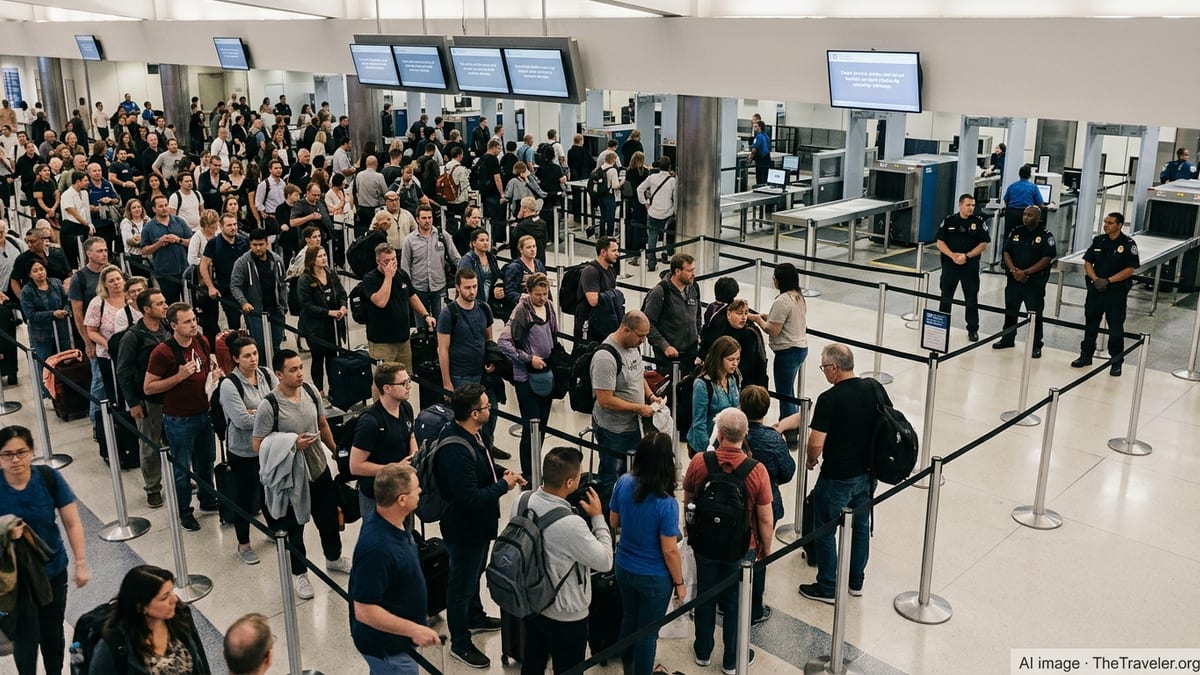
Multiple SpiceJet routes affected after early-morning disruption
According to published coverage from Indian media outlets, the latest disruption unfolded in the early hours of Saturday, September 19, primarily at Terminal 1 of Delhi’s Indira Gandhi International Airport. Reports indicate that check-in operations for some Leh-bound services were hit shortly after 2.30 am, triggering a build-up of passengers at departure counters.
SpiceJet flights SG121 and SG127 from Delhi to Leh and SG2160 from Delhi to Jammu were among those delayed due to what the airline publicly described as operational reasons. Other coverage indicates that at least four domestic flights and one international service were affected, with the cumulative impact estimated at more than 500 passengers waiting for revised departure times.
Flight-tracking data and local reports show that the affected aircraft eventually departed Delhi and later arrived at their respective destinations, but only after extended waits for travelers already inside the terminal. For passengers on early-morning hill-sector flights, the delays also raised concerns about onward connections and daylight-dependent plans on arrival.
The disruption came against the backdrop of a busy late-monsoon travel period for Delhi, with northbound flights to mountain destinations such as Leh typically operating close to capacity as visitors seek cooler weather and late-season trekking windows.
Stranded flyers report crowding and confusion in departure areas
Indian news outlets and social media posts from the morning of September 19 describe scenes of long queues and anxious passengers outside SpiceJet counters as the check-in disruption stretched on. Some travelers reported waiting with little clarity on revised departure times, while others shared images of crowded gate areas at Terminal 1.
Publicly available information indicates that airport teams were deployed to help manage the situation, including guiding passengers toward assistance desks and helping direct those with imminent departures or tight connections. Delhi Airport’s operator acknowledged the disruption in a public statement and said that on-ground teams were coordinating with the airline and other stakeholders to reduce congestion and support affected flyers.
The incident added to frustration among passengers who had already arrived several hours early for departures to high-altitude destinations. For some families and group travelers, particularly those heading to Leh and Jammu at the start of peak holiday itineraries, the uncertainty around boarding and baggage added an extra layer of stress.
While check-in operations were eventually restored, travelers departing later in the morning continued to report knock-on delays as aircraft and crews rotated through revised schedules, highlighting how a short-lived disruption at origin can ripple through an airline’s domestic network.
Recent Delhi to Dubai delays highlight wider operational pressures
The September 19 disruption follows a separate series of delays on SpiceJet’s Delhi to Dubai services earlier in the week, underscoring persistent operational challenges on some of the carrier’s busiest corridors. Reports from national newspapers and television channels describe two Delhi–Dubai flights facing extremely long delays around September 15, with some passengers waiting more than 24 hours inside the terminal.
Coverage from Delhi-based outlets notes that the prolonged delay prompted groups of stranded travelers to stage sit-in demonstrations at Terminal 3, demanding clearer information and immediate rebooking options. Video clips shared by local media show passengers sitting on the floor with baggage, holding up boarding passes and calling for faster resolution.
Additional reporting points out that one Delhi–Dubai flight was repeatedly rescheduled from its original departure on Monday evening to new slots extending into the following day. Some passengers reportedly opted to cancel their trips or seek alternatives on other carriers, while others chose to wait for the delayed SpiceJet services that eventually departed for the United Arab Emirates.
Taken together, the Dubai and Leh–Jammu delays at Delhi suggest that the airline has been dealing with a run of disruptions on both domestic and international routes, feeding into a growing volume of complaints documented on consumer forums and social media about reliability and communication.
Airport advisories and Indian passenger rights framework
Delhi Airport has been using public advisories to steer travelers toward airline-operated channels for real-time updates whenever disruptions occur. In the wake of the latest SpiceJet delays, the airport operator again urged passengers to verify flight status directly with their carrier before leaving for the airport and to make use of on-ground assistance teams once inside the terminal.
SpiceJet, like other Indian carriers, publishes live flight-status tools on its website and app, where travelers can confirm departure times, gate changes and any rolling rescheduling. During recent weather- and congestion-related events, the airline has highlighted these digital tools in public messages and encouraged passengers to monitor them closely on days with heavy disruption.
The situation at Delhi also brings renewed attention to India’s civil aviation rules on passenger rights. Under current regulations issued by the Directorate General of Civil Aviation, carriers are expected to provide specified assistance and, in some cases, compensation when flights are delayed or cancelled for reasons within the airline’s control. This framework covers meals, refreshments, hotel accommodation where necessary and rebooking or refund options in defined scenarios.
Consumer advocates note that practical awareness of these rules can help travelers engage more confidently with airline staff when facing extensive delays or overnight waits at airports. However, enforcement often depends on passengers being proactive, documenting communications and insisting that airlines apply the published standards in real-world situations.
What affected travelers can do before and during Delhi departures
For travelers planning to fly out of Delhi with SpiceJet in the coming days, recent events point to several practical steps that can help limit disruption. Published guidance from airports and aviation-consumer groups emphasizes checking flight status repeatedly in the 24 hours before departure, including on the morning of travel, and allowing extra time at the terminal when large-scale disruptions have been reported.
Given the specific issues around check-in on September 19, passengers may wish to complete web check-in as early as the airline allows and to keep digital boarding passes and payment confirmations easily accessible on their phones. This can speed up processing if staff are temporarily reassigned or if counters become congested while systems are restored.
Travelers connecting through Delhi to onward flights, particularly to international destinations such as Dubai or to time-sensitive routes to Leh and other Himalayan airports, may benefit from building in longer connection buffers or avoiding tight self-made connections on separate tickets. Recent delays demonstrate how quickly a schedule can slip when an aircraft is held on the ground for operational reasons.
For those already stranded in the terminal, the most recent disruptions underline the importance of contacting the airline through multiple channels, including customer-service desks inside the airport, call centers and digital chat or social media handles. Publicly available accounts from Delhi indicate that passengers who persisted across different contact points were more likely to secure rebooking options and clearer information about new departure times.