


More news on this day
A pointed social media complaint that “extra baggage gets an instant fine, but flight delays get excuses” has struck a nerve among SpiceJet passengers, crystallising growing frustration over strict fee collection for overweight bags even as reports of long delays and poor disruption handling continue to surface across the Indian budget carrier’s network.
Get the latest news straight to your inbox!
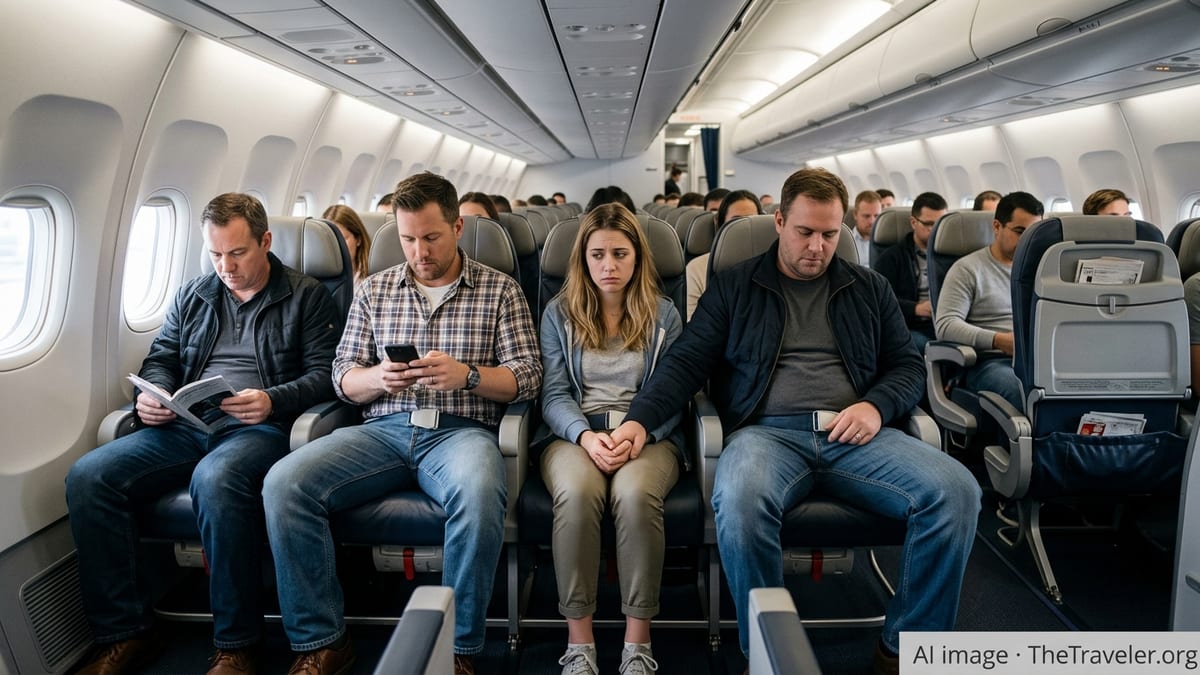
Viral Complaint Highlights Perceived Double Standard
The latest flashpoint emerged when a SpiceJet passenger took to social media to question why excess baggage is penalised immediately at the airport, while hours-long flight delays frequently attract little more than apologies and shifting explanations. The phrase, quickly shared and echoed across platforms, tapped into a broader sentiment that the enforcement of ancillary fees appears more reliable than the airline’s punctuality or communication.
Posts circulating in late May describe passengers being charged promptly for even marginal excess weight in checked luggage or additional cabin bags, with payments processed at counters before boarding. In contrast, flyers say schedule disruptions often unravel in slow motion, with departure times repeatedly revised and information arriving late or inconsistently across email, apps and airport display boards.
The criticism does not contest the existence of baggage rules, which are clearly detailed in the carrier’s published conditions of carriage and fare categories. Instead, passengers argue that the asymmetry between the precision of fee collection and the unpredictability of operations leaves them feeling that financial penalties are rigorously enforced while time lost to delays is treated as an unavoidable inconvenience.
SpiceJet has not issued a fresh overarching public statement addressing the specific social media remark, but the reaction has intensified scrutiny of the airline’s handling of punctuality, refunds and on-ground support during disruptions at major hubs including Mumbai, Delhi and Bengaluru.
Recent Delays and Stranded Flyers Fuel Backlash
The online backlash is unfolding against a backdrop of fresh disruption reports. In recent weeks, passengers on multiple domestic routes have described extended waits on the tarmac and in terminal buildings, with some flights from cities such as Mumbai, Bengaluru and Ahmedabad delayed for five hours or more. Local media coverage indicates that several affected travelers were left scrambling to rearrange connections, work commitments and family plans after late-night or early-morning departures.
In one widely reported incident at Mumbai’s domestic terminal, a SpiceJet service operating to Ahmedabad departed several hours behind schedule, with boarding beginning only after what passengers described as heated exchanges with ground staff. Coverage of the episode noted that the airline attributed the delay to earlier operational issues, while acknowledging gaps in communication, particularly for customers booked through third-party platforms.
Similar accounts have appeared from Bengaluru and Delhi, where flights have been grounded for prolonged periods due to technical checks or aircraft rotation challenges. Reports indicate that some travelers were kept waiting with minimal information on revised departure times, raising questions about whether the carrier’s contingency plans and staffing levels are adequate for peak travel periods.
Publicly available reviews on consumer and travel platforms also suggest that such incidents are not isolated. Over the past month, numerous posts have cited last-minute schedule changes, overnight rescheduling and limited assistance with onward connections, further shaping the narrative that operational reliability has become a weak link for the airline.
Strict Baggage Policies Under the Spotlight
While no major airline allows unlimited luggage without fees, SpiceJet’s structured baggage rules and fee tables are receiving renewed attention because of the contrasting experiences passengers describe at check-in versus during disruptions. The carrier’s published policy on domestic routes typically provides a fixed free allowance for checked-in baggage, with additional kilos charged per slab, and separate criteria for cabin bags and personal items.
Passengers recount that these rules are applied with precision at airport counters, where bags are weighed and tagged and extra charges raised before boarding cards are issued. Some recent reviews describe travelers being asked to pay for what they viewed as modest overages or for additional items such as laptop bags, although the exact circumstances and ticket types vary from case to case.
From the airline’s perspective, strict enforcement of weight limits helps manage fuel planning, payload and safety margins, particularly on routes operating from high-altitude or weather-sensitive airports. However, the current debate hinges less on the technical rationale and more on fairness and balance. Flyers argue that if airlines can measure and monetise baggage to the nearest kilogram, they should also have robust systems to protect passengers when operational failures consume hours of their time.
Industry observers note that low-cost carriers around the world rely heavily on ancillary revenue from baggage and seat selection fees, especially in periods of high fuel costs and competitive base fares. This business model, they say, makes it even more important to maintain high standards on punctuality and customer care, so that passengers do not perceive the relationship as one-sided.
Passenger Rights and Regulatory Expectations
The uproar is also renewing interest in Indian aviation regulations that govern compensation and assistance in the event of long delays, cancellations and denied boarding. Civil aviation rules set out minimum expectations for timely notifications, refunds and refreshments in specific scenarios, and consumer advocates frequently urge travelers to familiarise themselves with these provisions when challenging airlines over disrupted journeys.
Recent discussions on passenger forums show travelers comparing their experiences against these rules, particularly where delays exceeded three hours or where flights were rescheduled into the next day. Some passengers say they accepted refreshments or vouchers, while others claim they struggled to obtain refunds or rebooking on alternative flights without additional payment, especially when bookings were made through online travel agencies.
Legal commentators point out that the effectiveness of such regulations depends not only on what is written but on how consistently airlines implement them on the ground. The latest social media criticism of SpiceJet appears to question exactly that consistency, contrasting the near-automatic nature of baggage fines with what passengers see as more discretionary treatment when they seek remedies for service failures.
Regulators have in the past flagged on-time performance and complaint trends across major Indian carriers, emphasizing the need for transparent communication with passengers during disruptions. As travel demand remains robust heading into the summer season, the balance between commercial pressures, regulatory compliance and customer experience is likely to stay under close watch.
Growing Trust Deficit for a Once-Popular Low-Cost Brand
SpiceJet, one of India’s prominent budget airlines, has previously built its brand on aggressive fares and extensive domestic coverage, offering connections between metro cities and regional airports. In recent years, though, financial strain, fleet changes and competitive pressure have combined with operational challenges to erode some of that goodwill, according to analysts tracking the sector.
Complaints catalogued in customer review portals and aviation forums describe a pattern of late-notice cancellations, multi-hour delays and slow responses to refund requests. While many passengers continue to complete journeys without incident, the volume and tone of negative experiences circulating online suggest that trust is fragile, particularly among frequent flyers and business travelers with tight schedules.
The latest “extra baggage, instant fine” comment has effectively become a shorthand for this perceived imbalance. For some travelers, it symbolises a broader feeling that the risks and costs of disruption fall disproportionately on passengers, even as airlines seek to stabilise finances through ancillary revenues and capacity adjustments.
Travel industry watchers say that restoring confidence will require more than policy documents or isolated goodwill gestures. Consistent on-time performance, proactive and clear communication during irregular operations, and visible adherence to passenger-rights obligations are seen as crucial to convincing skeptical customers that the relationship is not purely transactional. Until then, pointed social media posts about fines and excuses are likely to continue shaping the public conversation around SpiceJet’s service standards.