


More news on this day
Weather-related disruption to U.S. air travel eased but did not disappear early Friday, with flight-tracking data showing just over 300 delays and 86 cancellations nationwide following a powerful Thanksgiving storm that had previously thrown thousands of journeys off schedule.
Get the latest news straight to your inbox!
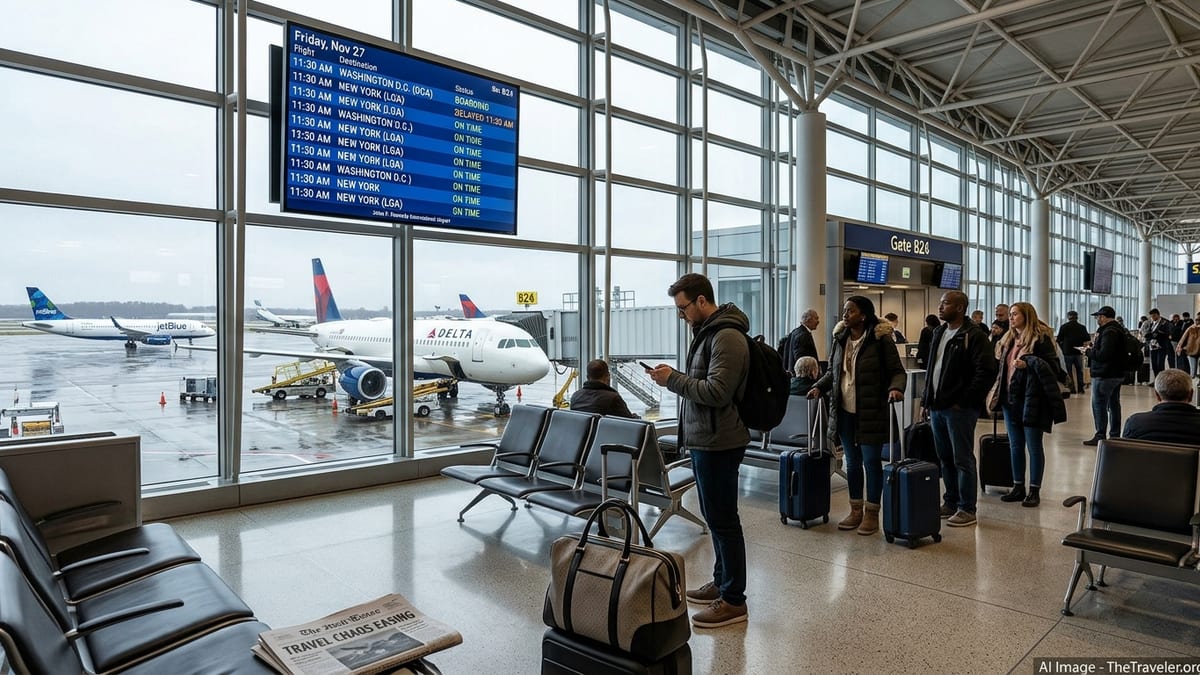
Friday’s flight picture after the Thanksgiving storm
The latest nationwide snapshot of air travel, compiled from airline and airport feeds early on Friday 27 November, indicated that a little more than 300 U.S. flights were running late and 86 had been canceled, a marked improvement on the severe disruption seen earlier in the week. The figures, first reported by CNN using data from flight-tracking services, capture the situation in the early morning and are expected to evolve through the day as the system behind the storm continues to move offshore.
These fresh numbers follow a far more turbulent period for travelers. On Wednesday, as the storm intensified and swept along the East Coast in the run-up to Thanksgiving, more than 6,000 flights were delayed and about 150 were canceled across the United States. By Thursday, delays had dropped to around 2,500, but cancellations rose to roughly 450 as airlines made more proactive schedule cuts to cope with winds and residual constraints in the national airspace system.
The clearing of the worst weather has allowed the Federal Aviation Administration to lift the most restrictive traffic-management measures at key airports, helping to push Friday’s disruption down to levels more typical of a busy travel day. However, scattered delays continue at individual hubs where airlines are repositioning aircraft and crews after days of rolling schedule changes.
Impact at New York and Washington airports
New York’s John F. Kennedy International Airport, one of the country’s most weather-sensitive hubs and a major gateway for transatlantic flights, recorded 29 delayed departures or arrivals and eight cancellations in the early-morning tally. That represents only a small fraction of JFK’s daily schedule and is consistent with broader FAA data on Friday that showed no active ground delay programs or ground stops in effect for the airport, even as local operators worked through residual issues from the storm and from earlier nationwide disruptions.
In the Washington region, Ronald Reagan Washington National Airport saw six early cancellations and 13 delays. This relatively modest level of disruption follows a much more challenging period on Wednesday and Thursday, when high winds and low cloud ceilings in the mid-Atlantic contributed to holding patterns and spacing restrictions in and out of the capital’s three main airports. By Friday, those system-level constraints had eased, allowing Reagan National in particular to handle near-normal volumes while still absorbing some lingering crew and aircraft imbalances.
Other major East Coast hubs that had been heavily affected by the storm, including LaGuardia and Newark Liberty International, were also reporting more manageable operations early Friday, according to FAA status feeds and local airport boards. While individual flights at these airports remained vulnerable to minor weather variations and knock-on delays from other parts of the network, the absence of formal FAA delay programs signaled a return to more regular holiday operations.
From widespread disruption to gradual recovery
The improving picture on Friday comes after a complex sequence of disruptions that began earlier in November with a nationwide ground stop linked to an FAA communications issue, continued with a major automation outage at Delta Air Lines on 22 November, and culminated in the powerful Thanksgiving-week storm that swept up the Eastern Seaboard. Each of these events left aircraft and crews out of position and created backlogs that took time to clear, even once the immediate trigger resolved.
In the days leading up to Thanksgiving, the National Weather Service repeatedly warned of high winds, heavy rain and low visibility along the Interstate 95 corridor from the mid-Atlantic into New England. Those forecasts proved accurate, with wind gusts above 50 miles per hour recorded in New York City and at several coastal airports on Thursday. Airports and airlines responded by spacing out arrivals and departures, rerouting some flights and canceling others outright when crosswinds and visibility fell outside safe operating limits.
At the same time, federal officials said they were applying lessons from the earlier nationwide ground stop in mid-November, which had briefly halted departures across the United States and created a cascade of more than 9,000 delays and around 900 cancellations in a single afternoon. Transportation officials pointed to new monitoring tools and so-called “tiger teams” tasked with identifying bottlenecks in the airspace system more quickly, with the goal of containing local disruptions before they escalated into nationwide gridlock.
Thanksgiving travel volumes and what passengers experienced
This year’s Thanksgiving travel surge has been among the heaviest since before the pandemic, putting additional pressure on the system’s ability to recover from weather shocks. Forecasts released earlier in the week indicated that more than 80 million Americans were expected to travel at least 50 miles between Tuesday and the Monday after Thanksgiving, with close to 6 million of them flying. Those projections proved broadly accurate, judging by Transportation Security Administration checkpoint data that showed steady growth in the number of passengers screened at major airports beginning last weekend.
For many travelers, the overlapping effects of the storm and the earlier technical problems translated into longer queues, tight connections and, in some cases, unexpected overnight stays. Social media posts and online forums in the last two weeks have chronicled a wide range of experiences, from relatively minor schedule changes to multi-day odysseys involving repeated cancellations and rebookings. While those individual accounts vary widely, they reflect the way localized operational decisions, such as swapping aircraft types or consolidating departures, fed into a broader perception of a strained system throughout the holiday period.
Despite the headline figures for delays and cancellations, federal statistics show that the majority of U.S. flights still arrive within 15 minutes of their scheduled time on a typical day, even during peak travel periods. Historical data in the Department of Transportation’s Air Travel Consumer Reports indicate that around one in five flights nationwide runs significantly late in a given month, with a smaller share canceled outright. The past two weeks, however, have highlighted how extreme weather and infrastructure problems can push those averages sharply higher on particular days, especially when the issues affect large connecting hubs.
What travelers should check next
With the immediate storm moving away from the East Coast and no nationwide air-traffic restrictions in place on Friday morning, aviation officials expect operations to continue normalizing into the weekend. That said, airlines and airports caution that residual disruption can persist for 24 to 48 hours after a major weather event or system outage, as carriers reposition aircraft, reassign crews that have reached duty-time limits and work through the backlog of passengers waiting to be rebooked.
Passengers with flights scheduled for Friday 27 November and over the remainder of the Thanksgiving travel window are being advised to monitor their airline’s app or website closely, particularly in the 24 hours before departure. Same-day schedule adjustments, gate changes and equipment swaps remain possible even in the absence of significant new weather threats, especially on routes where aircraft are arriving from previously affected airports. Many carriers continue to offer rebooking options or travel waivers on select routes where the operational impact has been most pronounced, although those policies vary by airline and are subject to change.
For travelers still planning trips over the coming days, the key practical steps are to verify flight status before leaving for the airport, allow additional time for check-in and security screening during peak hours, and keep an eye on local weather forecasts at both origin and destination. While Friday’s early data suggests that the worst of this week’s disruption is now behind the system, experience from recent storms and outages shows that conditions can change quickly, and that the most reliable information about a specific flight will come directly from the operating airline and the airport handling the service.