


The Florida Panhandle’s coast can feel like one long sweep of sugar-white sand, but individual beaches and parks have very different personalities. Some are packed with kid-friendly facilities and lifeguards, others are wilder, with sea oats, shorebirds and barely another towel in sight. This guide focuses on where to actually plant your chair and umbrella once you have picked a town, highlighting specific beaches and beach parks and what sets each one apart.
Get the latest updates straight to your inbox!
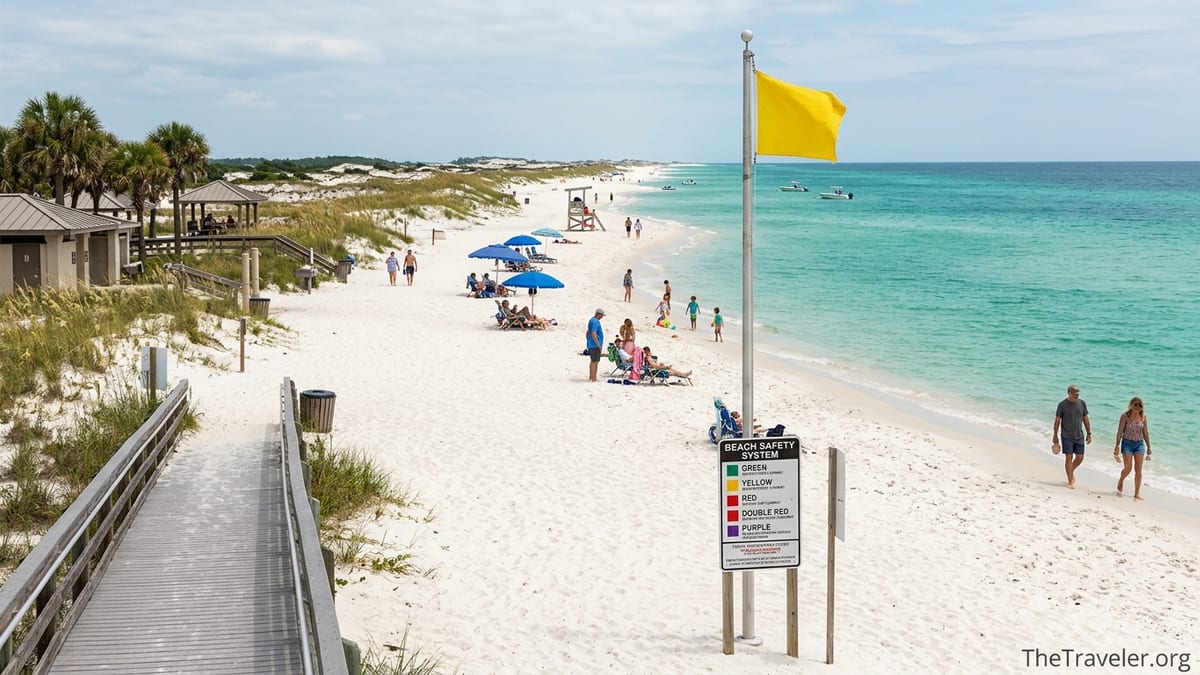
Understanding the Panhandle’s Beach & Safety Basics
Across the Florida Panhandle, the beaches share a few constants: soft, generally fine white sand, emerald or turquoise water on calmer days, and surf that can shift quickly with wind and storms. Even where towns blur together, each named beach or park has its own mix of crowds, access, and facilities such as restrooms, showers, picnic areas and boardwalks. This article concentrates on those on-the-sand details rather than lodging or nightlife, to help you decide where to spend your actual beach time.
Before choosing a beach, visitors should understand the regional beach-flag warning system used by Gulf counties and state parks. Flags are usually flown near main access points. Green typically indicates low hazard, yellow means moderate surf or currents, and a single red flag signals high surf or strong currents where extra caution is vital. A purple flag can be raised along with others when potentially dangerous marine life is present, such as jellyfish or stingrays. Local beach safety offices and the Florida Department of Health emphasize that rip currents can be hazardous even on seemingly calm days and that swimmers should not rely only on appearances.
Many Panhandle counties now treat double-red flags as a legal closure of the Gulf to swimming, not just a strong suggestion. In Okaloosa County, for example, county rules specify that when double-red flags are posted under a declared emergency, entering the Gulf is prohibited and failure to comply with lifeguards or law enforcement can lead to penalties. Several neighboring Gulf counties have adopted similar rules, and official safety information commonly defines double red as “water closed to the public.” Travelers should check local government or beach safety channels each morning for the current flag color and understand that conditions may change during the day.
Because rules and enforcement vary by jurisdiction, this guide uses examples rather than universal rules. In some counties, lifeguards are on duty only in high season and only at selected towers, while more remote state-park beaches may be unguarded year-round. Always look for posted signs about lifeguard coverage, flag meanings and prohibited activities, and verify current guidance with the relevant county or park authority before entering the water.
Family-Friendly Beaches With Facilities and Gentler Surf
Henderson Beach State Park in Destin is one of the Panhandle’s best all-round family beaches if you want a natural feel without losing basic conveniences. The park preserves over a mile of protected shoreline with deep dunes backing soft white sand, yet it sits only about 10 to 15 minutes by car from central Destin’s main commercial strip, depending on traffic. Facilities include a day-use area with restrooms, outdoor showers, picnic pavilions and boardwalks over the dunes, along with designated parking near the beach access points. The park charges a per-vehicle day-use fee for entry. Recent state park information notes that visitors may be encouraged or required to purchase day-use passes in advance on busy days, so travelers should confirm current pricing and reservation requirements close to their trip.
To the east in Panama City Beach, St Andrews State Park offers another strong candidate for families who like options. Located roughly 15 to 20 minutes by car from the central resort strip, the park features both Gulf-facing beaches with sweeping views and an often-sheltered area along the pass where water can be calmer for younger children, depending on tides and current conditions. Facilities include restrooms, showers, picnic areas and multiple parking lots close to the sand. The park currently charges a per-vehicle day-use fee similar to other Florida state parks, but visitors should check the latest fee schedule and any temporary closures or construction notices before arrival, as this high-use park can see periodic improvements and crowd-related capacity limits.
Along scenic Highway 30A in Walton County, Grayton Beach State Park offers another family-friendly option when you want to escape the busier public accesses but still have proper facilities. The main day-use beach area, usually accessed via a paved park road, has restrooms, outdoor showers and a short boardwalk to the sand. Recent updates from local visitor resources and Florida State Parks highlight that during high visitation days the park may reach capacity and temporarily close its entrance, particularly in spring and summer. Families staying in Seaside, WaterColor or Blue Mountain Beach can generally reach Grayton Beach State Park in about 10 to 20 minutes by car, traffic permitting. As with other state parks, there is a per-vehicle entrance fee; visitors should verify current rates and any parking advisories close to their visit.
Gulf Islands National Seashore: Where Facilities Meet Wild Scenery
Several of the Panhandle’s most memorable beaches sit within Gulf Islands National Seashore, which protects long reaches of undeveloped shoreline between Pensacola Beach and Navarre, plus additional segments near Perdido Key. Compared with city park beaches, these areas stand out for miles of uninterrupted white sand and sea oats, often with clearer sightlines and fewer high-rise backdrops. At the same time, selected day-use areas provide the basics such as paved parking, seasonal lifeguards, and restrooms, making them attractive for both families and couples seeking a quieter setting without going fully primitive.
Opal Beach, in the Santa Rosa area of Gulf Islands National Seashore between Pensacola Beach and Navarre, is a prime example. The day-use area offers paved parking areas on both Gulf and sound sides, restrooms, outdoor showers, picnic pavilions and beach access points via boardwalks. National Park Service information notes that visitors must pay an entrance fee or hold a park pass to use this area, with typical private vehicle passes valid for several days. During the main warm-weather season, Opal Beach often sees lifeguard coverage at designated swim areas, but coverage and dates can change from year to year, so beachgoers should confirm specifics with current park advisories.
Farther west, Johnson Beach on Perdido Key combines facilities with long, relatively undeveloped stretches of sand. This unit of Gulf Islands National Seashore lies about 25 to 35 minutes by car from downtown Pensacola under typical traffic. Visitor information highlights amenities including restrooms, showers, picnic shelters, a main parking area and seasonal lifeguards at the designated swim beach. Beyond the primary access area, the park road parallels a wilder expanse of dunes, giving couples and photographers room to walk away from crowds while still having facilities nearby at the main access. As with other seashore units, there is an entrance fee or pass requirement, and travelers should check for any current restoration projects or partial closures related to past storm damage before planning a full-day outing.
Storms have historically affected roadways and boardwalks within Gulf Islands National Seashore. Current park information notes that core infrastructure such as main roads, parking areas and visitor centers in the Florida districts are operational, but specific trails or nature paths can remain closed after significant storms or renourishment work. The safest approach is to verify the status of particular beach access points, parking lots and any fishing piers with the National Park Service shortly before your visit, especially during hurricane season or in the months following a major storm.
Quieter, More Natural State-Park Beaches and the Forgotten Coast
Travelers willing to drive a bit farther from the major resort hubs are rewarded with quieter, more natural beach experiences along the eastern Panhandle and the so-called Forgotten Coast. Here, state parks and preserves protect long, dune-backed strands where development is limited and the night sky tends to stay dark. Facilities range from basic to well developed, but the general feel is less commercial than in Destin or central Panama City Beach.
Topsail Hill Preserve State Park, west of Santa Rosa Beach, is one of the most striking dunes-and-lakes landscapes on the Panhandle. While the park’s campground area sits inland, a paved road and tram service (operated on a park schedule that visitors should confirm in advance) connect parking areas to the main beach access. Once there, you will find boardwalk access to a wide Gulf shoreline, along with restrooms and outdoor showers near the day-use hub. This beach often feels wilder than more central 30A accesses because much of the shoreline is backed by preserved dunes and coastal dune lakes instead of houses. Parking is behind the dunes rather than at the immediate shoreline, and a per-vehicle day-use fee applies at the entrance gate.
Farther east beyond the main resort belt, St George Island State Park sits on the eastern end of St George Island and typically offers some of the quietest drive-up beaches in the region. Plan on approximately a 20 to 30 minute drive from the mainland town of Eastpoint, depending on traffic over the bridge and along the island. Facilities include a primary day-use area with restrooms, showers, boardwalks over the dunes and several picnic shelters. Additional access points spread along the park road allow visitors to find less crowded stretches of sand, especially outside peak holiday periods. The park charges a per-vehicle entrance fee similar to other Florida state parks, and because this is a more remote barrier island, visitors should bring most of what they need for the day, including water, shade and food.
Along the curve of the Forgotten Coast, other options such as St Joseph Peninsula (T.H. Stone Memorial) State Park and portions of Cape San Blas continue to recover and evolve after past hurricanes. These beaches are valued for sweeping natural scenery, birdlife and, in certain sections, opportunities for quieter shelling compared with busier urban strands. However, access roads, campground loops, or specific day-use areas can change as restoration work continues. Any traveler planning a day on these beaches should review the latest state park updates for construction notes, reopened boardwalks and any day-use capacity limits before setting out.
Beaches Suited to Couples and Low-Key Escapes
For couples and travelers focused on scenery and space rather than playgrounds and snack shacks, several Panhandle beaches strike a balance between accessibility and a calmer atmosphere. Even within busier destinations, certain parks shield you from roadside noise and high-rise silhouettes, especially if you are willing to walk a short distance from the nearest parking lot.
Navarre Beach, sometimes called “Florida’s Most Relaxing Place” in local promotions, feels notably quieter than many Emerald Coast neighbors despite having a central fishing pier and public facilities. The main Navarre Beach public area offers restrooms, beach access walkovers and parking behind the dune line, with lifeguards typically present in season at designated towers. A short drive east brings you to the boundary with Gulf Islands National Seashore, where development drops away and long, undeveloped dunes dominate the view in both directions. Couples can base themselves near the main facilities, then walk along the shoreline into the less-built area for more solitude, always staying alert to flag colors and lifeguard boundaries.
On Florida’s western edge, the quieter segments of Perdido Key, including the stretches adjacent to Johnson Beach within the national seashore, tend to draw a mix of locals, nature lovers and day-tripping couples from Pensacola. Parking at the main day-use lot gets you close to restrooms and showers, but walking farther along the beach quickly thins the crowds. With miles of protected shoreline, it is usually possible to find a patch of sand where the loudest sounds are waves and seabirds. As with other barrier islands, conditions can change after storms, and access roads or dune crossovers may be temporarily rerouted or repaired, so visitors should check current park maps and notices before heading out.
Even busy 30A has pockets that feel tailor-made for a low-key morning walk or sunset picnic. Portions of Grayton Beach State Park and Topsail Hill Preserve, especially away from primary pavilions, can be very quiet outside the high midday window, particularly on weekdays. Because parking is finite inside both parks and entrance may be restricted at capacity, couples staying nearby may want to time their visits for early morning or late afternoon, when light is soft and crowds often thin. Entry fees and hours follow the standard Florida state park pattern but can occasionally adjust for construction or special projects, so checking park announcements is advisable.
Shelling, Wildlife Viewing and Wilder Shores
While the Panhandle’s sand is famously soft and powdery, true shell collectors and wildlife watchers should target particular beaches where currents and geography naturally deliver more finds or where habitat is protected. Generally, the more natural and less raked the beach, the better the chances of spotting birds, crabs, fish in the shallows and occasional dolphin offshore.
Sections of St George Island State Park and St Joseph Peninsula State Park often reward early risers with shell fragments, sand dollars in deeper water and frequent shorebird activity. Wide, gently sloping sands and nearby marshes attract terns, plovers and herons, and some stretches are roped off seasonally to protect nesting shorebirds and sea turtle nests. Visitors should respect any marked areas and follow Leave No Trace principles, packing out all trash and keeping a respectful distance from wildlife. In these more remote parks, there are generally no lifeguards on duty, so understanding the flag system at the nearest public access and assessing surf conditions conservatively becomes especially important.
Within Gulf Islands National Seashore, less-developed accesses near Opal Beach or farther along the Santa Rosa and Perdido Key districts can also offer good birding and a sense of wildness, especially outside peak weekends. Walkovers carry you across dune habitat where you might spot dune vegetation and tracks from small mammals or ghost crabs in the sand. Because the National Park Service balances preservation with recreation, visitors will see signage about staying on marked trails and avoiding dune trampling. Parking areas, restrooms and pavilions are usually concentrated in specific nodes, leaving long uninterrupted runs of beach between them, ideal for those who prefer a longer walk before spreading out a towel.
Weather and water quality can influence wildlife viewing as much as location. After strong storms or prolonged onshore winds, surf may be too rough for comfortable shelling, and double-red flags or advisories may keep people out of the water. Late spring and early fall often provide a mix of warm water and slightly fewer crowds, but conditions can change quickly. Travelers intent on shelling or birdwatching should maintain flexible expectations and plan for at least a couple of potential beach days to improve their chances of hitting favorable tides and light.
Practical Tips: Sun, Gear and Local Rules
Regardless of which beach you choose, a few practical habits help keep Panhandle beach days pleasant. Midday summer sun can be intense, with high UV indexes and limited natural shade on most open Gulf beaches. Many visitors find that arriving earlier in the morning or aiming for late afternoon and early evening not only softens the light and heat but also reduces crowding and parking stress, especially at popular state parks and central town accesses. In high demand areas like Grayton Beach State Park and Henderson Beach State Park, arriving near opening time can be the difference between driving straight in and waiting at a capacity closure.
Most family and park-oriented beaches allow personal shade such as umbrellas, small pop-up canopies or rented chairs, but exact rules on tent size, overnight storage and distance from the waterline vary by county and park. A typical setup for a Panhandle beach day includes shade, a small cooler where permitted, plenty of drinking water, reef-friendly sunscreen, hats and protective clothing. Some counties or parks restrict glass containers and open flames, and rules on grills, portable fire pits or sunset bonfires differ widely. For example, certain Panhandle counties require permits and limit beach fires to specific seasons or locations, while many state parks prohibit them in the dune areas entirely. Because regulations change, visitors should always confirm current rules with the specific county or park they plan to visit.
Alcohol and pet policies are also highly local. Some busy resort-area beaches either ban alcohol altogether or restrict it during peak spring break windows, while others allow moderate consumption away from accesses and dune lines. Dogs may be welcome on certain stretches of bay-side or county-designated dog beaches but are often prohibited on primary Gulf-front swimming beaches or limited to narrow time windows. Examples include designated dog-friendly accesses in some Panhandle counties and blanket prohibitions within many state parks. Travelers should look up current county ordinances and park rules ahead of time to avoid fines and to protect sensitive wildlife habitat.
The most consistently important rule across the region is to follow the beach-flag system and lifeguard instructions. Many counties now offer text-alert systems or official social media channels that post the daily flag color each morning; for instance, Okaloosa County advises visitors to sign up for beach flag text alerts during the season. Checking the flag color before you unpack your cooler, and rechecking if winds increase, can prevent a fun day from turning dangerous. Double-red flags, in particular, should be treated as a firm closure of the Gulf for swimming in many Panhandle jurisdictions, not as a challenge to see who is brave enough to go in.
Matching Beaches to Your Trip Style
For many travelers, the ideal strategy is to combine one or two convenient local beaches with a targeted day trip to a wilder or quieter shore. Families staying in a condo in Destin, for example, might split their time between the easily reached public city beaches and a full day at Henderson Beach State Park, where facilities and protected dunes soften the intensity of the resort strip. When kids are ready for a slightly different setting, a short drive to Okaloosa Island or to a guarded section of Navarre Beach can deliver a change of scenery while still keeping restroom and parking access straightforward.
Couples based in busier hubs like Panama City Beach or along central 30A may want to dedicate at least one day to a wilder state-park or national seashore beach. From Panama City Beach, that might mean spending a calm morning inside St Andrews State Park, then planning a longer excursion on another day to St Joseph Peninsula or St George Island for a more remote feel. From Seaside or Rosemary Beach, a 20 to 40 minute drive, depending on traffic, can get you into Topsail Hill Preserve or Grayton Beach State Park early enough to secure parking and enjoy quieter walking before day-use crowds arrive.
Travelers drawn to nature, birding and shelling might prioritize a longer loop east toward the Forgotten Coast, even if they are staying in a more built-up resort town. A day trip from Destin or Fort Walton Beach to the state parks around Cape San Blas or St George Island is a long but rewarding excursion for those who value scenery, dunes and wildlife more than restaurant choice. In the western Panhandle, a quieter retreat can be as simple as shifting from central Pensacola Beach to Johnson Beach at Perdido Key or deeper into the Opal Beach segment of Gulf Islands National Seashore, accepting an entrance fee in exchange for more breathing room.
Whichever combination you choose, the key is to match each beach’s character to the specific day you have in mind, whether that is a lifeguarded swim and playground time with young children, a long hand-in-hand walk under pastel evening light, or a quiet solo morning listening to shorebirds on a nearly empty strand. By checking current park and county information for flags, fees, amenities and any storm-related closures just before your trip, you can arrive on the Panhandle with realistic expectations and a shortlist of beaches that fit your style.