


More news on this day
Millions of Americans were wrapping up Thanksgiving trips on Sunday, November 29, 2026, as storms swept across large parts of the United States and travelers remained alert to potential fallout from this month’s aviation technology failures.
Get the latest news straight to your inbox!
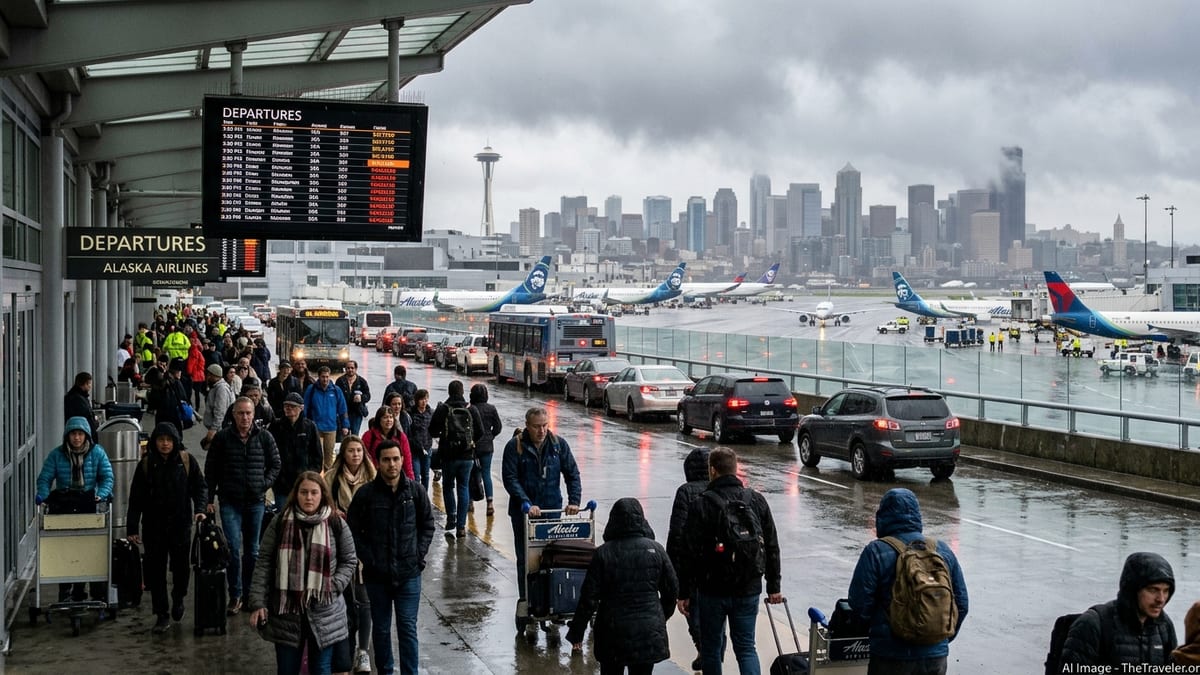
Storm system slows late‑weekend returns on roads and in the air
The National Weather Service forecast a broad low‑pressure system stretching from the Midwest into the East Coast on Sunday into Monday, bringing periods of steady rain, gusty winds and pockets of snow to key travel corridors. Forecasters warned that heavier bands of rain and isolated thunderstorms were likely along parts of the Interstate 95 corridor overnight into Monday morning, raising the risk of reduced visibility and localized flooding for motorists heading home late in the holiday weekend.
Across the Midwest, colder air behind the front was expected to mix rain with wet snow in some areas, particularly across higher elevations and the Upper Great Lakes. While major accumulations were not widely forecast, forecasters cautioned that slushy conditions and falling temperatures could still affect driving conditions and regional flights, especially at smaller airports with more limited de‑icing capacity.
On the West Coast, a separate Pacific system was forecast to bring periods of heavy rainfall to parts of Northern California, the Pacific Northwest and portions of the interior Northwest into Monday. That raised the possibility of weather‑related delays at hubs like Seattle and San Francisco, particularly during the Monday morning commute as some travelers squeezed in last‑minute returns beyond the core Thanksgiving window.
TSA expects Sunday to be peak of a 17.6 million‑passenger week
The Transportation Security Administration entered the final day of the Thanksgiving travel period expecting Sunday, November 29, to be the single busiest screening day of the week. In a forecast published ahead of the holiday, TSA projected it would screen about 17.6 million passengers nationwide between Tuesday, November 24, and Monday, November 30, with more than 3 million of those passengers expected on Sunday alone.
Agency data indicate that the Sunday after Thanksgiving has been the busiest air travel day of the year in every recent, non‑pandemic year. TSA set its all‑time single‑day record on Sunday, November 30, 2025, when more than 3.13 million passengers passed through airport checkpoints. Early indicators from TSA and aviation analytics firms suggested that 2026 volumes would come close to, but may not exceed, that record, in part because overall passenger throughput this autumn has trended a few percentage points below last year.
TSA officials said ahead of the holiday that they had staffed checkpoints to handle peak volumes and reiterated standard advice for travelers. The agency urged passengers to arrive early, allowing extra time for parking, airline check‑in and security screening, especially at large hubs where early‑morning and late‑afternoon departure banks typically see the longest lines during holiday peaks.
Heavy traffic on highways despite slightly softer AAA forecast
The highway network also remained busy on Sunday as drivers returned from family visits and long‑weekend trips. AAA projected that about 81.5 million people in the United States would travel at least 50 miles from home between Tuesday, November 24, and Monday, November 30. That forecast was marginally lower than last year’s estimate, a change AAA partly linked to higher travel costs, including increased airfares and elevated fuel prices.
Even with the slight dip in the forecast, state transportation departments anticipated heavy volumes on key interstate corridors throughout Sunday afternoon and evening, particularly on routes feeding major metropolitan areas. Several agencies advised drivers to build in extra time and to avoid peak return windows where possible. Real‑time traffic data on navigation apps showed recurring congestion around major bottlenecks, including approaches to urban ring roads, mountain passes and popular coastal destinations.
Some states used the occasion to reinforce safety messages. In Maine, the state Department of Transportation deployed humorous electronic message signs with Thanksgiving‑themed slogans such as “Eyes on the road, not pie” and “Mash potatoes not the gas,” aiming to encourage attentive driving as vehicles queued on the state’s main north–south highway. In Florida, transportation officials focused on sobriety warnings tied to the weekend’s college football rivalry games, reminding fans traveling to and from stadiums that arranging a sober ride home should be part of their game‑day plans.
Thanksgiving travel follows month of aviation tech failures
This year’s Thanksgiving rush came less than three weeks after a nationwide Federal Aviation Administration ground stop that halted most U.S. departures on Friday, November 13. According to the FAA’s subsequent explanation, the agency ordered the nationwide ground stop after communications and surveillance data problems spread beyond an initial fault reported in the Chicago area, affecting multiple air route traffic control centers across the national airspace system.
The FAA has described the November 13 event as the most extensive nationwide halt to U.S. flight departures in roughly a quarter of a century. Preliminary findings made public by the agency indicate that instability in legacy equipment was triggered when a newly installed router began sending thousands of unexpected connection attempts across a key telecommunications network, overwhelming older systems at several facilities. While critical traffic such as emergency, military and certain life‑saving flights continued, most commercial and general aviation departures were temporarily frozen for several hours.
The ground stop was followed within days by separate technology outages at major U.S. carriers. United Airlines and Delta Air Lines each reported system disruptions that temporarily affected check‑in, flight planning or dispatch operations, causing hundreds of delays and some cancellations. Regulators and the airlines have not indicated any direct link between the FAA network failure and the airline‑specific outages, but the cluster of incidents has sharpened attention on the resilience of aviation IT systems during one of the busiest travel periods of the year.
Delays, cancellations and what travelers should watch next
Flight tracking services reported elevated levels of disruption across the U.S. network as the Thanksgiving period drew to a close. On Saturday, November 28, thousands of U.S. flights experienced delays and several hundred were canceled as airlines and airports coped with high demand, aircraft repositioning after earlier disruptions and emerging weather issues in some regions. Early tallies on Sunday pointed to another day of significant delays and cancellations, with conditions varying widely by airport and time of day.
Historical data from federal transportation statistics show that the Sunday after Thanksgiving consistently ranks as one of the worst days of the year for on‑time performance. In the 2023 to 2025 Thanksgiving periods, roughly one‑third of U.S. flights on the Sunday after the holiday arrived at least 15 minutes late, a rate several times higher than on Thanksgiving Day itself. Late‑evening departures and flights passing through congestion‑prone hubs have typically been the most vulnerable to knock‑on delays.
Rail operators also faced pressure. Amtrak said in a November advisory that Thanksgiving is its busiest travel period and noted that it carried more than 1.2 million customers during the 2025 Thanksgiving window, a record for the company. For 2026, Amtrak signaled that demand was again tracking at or above last year’s levels in some corridors and urged passengers to book early and to arrive at stations ahead of departure time to allow for boarding and baggage procedures.
As holidaymakers complete their return journeys, travel agencies, airlines and transport authorities are turning attention to the upcoming December holiday period. Many of the same pinch points seen over Thanksgiving, including late‑day Sunday peaks, staffing‑sensitive operations and the interaction of winter storms with already tight schedules, are expected to shape Christmas and New Year travel. Travelers planning year‑end trips are being advised to monitor airline, rail and highway updates closely, consider early‑morning departures when possible, and build flexibility into itineraries in case weather or lingering system issues trigger further disruption.