


More news on this day
The 2026 Thanksgiving travel rush began winding down on Sunday, November 29, with millions of Americans heading home through pockets of heavy rain, thunderstorms and mountain snow while airlines, airports and passengers remained alert for further technology glitches less than three weeks after a nationwide Federal Aviation Administration ground stop disrupted flights across the United States.
Get the latest news straight to your inbox!
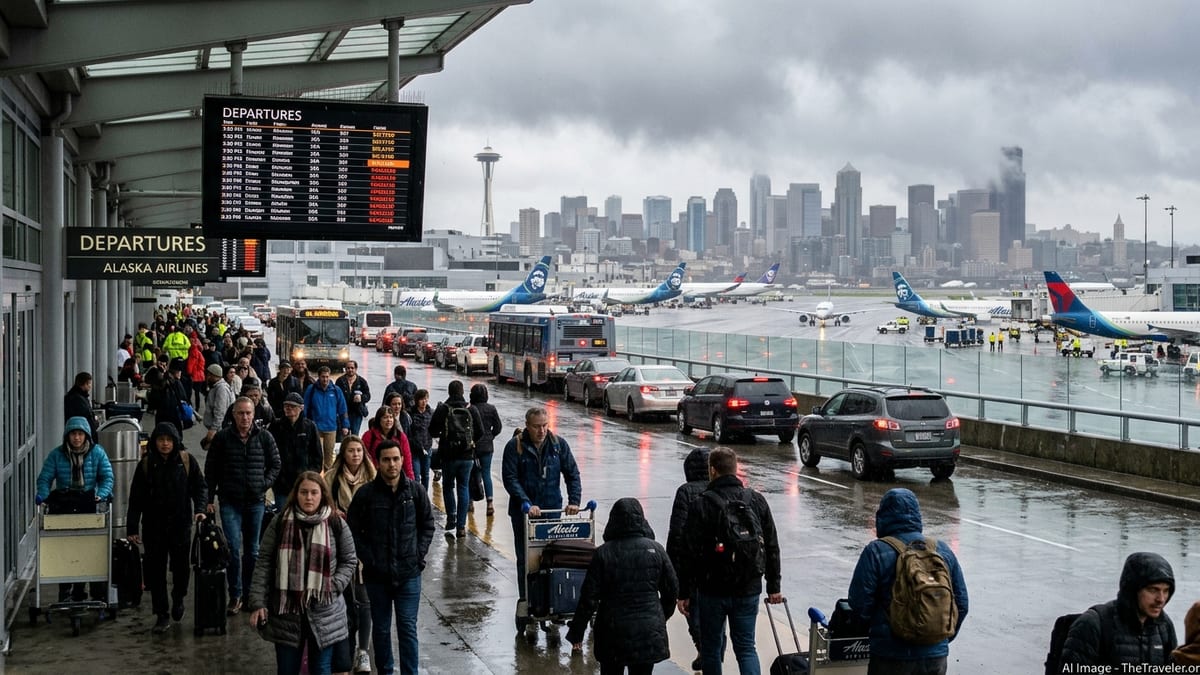
Storm systems complicate the trip home
As the long holiday weekend closed, a series of low pressure systems and frontal boundaries were moving across the country, creating challenging conditions on some of the busiest highways and air corridors. Short-range discussions from the National Weather Service’s Weather Prediction Center for Sunday into Monday highlighted areas of heavy rain along a cold front stretching from the Ohio Valley into the Southeast and central Gulf Coast, with embedded thunderstorms and locally stronger wind gusts. Over the northern Plains and parts of the Upper Midwest, colder air behind the front supported areas of accumulating snow, particularly at higher elevations and in open country where winds could reduce visibility.
Farther west, forecasters expected a new Pacific system to send another round of moisture into the Pacific Northwest and northern California late Sunday into Monday, with coastal and upslope locations most likely to see several inches of rain over the full event and high-elevation snow in the Cascades and northern Rockies. Forecast graphics issued over the Thanksgiving period showed a broad swath of rain and mixed precipitation progressing from the central United States toward the East Coast through the weekend, with lingering showers and gusty winds in New England as the main coastal low moved away.
For travelers, that translated into wet, and in some cases stormy, drives on key road corridors in the Appalachians, Mid-Atlantic and Southeast, along with the risk of low clouds, turbulence and deicing delays at some hub airports. The Weather Prediction Center’s hazard outlooks pointed to heavy rain risk over portions of the Great Lakes and eastern U.S. late in the weekend, while separate outlooks from the Storm Prediction Center indicated a marginal risk of severe thunderstorms in parts of the Ohio Valley and Mid-South as the cold front pushed south and east.
Air travel volumes test a stressed system
Even with unsettled weather, airlines and airports were primarily focused on managing sheer volume. The Transportation Security Administration projected ahead of the holiday that it would screen about 17.6 million passengers nationwide between Tuesday, November 24, and Monday, November 30, with Sunday, November 29, expected to be the single busiest day at more than 3 million travelers. That forecast would put the week close to, but slightly below, the record 17.77 million passengers screened over the Thanksgiving period in 2025, when TSA handled 3.13 million people on the Sunday after the holiday.
Preliminary third-party analyses of TSA’s daily screening data for this autumn have shown checkpoint volumes running a few percentage points below last year in many weeks, reinforcing expectations that 2026 would be another very busy but not record-breaking Thanksgiving. Industry data sites that track holiday travel patterns noted that TSA had not yet surpassed the 3 million passengers-in-a-day mark in 2026 prior to Thanksgiving week, topping out just under that figure in June, which added interest to whether the post-holiday Sunday would become the first 3 million-plus day of the year once final numbers are published on Monday, November 30.
Sunday also capped what federal officials described as an intense operational stretch for the aviation system. U.S. Transportation Department updates last week highlighted that, on Tuesday, November 24, air traffic controllers handled roughly 52,000 flights nationwide, a 16-year high for a single day. The Federal Aviation Administration’s traffic statistics for the Thanksgiving period typically show the Wednesday before and the Sunday after the holiday as the heaviest days for flight counts and passenger loads, and early reports from major hubs such as Dallas–Fort Worth and Denver indicated that both airports expected to surpass last year’s passenger totals for the same November window.
Technology failures still fresh in travelers’ minds
This year’s end-of-holiday rush came less than three weeks after a rare nationwide FAA ground stop on Friday, November 13, that halted nearly all U.S. airline departures for close to five hours. According to an FAA question-and-answer document and briefings from Transportation Secretary Sean P. Duffy and FAA leadership, the outage was triggered by a telecommunications failure affecting multiple air traffic control centers, tied to the modernization of the agency’s communications network used for radar and radio links. The disruption forced airlines to cancel more than 12,000 flights in total as operations were gradually restored, and has been described by federal officials and independent analysts as the most extensive national ground stop since the measures imposed immediately after the September 11, 2001 attacks.
Congressional researchers and aviation specialists reviewing the event have pointed to the incident as a case study in the risks created when legacy systems interact with new routing and networking equipment. An early technical assessment by the FAA indicated that new routers installed at facilities in Arkansas and Texas began sending an unexpectedly high volume of data through the Federal Telecommunications Infrastructure network, overwhelming older systems at 17 affected facilities and leading to unstable communications. While safety-critical channels allowed aircraft already in the air to land, the agency ordered a full stop to new departures until communications were verified as stable.
In the days that followed, the FAA said it had implemented temporary safeguards and was examining its modernization timelines, while members of Congress requested briefings and potential recommendations. The November 13 ground stop coincided with, and was followed by, a separate Microsoft Outlook disruption and individual outages at private companies, including United Airlines and Delta Air Lines later in the month, although public summaries from federal agencies and the affected companies have not identified any direct technical link between those events. For passengers preparing to travel home on the Sunday after Thanksgiving, the string of incidents remained a concern, even as airlines emphasized redundancy and contingency plans in public travel advisories.
Delays and cancellations accumulate over the holiday period
The challenging mix of weather, volume and system stress translated into a significant number of delayed and canceled flights as the holiday weekend unfolded. FlightAware, a major flight-tracking service, reported nearly 4,300 flight delays within, into or out of the United States and several hundred cancellations on Saturday, November 28, alone. By early Sunday afternoon, the service’s live boards still showed elevated levels of disruption, with hundreds of additional cancellations and thousands of flights running late as airlines worked to reset schedules and reposition aircraft and crews.
Those figures continued a pattern seen around other major holidays in recent years, where relatively small percentages of overall flights affected can still mean long lines and missed connections for tens of thousands of individual travelers. In 2025, for example, federal data compiled in a subsequent analysis showed that more than one in five departures from some large hub airports were delayed during the combined November and December peak travel window, even though nationwide on-time performance remained close to seasonal norms.
Rail and road networks were also heavily used, though large-scale disruptions were more localized. Amtrak stated before the holiday that it expected to surpass the 1.2 million trips it handled during the 2025 Thanksgiving period, scheduling additional services on high-demand routes such as the Northeast Corridor and busy state-supported lines in California and the Midwest. AAA, which predicted that about 81.5 million Americans would travel at least 50 miles from home between November 24 and November 30 across all modes, forecast a modest dip in road trip numbers compared with last year, attributing the change in part to higher fuel prices. However, state transportation agencies in regions including New England, Texas and Colorado still warned of sustained congestion on interstates and key regional routes, particularly on Sunday afternoon and evening.
How travelers and agencies adjusted on one of the year’s busiest days
With the combination of unsettled weather, recent technology failures and record-or-near-record passenger loads, transportation agencies and operators leaned on both practical and public messaging strategies to manage Sunday’s return traffic. The TSA reiterated guidance issued earlier in the week for passengers to arrive at the airport at least two hours before domestic flights and three hours before international departures, with extra time built in at the largest hubs. The agency highlighted that many of the nation’s busiest airports now offer live security wait-time tools through mobile apps or terminal displays, giving travelers a way to adjust their arrival time or choose alternate checkpoints.
On the roads, state transportation departments used overhead message boards and social media feeds to push both safety and traffic advice. In Maine, the Department of Transportation continued its habit of deploying light-hearted holiday-themed safety messages, including lines reminding drivers to keep their eyes on the road instead of leftover pie and to “mash potatoes not the gas.” In contrast, Florida’s transportation and public safety agencies focused their Sunday messaging on sober driving and safe returns from a packed college football rivalry weekend, advising fans to plan designated drivers or use ride-hailing services when returning from stadiums.
Some metropolitan areas also activated holiday traffic-management plans that rely on reversible lanes, ramp metering and real-time signal adjustments to smooth afternoon and evening flows. While those systems are largely invisible to travelers, city and state briefings ahead of the weekend emphasized that staffing levels for traffic operations centers, highway patrols and incident-response teams would be elevated through Sunday night to clear stalled vehicles and minor crashes more quickly.
What travelers should watch for after the Thanksgiving peak
Once TSA publishes final daily screening totals for Sunday, November 29, officials and analysts will be able to confirm whether 2026 set any new records for single-day or full-week Thanksgiving air travel. Regardless of the final numbers, federal data already confirm that the holiday period maintained its position as one of the busiest stretches of the travel year, compressing summer-like airport volumes into a single week. The performance of airlines and the national airspace system under that stress, and the way they managed delays linked to both weather and infrastructure, are likely to inform congressional and regulatory discussions in the coming months on issues ranging from FAA modernization funding to passenger protections.
For travelers, the immediate next step after Sunday’s return rush will be monitoring for residual disruption on Monday, November 30, as aircraft and crew rotations continue to normalize. Flight tracking platforms and airline status tools historically show elevated delay and cancellation rates on the Monday after Thanksgiving, although generally below Sunday’s peaks. Passengers with flexible schedules may see Monday or Tuesday departures as a less congested alternative, but should still build in extra connection time at large hubs where weather or earlier disruptions could have lingering effects.
Looking ahead to the December and New Year holidays, travel agencies and federal forecasters recommend a few tactics that proved useful over Thanksgiving. These include booking early-morning flights, when departure banks are less exposed to upstream delays; leaving wider margins for connections in weather-sensitive hubs; and checking both airline apps and independent flight trackers for real-time updates if a major outage or ground stop is reported. As with this weekend’s storms, the National Weather Service and its local forecast offices will continue to issue updated outlooks for heavy rain, snow and severe weather several days in advance, allowing travelers to adjust plans where possible when the next big holiday getaway approaches.