


More news on this day
America’s busiest Thanksgiving return rush is unfolding under unusual strain, with U.S. officials warning that record flight volumes, lingering storm damage on the East Coast and a magnitude‑5.0 earthquake near Los Angeles International Airport could continue to disrupt air and ground travel through Tuesday.
Get the latest news straight to your inbox!
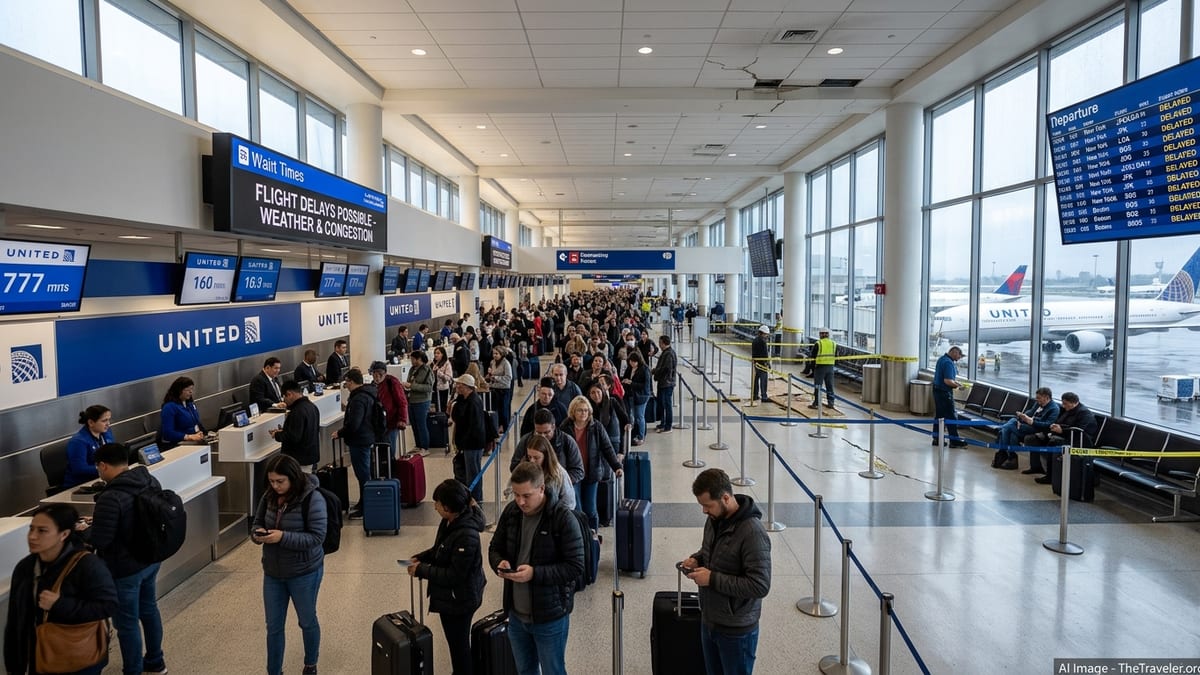
Record Thanksgiving flight volumes test U.S. aviation system
The U.S. Department of Transportation says the national air network is operating near capacity as millions of travelers head home at the end of the long weekend. Federal data released in the run‑up to the holiday showed about 52,000 flights scheduled on Tuesday, November 24, the busiest U.S. flying day in roughly 16 years, and transportation officials now expect more than 50,000 daily flights from Sunday, November 29, through Tuesday, December 1, as the return wave peaks.
Transportation Secretary Sean P. Duffy has compared the Thanksgiving period to the “Super Bowl” of U.S. air travel and has urged passengers to treat published schedules as subject to change. In public briefings, he has credited airline, airport and air traffic control teams with keeping most traffic flowing despite difficult weather and has stressed that even a modest new disruption can have outsized effects when airlines are running almost full holiday schedules with limited spare aircraft and crew.
Preliminary delay breakdowns shared by federal officials point to weather as the dominant driver of recent disruptions, followed by airspace congestion and staffing and equipment constraints within the air traffic control system. Those proportions align with patterns seen in past holiday periods, when storms affecting a few key hubs can ripple across networks that connect dozens of cities. While there is no forecast for a nationwide ground stop similar to the FAA technology‑related halt earlier this month, authorities have warned that localized bottlenecks could emerge quickly if adverse conditions overlap with peak departure windows.
Thanksgiving coastal storm leaves outages and historic parade delay
The warning over return‑travel disruptions follows a powerful coastal storm that swept across the eastern United States on Thanksgiving Day, Thursday, November 26. The system brought heavy rain, damaging winds and coastal flooding from the Mid‑Atlantic into New England, downing trees and power lines and slowing travel on major corridors. Utility tracking services reported that close to 1 million customers were without electricity at the height of the outages on Thursday evening, with hundreds of thousands still off the grid into Friday as crews worked to repair damage.
Aviation operations along the storm’s path were significantly affected. By late Thursday, flight‑tracking services recorded more than 2,000 delays and several hundred cancellations involving U.S. airports, concentrated in major East Coast hubs where traffic management initiatives such as ground delays and rerouted arrival flows were implemented to keep operations safe in high winds and low visibility. Many of the affected flights were able to depart later in the day, but crews and aircraft frequently ended up out of position, contributing to residual knock‑on delays on Friday and Saturday.
In New York City, the impact was most visible in the rare postponement of the Macy’s Thanksgiving Day Parade. City and company officials announced on Wednesday evening, November 25, that the 100th running of the parade would be pushed to Saturday, November 28, citing forecasts for strong winds, heavy rain and coastal flooding that raised safety concerns for the event’s giant balloons, participants and spectators. Municipal notices and subsequent coverage confirm that it was the first time in the parade’s century‑long history that weather forced the entire event off Thanksgiving Day rather than prompting adjustments to balloon handling.
The rescheduled parade stepped off in Manhattan on Saturday morning under cloudy but calmer skies, following revised street‑closure plans issued by the city. Marching bands, school groups and performance troupes that had planned tight itineraries around a Thursday appearance reported having to rearrange hotel nights, charter buses and return flights on short notice. Some groups indicated that sponsors or parent associations were helping cover the unexpected costs created by the two‑day delay, while others shortened their New York stay to keep within existing budgets.
Magnitude‑5.0 earthquake near LAX triggers inspections but limited disruption
While East Coast travelers were dealing with rain and wind, passengers in Southern California experienced a different kind of disruption on Saturday, November 28. According to the U.S. Geological Survey’s preliminary assessment, a magnitude‑5.0 earthquake struck beneath Santa Monica Bay at about 9:30 a.m. local time, roughly 3 miles off Manhattan Beach and within the broader Los Angeles metropolitan area. USGS products show the event occurring at a shallow depth with shaking widely felt across Los Angeles County and in parts of neighboring regions, followed by dozens of aftershocks through the day.
Los Angeles International Airport reported structural but non‑life‑threatening damage inside at least one terminal complex. Local television footage and airport social media updates showed shattered overhead windows and scattered glass along a pedestrian link near Terminal 7, an area heavily used by United Airlines passengers. Airport staff quickly cordoned off affected walkways while engineers and local fire officials carried out standard post‑quake inspections of terminals, runways, taxiways and utility systems to verify that critical infrastructure was safe.
For travelers in the air and on the ground, the immediate impact was a brief operational pause rather than a prolonged shutdown. Witnesses at LAX reported a sharp jolt and noted that some arriving aircraft broke off their approaches and conducted go‑arounds as the shaking began. Flight‑tracking data and airline statements indicate that carriers temporarily held some departures and arrivals in the air until checks of runways and key facilities were completed. By early afternoon, most flight operations at LAX had resumed with only limited residual delays, although several airlines introduced flexible rebooking policies for customers traveling through Los Angeles in case aftershocks or inspection work caused localized disruptions.
Beyond the airport, local authorities said they were checking a wide range of infrastructure, including freeway overpasses, port facilities and rail lines, consistent with standing protocols following any moderate quake near a major urban area. As of Sunday morning, there were no confirmed reports of serious injuries linked to the event, and there were no indications of major damage that would force extended closures at LAX or other transport hubs. Officials have nonetheless cautioned that additional aftershocks remain possible and that travelers should be prepared for short‑notice changes if inspections reveal new issues.
How the combined disruptions are affecting the Thanksgiving return rush
The timing of both the East Coast storm and the Southern California earthquake has complicated what is already projected to be the busiest stretch of the Thanksgiving period. The Transportation Security Administration expects to screen more than 3 million passengers on Sunday, November 29, which would make it the single heaviest day for airport security checkpoints during this year’s holiday. Busy conditions are also forecast to continue on Monday and Tuesday as travelers on flexible schedules delay their return to avoid Sunday’s peak crowds.
Airports in the Northeast corridor and Mid‑Atlantic that were most exposed to Thursday’s storm are now handling multiple pressures at once. Terminals are processing unusually high passenger volumes while still dealing with some residual staffing challenges, equipment issues and, in certain cases, minor water intrusion or power‑backup problems tied to the earlier weather. This raises the risk that even relatively small fresh weather disturbances, such as bands of heavy rain or pockets of low cloud, could again slow arrivals and departures and create queues at security, baggage claim and taxi stands.
Chicago, Atlanta and several major Florida gateways are also identified by federal aviation planners as potential pinch points over the next three days. Forecasts indicate that parts of the Midwest and Northeast could see rain, snow or thunderstorms at times between Sunday and Monday, with the possibility of gusty winds that may trigger new traffic management measures. Because airlines are operating near their maximum planned holiday capacity, there is limited slack in the system to reposition aircraft or reassign crews once delays start to accumulate, meaning that a disruption in one part of the network can still cascade into missed connections and rolling delays elsewhere.
On the ground, the Thanksgiving storm’s aftermath is continuing to affect road and rail journeys in parts of the East. Flooded or debris‑strewn local streets have slowed access to some suburban rail stations and airports, and isolated power outages have temporarily taken traffic lights or station facilities offline. Several commuter and intercity rail services in the Northeast and Mid‑Atlantic have reported slower operations or minor delays linked to trees on tracks, signal issues and ongoing electrical repairs. Operators say they are working to restore normal timetables as quickly as conditions allow but caution that some services may still be subject to short‑notice changes through the early part of the week.
What travelers should check in the coming days
With the Thanksgiving return wave at its peak and multiple sources of disruption still in play, officials are advising travelers to verify plans repeatedly rather than assuming that original itineraries will operate exactly as booked. Airlines are updating schedules throughout the day as they recover from earlier storms, factor in the operational effects of the Southern California earthquake and respond to evolving weather forecasts. Many carriers have introduced temporary change‑fee waivers or flexible travel policies for passengers booked through affected hubs, particularly in the Northeast and at Los Angeles, but the precise terms vary and may change as conditions stabilize.
Passengers preparing to fly on Sunday, Monday or Tuesday are being encouraged to use airline apps and opt in to text or email alerts to track real‑time gate assignments, boarding times, aircraft changes and rolling delays. Where feasible, officials recommend allowing extra time to reach the airport, particularly at large hubs where access roads may still be affected by flooding or repair work. Travelers with connections through multiple hubs may wish to consider longer layovers or earlier departure times to provide a buffer against possible weather or congestion‑related slowdowns.
Rail and road users are receiving similar guidance. Intercity rail operators and local transit agencies are publishing service updates throughout the day as they complete inspections and clear remaining storm debris. Motorists are being urged to check navigation and traffic apps for reports of road closures, downed trees or non‑functioning traffic lights, especially in coastal and riverfront areas that experienced the worst flooding on Thanksgiving Day. Drivers should also account for slower‑than‑usual traffic near major airports and highway interchanges during peak return periods on Sunday afternoon and Monday evening.
Looking beyond the immediate rush to get people home, federal transportation agencies and local authorities have signaled that they will conduct detailed reviews of how the system handled this year’s combination of record flight volumes, a significant coastal storm and a moderate earthquake near one of the country’s busiest airports. Any formal changes to procedures, infrastructure standards or contingency planning will come later, after those assessments are completed. For now, officials say, the priority is to move the remaining Thanksgiving travelers safely and to keep them informed as conditions continue to evolve in the days ahead.