


More news on this day
Thousands of air travelers have been forced to sleep on terminal floors from London to Turkey and Miami this week, as a fresh wave of cancellations and knock-on delays leaves airlines struggling to move passengers and aircraft into the right place.
Get the latest news straight to your inbox!
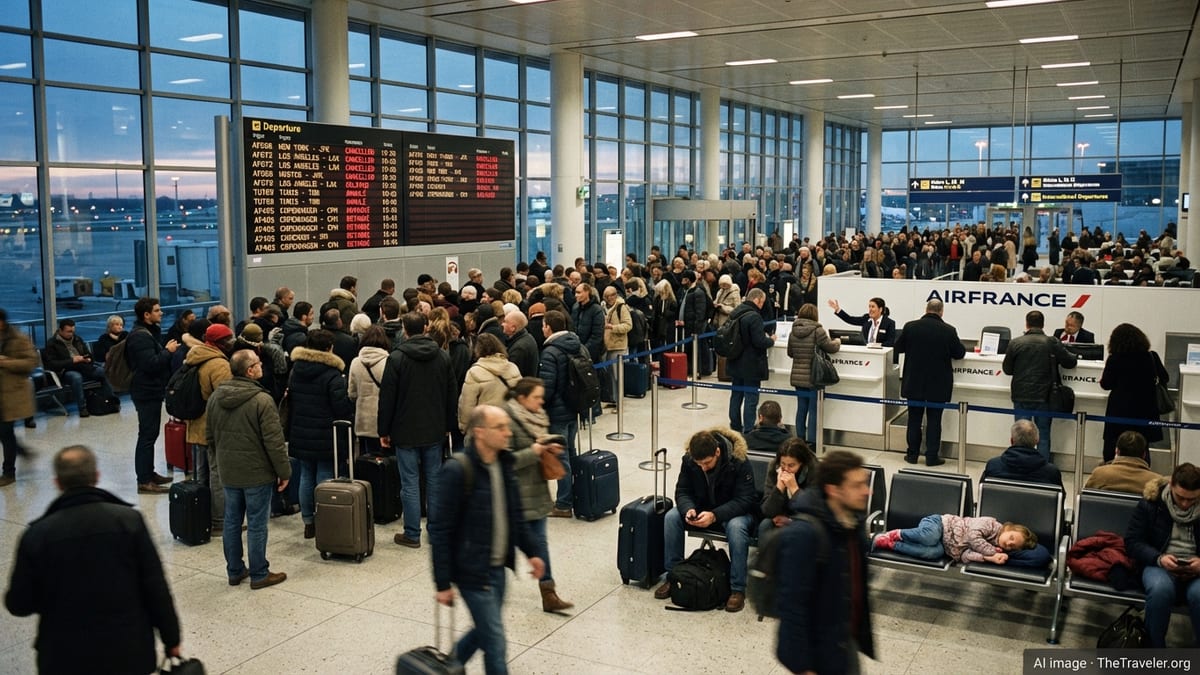
UK air traffic control failure leaves terminals packed overnight
A major technical failure at the United Kingdom’s National Air Traffic Services on Tuesday triggered widespread disruption that continued into Thursday, with reports indicating at least 2,000 flights were canceled and many more delayed across Heathrow, Gatwick, Manchester, Stansted and regional airports.
According to aviation analytics shared in published coverage, cancellations began after a fault in the flight data processing system forced restrictions on movements in UK airspace. The initial outage has been resolved, but the resulting backlog of aircraft and crews has rippled through the network, leaving tens of thousands of travelers waiting for rebooked flights and onward connections.
Images from Heathrow and Gatwick show passengers lying on thin blankets or directly on the floor, clustered around power outlets and departure boards as they wait for updates. Local travel reports describe families sleeping beside luggage trolleys and using jackets, yoga mats and even inflatable pool lilos as makeshift bedding while overnight accommodation remains scarce or fully booked.
Heathrow-focused coverage notes that more than 170 additional flights were canceled on Wednesday alone, after hundreds of services were already cut on Tuesday. Websites tracking operations at the airport indicate that major carriers, including British Airways, had to ground or divert more than 100 flights, compounding pressure on limited gate space and customer service desks.
Stranded passengers recount nights on airport floors
Accounts compiled by broadcasters, newspapers and online forums highlight how quickly normal operations gave way to scenes of improvised overnight camps inside terminals. At Heathrow’s Terminal 5, Australian travelers heading to Iceland and onward to Asia described waiting through repeated schedule changes before finally being told their flights would not depart, leaving them to sleep on the concourse with plastic cups of water and snack boxes.
At Gatwick, regional news outlets published photos of travelers stretched out across tiled floors near baggage carousels and check in zones. Some passengers said they were initially instructed to leave secure areas while staff tried to regroup operations, only to find limited information on rebooking options and no clear guidance on where to rest while they waited.
Further afield, cancellations affecting UK-bound flights left holidaymakers stuck in overseas airports well into the night. Coverage from Dalaman in Turkey describes “absolute chaos” as returning travelers faced the cancellation of late night services to Manchester, with families reporting that children slept on blow up mattresses and terminal benches until morning.
Online travel communities and airline specific discussion boards show similar stories from passengers who say they could not secure hotel rooms near London airports as disruption unfolded. Several described being rebooked 24 hours later and weighing whether to leave the airport to search for accommodation or stay close to departure gates on the floor in case of further last minute changes.
Ripple effects felt from Europe to the United States
While the UK air traffic outage has been the most high profile trigger for mass cancellations this week, it is not the only cause of passengers sleeping in terminals. In Indonesia, a recent volcanic eruption led to blanket suspensions of flights at Jakarta’s main international airport and several regional hubs, stranding what authorities there estimated as around 170,000 travelers over several days.
In the United States, a separate disruption at Miami International Airport earlier in the week led to mounting delays and cancellations after a cargo aircraft overran a runway, temporarily shutting all operations while emergency crews responded. Local television footage showed passengers dozing on benches and on the floor near darkened ticket counters as airlines worked through the resulting backlog.
These overlapping events highlight how vulnerable global aviation remains to unexpected shocks, whether from technical failures, severe weather, natural hazards or incidents on or near runways. Once a major hub is constrained, aircraft and crew schedules can quickly become misaligned, triggering cancellations far from the original point of failure and creating clusters of stranded travelers who must scramble for accommodation.
Travel analysts quoted in recent industry coverage note that high passenger volumes, close to or above pre pandemic levels in many markets, leave little slack in the system when problems arise. With aircraft flying near full and short haul routes heavily booked, rebooking options can be limited for days, making overnight airport stays more likely when large numbers of flights are lost in a short window.
Limited hotel options raise questions about passenger care
The scenes of travelers bedding down on hard floors have renewed debate about how airlines and airports support passengers during large scale disruption. Consumer sites and travel rights advocates point out that European regulations require carriers to provide care, such as meals and hotel rooms, when cancellations are within an airline’s control, but obligations can be different when events are classified as extraordinary, such as air traffic control failures or volcanic ash.
Reports from UK airports indicate that some passengers received hotel vouchers or advice to book their own rooms and claim reimbursement later, while others said nearby accommodation quickly sold out or became prohibitively expensive. In online discussions, travelers described struggling to find rooms under several hundred pounds a night near London, leading many to remain in terminals despite exhaustion.
Airport operators have emphasized in public statements that they are not directly responsible for rebooking or compensation decisions, which rest with individual airlines. However, images of crowded concourses and long lines at information points have prompted questions over whether contingency plans for mass disruption provide sufficient seating, rest areas and basic supplies for passengers who have no realistic alternative but to stay overnight.
Some travelers commenting on the latest events argue that, while large scale outages will always be disruptive, clearer communication and more visible staffing at key moments could reduce confusion and anxiety. Others highlight that passengers with mobility issues, young children or limited financial means often bear the brunt of inadequate support when forced to improvise sleeping arrangements on terminal floors.
What travelers can do when cancellations cascade
As airlines work through the latest backlog, travel experts cited in recent guidance recommend that passengers facing cancellations first confirm their booking status directly through airline apps or websites before heading to the airport. Published advice stresses that travelers who are already checked in or in transit should monitor push notifications closely and seek written confirmation of new itineraries when possible.
For those already stranded, industry information suggests checking whether an airline will arrange hotel accommodation or transport, particularly in cases where the disruption is within the carrier’s control. Where local hotels are full, some passengers may still be entitled to meal vouchers or reimbursement for reasonable expenses, depending on jurisdiction and the cause of the cancellation.
Specialist consumer groups also advise keeping detailed records of receipts, boarding passes and messages exchanged with airlines to support any later claims. In parallel, they recommend evaluating alternative routes, including departures from nearby airports or travel on partner airlines, while being mindful that high demand may push fares up quickly after major disruptions.
With the latest wave of cancellations still playing out, published schedules show that delays and further cuts remain possible as aircraft and crews are repositioned. For now, images of passengers sleeping in brightly lit concourses from London to Miami underscore how even short lived system failures can translate into long, uncomfortable nights for travelers caught in the middle.
ABC News: UK airport chaos continues as investigation ordered
Heathrow Airport Guide: Passengers stranded overnight as more flights canceled
LBC: More than 1,300 flights cancelled with passengers forced to sleep in terminals
AP News: Travel chaos at UK airports after air traffic control issue
CBS Miami: Delays and cancellations mount at Miami International Airport