


More news on this day
Hundreds of thousands of airline passengers have been left stranded or facing hours-long queues after a technical failure in the United Kingdom’s air traffic control systems forced the cancellation and delay of flights across Europe.
Get the latest news straight to your inbox!
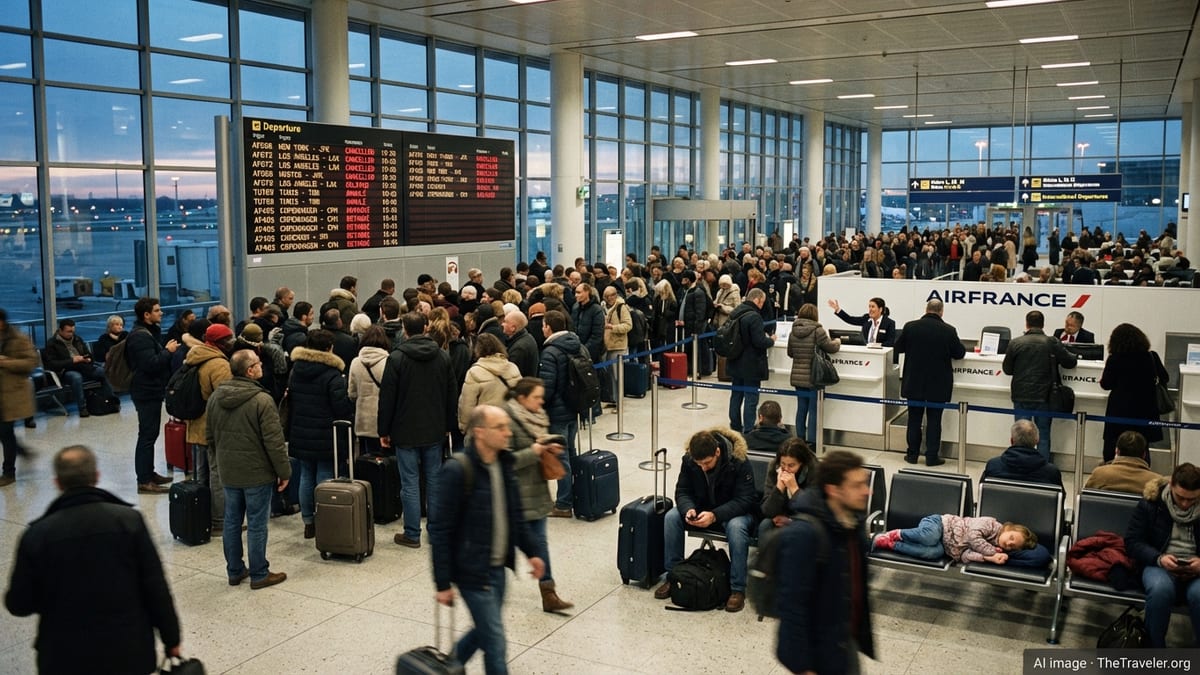
Bank holiday breakdown triggers widespread disruption
Travel disruption began on 28 August 2023, a busy summer bank holiday, when National Air Traffic Services (NATS) experienced a failure in its automated flight-planning subsystem used to process flight data for UK airspace. Reports indicate that the system fault significantly reduced the rate at which flight plans could be handled, forcing controllers to switch to manual input methods and sharply restricting the number of aircraft that could be safely managed.
According to published coverage and flight-tracking data, hundreds of flights to and from the UK were cancelled on the day of the outage, with estimates rising to around 1,200 cancellations by the evening and many more suffering substantial delays. Airports including London Heathrow, Gatwick, Stansted, Manchester, Dublin and others across Europe reported knock-on congestion as aircraft, crews and passengers were left out of position.
NATS stated that the underlying technical issue was identified and remedied within hours, but capacity constraints and the need to re-sequence flights meant that disruption continued well beyond the initial failure. Publicly available information from the UK Civil Aviation Authority (CAA) notes that the incident ultimately affected more than 700,000 passengers and caused significant operational and financial impacts for airlines and airports.
Despite the rapid restoration of core systems, industry bulletins highlight that the combination of peak-season traffic, limited spare aircraft and crew duty-time limits ensured that delays and cancellations stretched into subsequent days, particularly for leisure destinations with less frequent service.
Stranded passengers and days of knock-on delays
Reports from major hubs describe long overnight queues, crowded terminal floors and passengers sleeping in departure halls as airlines worked to clear the backlog. Published coverage from UK and Irish media indicates that some travellers were told to expect delays of eight to twelve hours, while others saw their flights cancelled outright with replacement services unavailable for several days.
Because the outage struck late in the summer holiday period, large numbers of passengers were returning from European beach destinations and city breaks. Case studies compiled for a CAA-commissioned review into the passenger experience describe families stuck abroad while searching for scarce hotel rooms, as well as travellers forced to piece together complex alternative routes using rail and ferry services after being unable to secure new flights.
In Ireland and other European countries within the UK-controlled airspace network, airports reported similar scenes, with dozens of services either grounded or heavily delayed as operators attempted to reroute aircraft around the bottleneck. Local media accounts from Dublin and other regional airports highlight how quickly departure boards filled with cancellations as the scale of the technical issue became clear.
Even after the immediate crisis eased, publicly available passenger surveys show that many travellers arrived home days later than planned, in some cases incurring substantial out-of-pocket costs for accommodation, meals and replacement transport.
What went wrong inside the UK flight-planning system
Subsequent technical analysis, published by the CAA through an independent review panel, traces the disruption to a failure in the flight-planning subsystem used by NATS to automatically process and distribute flight plans. According to the review, an unusual but valid flight plan triggered a software failure that forced the system offline, requiring controllers to revert to slower, manual methods.
When automated processing stopped, air traffic control units had to enter and verify flight details by hand, significantly lowering throughput. Industry summaries note that, although there was no compromise to safety, the reduced capacity meant that many flights were delayed at departure or cancelled entirely, even after the root cause was corrected.
The independent review points to weaknesses in system resilience and the handling of rare data scenarios, recommending a series of technical and governance changes intended to reduce the risk of a similar outage. These include improving data validation, enhancing backup processes and strengthening oversight of critical software updates and testing.
The incident has drawn renewed attention to the complexity of modern air traffic management, where highly automated systems are designed to run at near-continuous high capacity. The events of August 2023 highlighted how a single point of technical failure can cascade across an interconnected European network, with disproportionate consequences for passengers.
Passenger rights and airline obligations during major delays
As travellers struggled to rebook flights and find accommodation, questions quickly emerged about what support passengers were entitled to receive. Guidance from the UK Civil Aviation Authority, issued in the days following the failure, underlines that airlines remain responsible for looking after customers during disruption, even when the cause lies with external infrastructure such as air traffic control systems.
Under existing UK and EU-style compensation regimes, carriers are generally required to provide meals, refreshments and hotel accommodation that are proportionate to the length of the delay, along with transport to and from accommodation where necessary. They must also offer re-routing at the earliest opportunity or refunds where flights are cancelled. However, cash compensation for delay may not be payable when the disruption is deemed to have been caused by extraordinary circumstances outside the airline’s control.
Consumer organisations’ submissions to the UK Parliament’s Transport Select Committee argue that, in practice, passengers affected by the August 2023 outage often struggled to obtain timely information and consistent assistance. Some airlines offered rebooking only on their own services, despite guidance that carriers should consider available alternatives on other operators when delays stretch into days.
Regulators have since reiterated that airlines should proactively inform passengers of their rights during major incidents and ensure that customer service channels are adequately staffed. The disruption has also fuelled debate over whether the current compensation framework strikes the right balance between protecting consumers and recognising the challenges airlines face when large-scale infrastructure failures occur.
Regulatory reviews and calls for greater resilience
In response to the scale of the disruption, the UK Civil Aviation Authority launched a formal independent review into the NATS system failure, with terms of reference covering both the technical causes and the broader passenger experience. The final report, now published, concludes that the incident represented a major failure of critical infrastructure and makes a series of recommendations directed at NATS, the government and industry stakeholders.
Among its key findings, the review highlights the need for enhanced system redundancy, more robust scenario testing and clearer contingency planning for rare but high-impact events. It also emphasizes that communication protocols between NATS, airlines, airports and passengers need to be improved so that information flows quickly and consistently when capacity is constrained.
Separately, transport watchdogs and consumer groups have urged the government to ensure that investment in air traffic management infrastructure keeps pace with growing demand for air travel. They argue that the bank holiday failure, following earlier capacity pressures and post-pandemic staffing challenges, underlines the importance of resilient digital systems for maintaining public confidence in aviation.
For passengers, the August 2023 breakdown has become another reminder that even brief failures in background infrastructure can translate into long, uncomfortable waits in terminals and unexpected nights away from home. With regulators and industry now reviewing lessons learned, attention is turning to whether promised improvements will be in place before the next peak travel season tests the system again.
UK Civil Aviation Authority independent review hub on the NATS August 2023 failure
Summary of independent review findings on the 28 August 2023 flight-planning failure
News coverage of UK air traffic control meltdown and passenger impact
CAA guidance and updates for consumers affected by air traffic control disruption