


More news on this day
Qatar Airways has released new operational details on how the carrier sheltered and rerouted more than 16,000 passengers left stranded by recent Qatari airspace closures, offering a rare look at crisis management on one of the world’s busiest transit networks.
Get the latest news straight to your inbox!
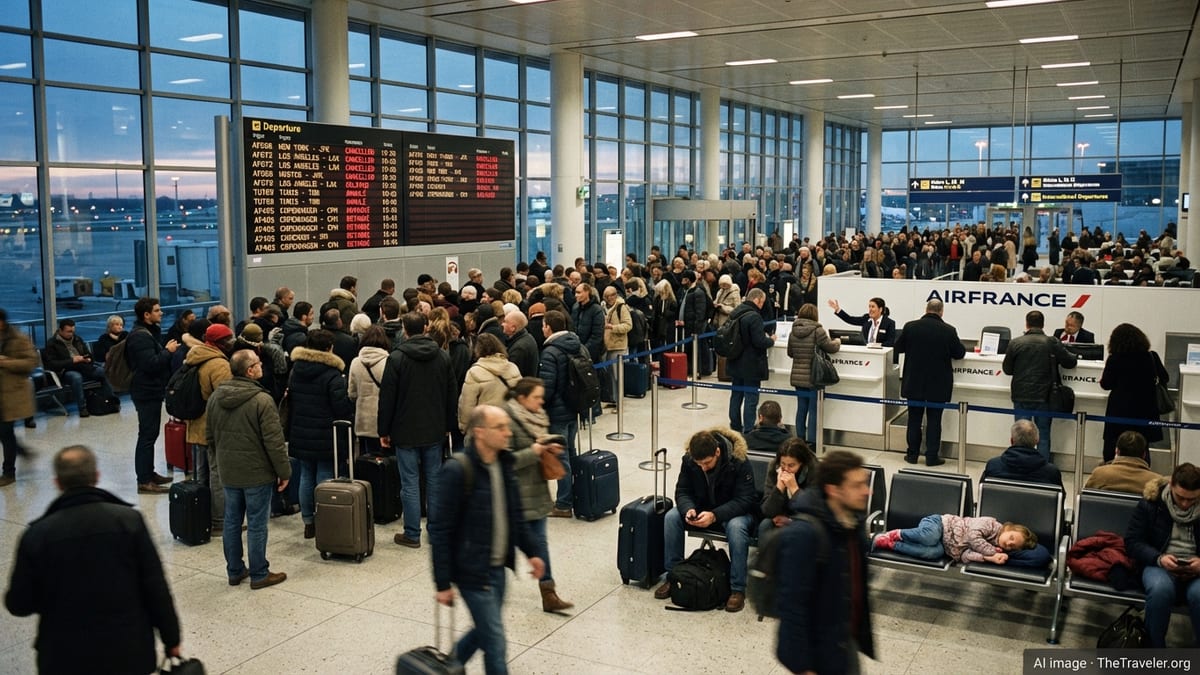
Scale of Disruption Across Qatar Airways’ Global Network
According to publicly available information from Qatar’s state news agency, the temporary closure of Qatari airspace earlier this year forced Qatar Airways to halt scheduled passenger services and activate emergency plans across its global network. The disruption left around 8,000 travelers stranded in Doha and approximately 8,400 more at outstations around the world, impacting connections across Europe, Asia and Africa.
Reports indicate that the carrier’s chief operating officer described the episode as an exceptional crisis that tested the airline’s hub and spoke model centered on Hamad International Airport. With aircraft and crews out of position and no immediate clarity on when regular operations would resume, Qatar Airways shifted rapidly from a transfer-focused operation to a large-scale passenger care and repatriation effort.
The airspace restrictions followed earlier periods of instability affecting regional air corridors, but observers note that the latest closure was more prolonged and comprehensive. Qatar Airways’ own travel advisories and service updates show that the airline framed the suspension as a safety-driven response mandated by the Qatar Civil Aviation Authority, with a promise to rebuild connectivity in phases once a safe corridor could be re-established.
Industry commentary suggests that the situation underlined how vulnerable major transfer hubs can be to sudden airspace changes, particularly when a single airport handles the vast majority of a carrier’s long haul traffic. In this instance, Qatar Airways’ ability to maintain passenger welfare became as important as operating flights.
Hotels, Meals and Ground Support for 16,000 Travelers
Details published by Qatar News Agency and summarized by regional media outline the scale of the accommodation effort undertaken in Doha and beyond. Public information shows that Qatar Airways arranged approximately 15,600 hotel room nights distributed across 61 properties in greater Doha to host stranded travelers, while also contracting rooms in several key outstations where passengers were unable to continue their journeys.
The same reports indicate that more than 15,000 meals were provided inside Hamad International Airport during peak disruption as passengers waited for onward transport or coach transfers to their hotels. Additional ground staff were deployed at the hub and at selected overseas stations to support rebooking, welfare checks and information desks, complementing online channels that were handling high volumes of itinerary changes and inquiries.
Qatar Airways’ own advisories during the crisis stated that hotel accommodation, local transport between airport and hotel, and basic meal provision would be covered for eligible passengers whose flights had been cancelled or significantly delayed due to the closure. A dedicated crisis management team, referenced in the airline’s earlier statements about the airspace shutdown, was tasked with coordinating these efforts and aligning them with evolving operational constraints.
While official figures emphasize the breadth of support offered, publicly shared passenger accounts on independent platforms highlight a mixed experience, with some travelers reporting delays in receiving hotel assignments or having to cover initial expenses themselves before seeking reimbursement. These contrasting perspectives point to the complexity of executing welfare commitments at scale when tens of thousands of people are affected simultaneously.
Phased Repatriation Flights and Limited Relief Corridors
Once regulators authorized a limited safe operating corridor out of Doha, Qatar Airways gradually shifted from static accommodation measures to active repatriation. Press releases from the airline show that, beginning on March 7, a series of targeted evacuation flights were mounted from Hamad International Airport to major European gateways including London Heathrow, Paris Charles de Gaulle, Madrid, Rome and Frankfurt, with subsequent rotations to additional cities as capacity became available.
The airline’s public updates indicate that priority on these services was given to families, elderly passengers and travelers with urgent medical or compassionate needs. Seats were allocated in phases as aircraft, crew and slots could be secured, with Qatar Airways cautioning travelers not to proceed to the airport unless they had received specific confirmation that their flight had been rebooked.
As the operation continued, the carrier added further relief flights and began to operate a limited schedule to and from Doha under ongoing airspace restrictions. In parallel, some passengers were rerouted on alternative hubs or placed on other airlines where bilateral agreements and local regulations allowed, particularly for itineraries that could not be easily reconnected through Doha in the short term.
Aviation analysts observing the situation note that this model, combining controlled relief corridors with selective use of third party networks, is increasingly common during prolonged airspace disruptions. It allows airlines to clear the most urgent cases first while gradually rebuilding a skeleton timetable that can later be scaled up as restrictions ease.
Operational Lessons and Future Preparedness
Commentary in regional business media and specialized aviation outlets suggests that Qatar Airways’ handling of more than 16,000 stranded passengers is likely to inform future crisis planning across the Gulf and beyond. The combination of large scale hotel contracting, on airport meal provision and coordinated repatriation corridors illustrates the breadth of response tools that full service carriers may require when their primary hub is suddenly constrained.
Publicly available information on the operation indicates that business continuity plans were central to the response, from reallocating aircraft and crews to reinforcing call centers and digital channels. Observers also highlight the importance of clear and consistent communication, including repeated advisories urging customers not to travel to the airport without confirmed bookings, to prevent overcrowding and additional strain on limited resources.
At the same time, passenger testimonies shared on independent forums underline gaps that can emerge between policy and implementation under heavy pressure. Reports of individuals waiting days for accommodation decisions or struggling to secure information about onward travel have prompted debate about industry standards for welfare, transparency and compensation during extraordinary disruptions.
Regulators and airport operators in the region have already pointed to the need for stronger contingency frameworks for long duration irregular operations, including predefined welfare arrangements, clearer division of responsibilities between airlines and airports, and closer coordination with diplomatic missions when large numbers of foreign nationals are involved. The Qatar Airways experience during the airspace closures is likely to remain a reference point in those discussions.
Impact on Qatar’s Position as a Global Transit Hub
The airspace closure and the resulting effort to assist more than 16,000 stranded passengers also carry implications for Qatar’s broader role as an intercontinental transfer hub. Prior to the disruption, Qatar Airways had repeatedly been recognized in industry rankings and awards for its network connectivity and hub efficiency, positioning Doha as a key link between Europe, Asia, Africa and the Americas.
Analysts note that the prolonged suspension of regular services and the need to rely on restricted corridors and repatriation flights temporarily reduced that connectivity, with ripple effects on tourism flows, business travel and cargo operations. Some travelers subsequently reported reconsidering their choice of transit hub in the near term, citing concerns about potential future closures and the practical challenges of being stranded far from home.
However, others point out that major hubs in different regions have experienced severe disruptions in recent years related to weather, technical outages or geopolitical tensions, suggesting that resilience and recovery speed may matter more than the absence of disruption itself. From this perspective, Qatar Airways’ data on hotel nights, meals provided and passengers successfully rebooked are being closely examined as indicators of how quickly and comprehensively a hub carrier can respond when core infrastructure is constrained.
As scheduled services continue to rebuild, airlines, airports and passengers worldwide are likely to watch how traveler confidence in transiting through Doha evolves, and how the operational lessons from handling more than 16,000 stranded passengers shape contingency planning across the global aviation system.
Qatar News Agency coverage of Qatar Airways COO statement
Qatar Airways statement on temporary suspension of flights