


More news on this day
Hundreds of thousands of air passengers have faced long delays and missed connections after a failure in the UK’s flight data processing system forced airlines to cut schedules, leaving aircraft and travelers stranded at airports across Britain and beyond.
Get the latest news straight to your inbox!
Technical fault hits critical flight data processing system
Publicly available information from the UK’s air navigation provider indicates that the disruption was triggered by a malfunction in the automated flight plan processing system used to manage traffic in much of UK airspace. The system is designed to ingest, validate and distribute flight plans to controllers, forming the digital backbone of day-to-day operations.
According to published coverage, the fault led to a so-called flight data processing failure, meaning new or updated flight plans could not be handled automatically. To maintain safety, traffic flow restrictions were imposed and the rate of arrivals and departures at major hubs such as Heathrow and Gatwick was sharply reduced. While radars and radio communications remained available, the reduced capacity quickly translated into queues both in the air and on the ground.
European air traffic network manager Eurocontrol reported “very high” delays linked to the UK issue, with data showing widespread knock-on effects across the continent as flights to, from and through British airspace were capped. Industry analyses suggest that more than 1,500 flights were cancelled on the main day of disruption, with total delays running to tens of thousands of minutes and the system operating below normal capacity well into the recovery phase.
A subsequent technical investigation, summarised in documents released by aviation regulators and the navigation service provider, highlighted a rare software interaction in the flight plan processing architecture. The problem caused the automatic system to halt processing in line with its safety design, forcing controllers and support staff to work with limited tools while engineers reset and verified the affected components.
Airports and airlines struggle to clear backlogs
Major UK airports experienced some of the heaviest disruption as the technical failure coincided with a peak travel period. Reports from Heathrow, Gatwick, Manchester and other hubs described aircraft held at gates for hours, with some crews timing out under duty rules and flights eventually cancelled after lengthy waits on the tarmac.
Airports outside the UK also reported difficulties as the reduced flow through British airspace disrupted tightly planned schedules. Dublin, for example, warned travellers of cancellations and delays on services that relied on transiting UK-controlled routes, while carriers in the Middle East and elsewhere issued advisories about longer journey times and potential missed connections for passengers heading to London and other British cities.
Airlines were left to rebalance fleets, crews and passenger itineraries once the immediate technical fault was resolved. Industry data cited in public reports indicates that some carriers cancelled rotations proactively in the following days so that aircraft and staff could be repositioned. That decision helped stabilise operations but extended the period during which travelers found themselves rebooked, rerouted or overnighting unexpectedly.
Analysts note that airline recovery strategies varied. Some carriers focused on protecting long-haul links and transatlantic corridors, while others concentrated on dense European short-haul networks. For passengers, this often meant that the likelihood of a swift rebooking depended on route, airline and the availability of spare seats across already busy late-summer schedules.
Passengers stranded for days as disruption ripples outward
As cancellations mounted, travelers reported being stranded not only at major UK airports but also at outstations around Europe, North America and the Middle East, waiting for available seats back to Britain. Data compiled by Eurocontrol and referenced in industry publications suggests that hundreds of thousands of passengers experienced some level of delay, with a significant minority facing overnight stays or multi-day journeys home.
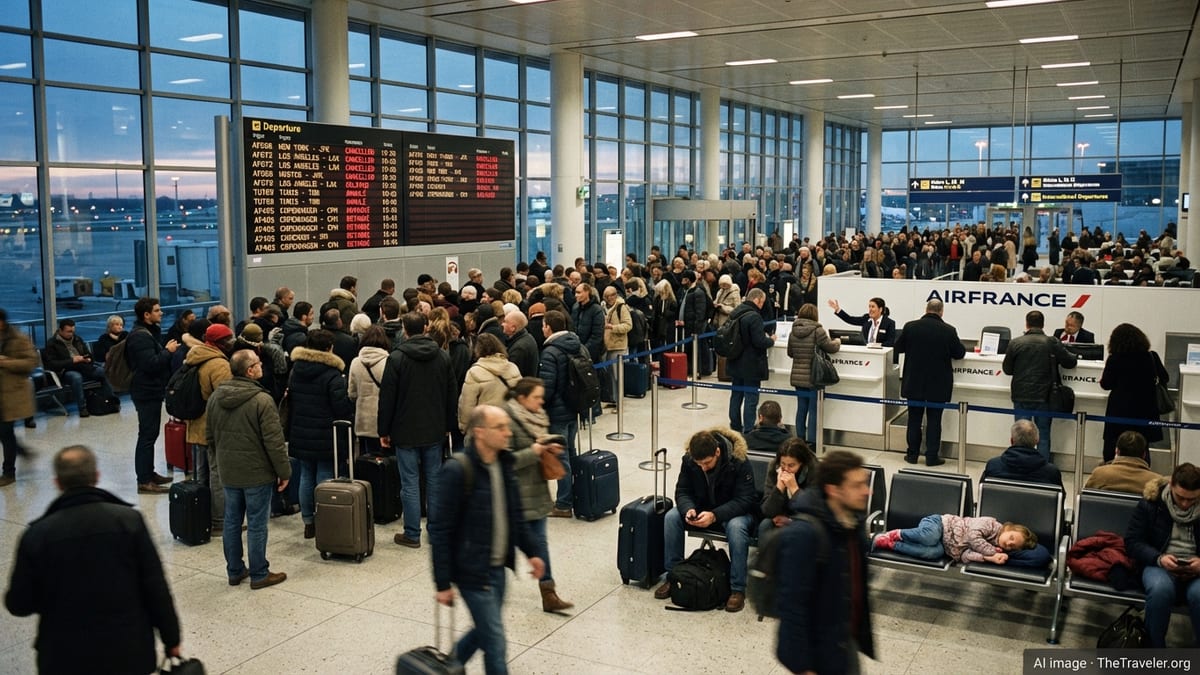
Published accounts describe passengers spending hours in packed terminals as departure boards filled with delays and cancellations. Some people missed onward connections, cruise departures and major events, while others were forced to rearrange hotel stays, car rentals and rail tickets at short notice. For travellers on complex itineraries involving multiple legs, the breakdown of the UK system often disrupted entire trips rather than a single flight.
Travel forums and consumer organisations reported wide variation in how airlines handled stranded customers. Some passengers were offered hotel rooms, meal vouchers and automatic rebooking, while others said they received limited information and were told to make their own arrangements and claim reimbursement later. The patchwork response highlighted ongoing debate about the consistency of customer care during large-scale operational disruptions.
In the days after the incident, airport congestion eased gradually as schedules stabilised and aircraft were returned to regular rotations. However, the backlog meant that even travellers flying several days after the initial failure continued to experience longer-than-normal queues, gate changes and short-notice schedule adjustments as airlines worked through residual imbalances.
Regulatory scrutiny and industry questions on resilience
The scale of the disruption has drawn sustained attention from regulators, industry groups and passenger advocates. A detailed investigation overseen by the UK Civil Aviation Authority examined not only the technical root cause in the flight plan processing system, but also the speed of incident detection, escalation procedures and the robustness of contingency arrangements.
According to openly available summaries of that work, the failure stemmed from an unusual combination of data in a flight plan that exposed a software weakness in how routes were processed. While the system behaved conservatively from a safety standpoint by halting processing rather than accepting ambiguous data, the knock-on effects for capacity were severe. The incident therefore raised questions about how safety, resilience and continuity planning are balanced in such critical infrastructure.
Industry analyses have pointed to the age and complexity of legacy air traffic systems as a persistent challenge. While components are regularly upgraded, the underlying architectures were built for earlier eras of traffic levels and route structures. Integrating new tools, handling more data and defending against emerging cyber and operational risks all add layers of complexity that can make rare failure modes harder to predict.
Regulatory documents indicate that recommendations from the inquiry include strengthening testing for edge-case flight plans, improving fault isolation within the processing chain so that individual anomalies do not force wider shutdowns, and refining communication protocols with airlines and airports during major incidents. How quickly these changes can be implemented, and to what extent they can reduce the risk of similar mass disruption, remains a central concern for the travel industry.
What travelers should know for future UK flights
While large-scale failures of air traffic control systems remain rare, the recent incident has prompted renewed interest in how travellers can prepare for knock-on disruption. Travel organisations and consumer groups suggest that, during periods of high demand, even a short technical outage can cascade into multi-day problems because schedules are operating close to capacity.
For passengers planning journeys via the UK, publicly available guidance stresses the value of allowing generous connection times, especially when itineraries involve separate tickets or self-arranged transfers such as rail and coach services. Flexible booking options and comprehensive travel insurance can also make it easier to absorb changes if large-scale operational problems resurface.
Consumer advocates further recommend monitoring airline apps and official airport channels closely on the day of travel, as real-time updates on gate changes, delays and rebookings tend to appear there first. When disruption does occur, passengers travelling under UK or EU jurisdiction may have specific rights to care and re-routing, although compensation for delays linked to air traffic control failures is often treated differently from airline-controlled causes.
For now, the air traffic provider has stated in its published reports that lessons from the breakdown are being incorporated into ongoing technology upgrades. Travellers and airlines alike will be watching closely to see whether those measures can prevent a recurrence of the kind of system failure that left so many passengers stranded this time.