


Sweden combines medieval cities, wild forests and sleek Scandinavian design, but getting in and getting around now requires a little more planning than it once did. Border rules across Europe are changing, Sweden has become almost cash free, and visitors are often surprised by prices, alcohol regulations and local etiquette. This guide brings together the latest entry requirements and practical tips so you can focus on enjoying Stockholm’s waterfront, fika in Gothenburg or the midnight sun in Swedish Lapland instead of worrying about paperwork and logistics.
Get the latest updates straight to your inbox!
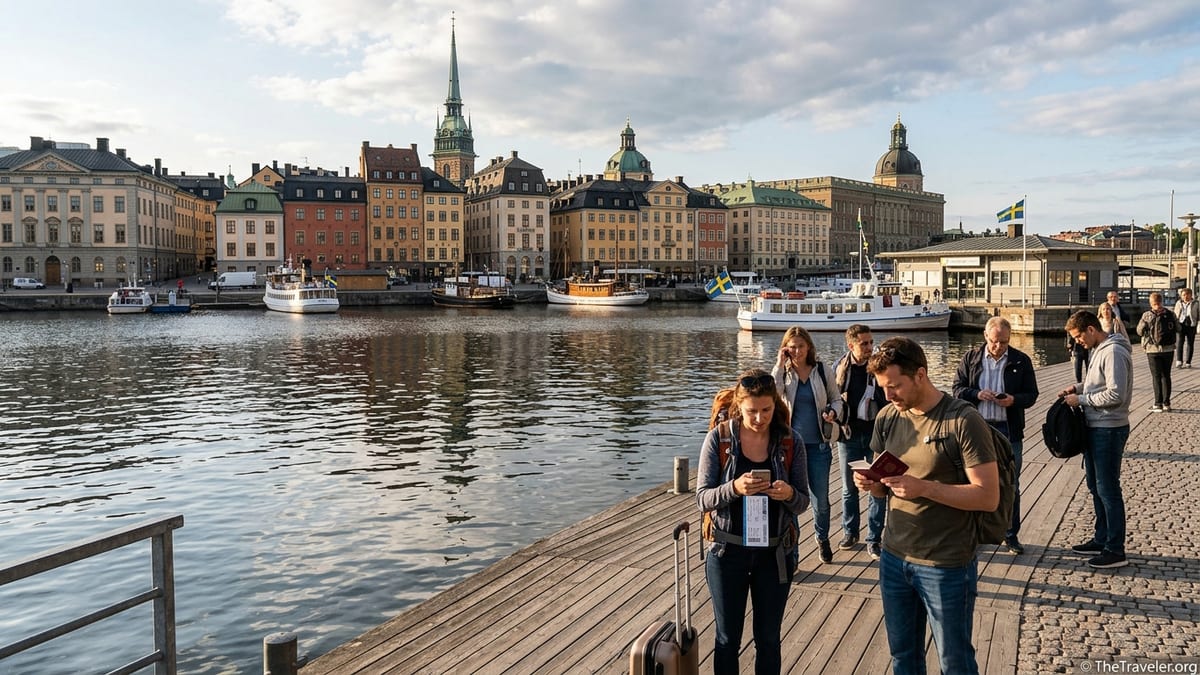
Understanding Sweden’s Place in the Schengen Area
Sweden is part of the Schengen Area, a group of European countries that share a common external border and short-stay visa policy. For travelers this means that when you clear border control in your first Schengen country, you usually will not go through full passport checks again when flying or taking trains between Schengen states such as Denmark, Germany or France. Your time in Sweden counts toward a shared Schengen allowance, not a separate Swedish clock.
Most non-European visitors are subject to the standard Schengen rule of up to 90 days in any rolling 180 day period for tourism or business without working. For example, if you spend 30 days in Sweden in June, 30 days in Germany in August and 20 days in France in September, you have used 80 of your 90 days. Overstaying can result in fines, entry bans or problems the next time you try to visit Europe, so it is worth tracking your days on a calendar or using a reputable Schengen calculator app.
Schengen rules sit on top of, not instead of, individual airline requirements. Even if your nationality does not need a visa, airlines will still check your passport meets Schengen standards before boarding a flight to Stockholm or Gothenburg. If your passport is close to expiring or damaged, you can be denied boarding at your departure airport long before you see a Swedish border officer.
Because Sweden follows Schengen standards, any broad changes in European border systems, such as the new Entry/Exit System (EES) or the upcoming ETIAS travel authorization, automatically apply to Sweden. If you are reading older travel blogs, double check dates: European authorities have repeatedly delayed start dates, and advice from 2022 or early 2023 may now be wrong.
Passport, Visa Rules and What ETIAS Really Means
For visitors from visa exempt countries, including the United States, Canada, the United Kingdom, Australia and many others, Sweden currently allows visa free stays of up to 90 days in a 180 day period for tourism, family visits or business meetings. You must still meet Schengen passport rules: your passport should have been issued within the past 10 years and generally should be valid for at least three months beyond your planned departure from the Schengen Area. In practice, many airlines prefer a six month buffer, so if your passport is within a few months of expiring, renew it before you book long haul flights.
Travelers from countries that require a Schengen visa, such as India, South Africa or China, must apply in advance through the appropriate visa application center or consulate. A short stay Schengen visa for Sweden typically allows up to 90 days and is valid across the Schengen Area. Processing times can run several weeks in busy seasons, so applying at least a month before your planned trip is prudent. Expect to provide proof of accommodation, travel insurance, funds and a return or onward ticket.
One of the most confusing topics right now is ETIAS, the European Travel Information and Authorisation System. As of June 2026, ETIAS has not yet started. European institutions and recent government briefings indicate that ETIAS is planned to launch in the last quarter of 2026, with a transition period into 2027 before it becomes fully mandatory. When it does begin, most visa exempt travelers heading to Sweden and the rest of Schengen will need to obtain a small, low cost online authorization linked to their passport, valid for several years.
In practice, ETIAS will function similarly to the US ESTA or the UK ETA: you will complete an online form, pay a modest fee, and usually receive approval within minutes or hours. You will not need ETIAS for trips in mid 2026, but if you are planning travel around late 2026 or 2027, build in time to check the official EU and Swedish government sites for the exact start date and process. Do not rely on unofficial companies that charge inflated “service fees” for what is meant to be a straightforward official application.
Arrival in Sweden: Airports, Border Checks and Customs
Most international visitors arrive via Stockholm Arlanda Airport, but Gothenburg Landvetter and Malmö via Copenhagen’s Kastrup airport are also common gateways. On arrival from outside Schengen you will go through passport control, then customs. With the recent introduction of the Entry/Exit System across Europe, first time visitors from outside the EU may have their fingerprints and a facial image captured and their entry recorded digitally. This can make queues longer during the roll out, so allow extra time for connections or trains after landing.
Once you have cleared border control, you will collect your luggage and walk through customs. Sweden applies EU customs rules on duty free limits for alcohol, tobacco and certain foods. For example, travelers arriving from outside the EU are allowed to bring only limited quantities of spirits and cigarettes tax free. Bringing a suitcase full of liquor or cartons of cigarettes can result in significant duty charges or confiscation. Fresh meat and dairy products from outside the EU are generally restricted, so think twice before packing homemade sausages or cheese as gifts.
At Arlanda, you will then choose the green channel if you have nothing to declare or the red channel if you exceed allowances or are carrying restricted items. Customs officers do conduct spot checks in the green channel. A common real world scenario is the traveler who buys a luxury watch or designer handbag outside the EU and forgets to declare it: if stopped, you can be charged Swedish VAT and possibly a fine. Keeping receipts handy and staying within allowances avoids a stressful start to your trip.
After customs, you can continue by train, express train, city bus or taxi. The Arlanda Express train takes about 18 minutes to Stockholm Central and is fast but relatively expensive compared with local commuter trains, which take around 40 minutes but cost noticeably less. If you arrive late at night or with heavy luggage, Stockholm’s official taxis display fixed prices to central zones on the rear door window. Always choose a reputable company at the official rank and confirm the approximate fare before you get in to avoid unexpected bills.
Money, Costs and Sweden’s Cashless Culture
One of the biggest surprises for first time visitors is just how cashless Sweden has become. Credit and debit cards are accepted almost everywhere, from high end restaurants to small cafes, and even at many public toilets. Mobile payments such as Swish are ubiquitous among locals, but most visitors will rely on contactless Visa or Mastercard. American Express is accepted in some hotels and upscale restaurants but not as widely as the big two networks.
It is entirely realistic to spend a week in Stockholm without withdrawing any cash. Many businesses, including some cafes and bars, display “cash free” signs and will simply not accept banknotes. If you like to carry a little local currency, withdraw a small amount of Swedish kronor from an ATM operated by a major bank in the arrivals hall or city center, and avoid independent ATM operators that add high fees and offer poor exchange rates. In practice, even small transactions like a single tram ticket, a cinnamon bun at a bakery, or entry to a local museum can usually be tapped with a card.
Sweden is a high cost destination by global standards, and budgeting realistically makes the trip more enjoyable. A cappuccino in a central Stockholm cafe might be around the equivalent of a few US dollars. A simple lunch of soup and bread at a neighborhood spot can reach mid level prices, while a main course at a sit down restaurant in Södermalm or Vasastan often matches or exceeds prices in major US cities. On the other hand, many city museums offer free entry or free certain days, and tap water is safe, high quality and free in restaurants, which helps balance costs.
To keep bank fees down, consider using a travel friendly card with no foreign transaction fees and transparent exchange rates. Some Swedish card terminals will ask if you want to be charged in your home currency instead of kronor. Choosing your home currency often results in a poor exchange rate due to dynamic currency conversion, so selecting to pay in SEK and letting your bank handle the conversion is usually cheaper.
Getting Around: Trains, Transit and Domestic Travel
Sweden’s public transport is efficient, punctual and usually easy to navigate in English. In Stockholm, the local transport authority operates a network of metro, commuter trains, trams, buses and some ferries under one integrated ticketing system. You can buy single tickets, time based passes or load credit via machines at major stations, convenience shops, or increasingly through contactless payments directly at the ticket gates or bus card readers. English language menus are standard on ticket machines and apps.
For example, to travel from Arlanda Airport to a hotel in central Stockholm on a budget, many visitors take a regional train or airport coach rather than the fastest express train. While the express service is quick, the regional train to Stockholm City station or the airport bus to the central bus station often costs noticeably less and still gets you downtown in under an hour. In Gothenburg, trams crisscross the city and can take you from the central station to districts like Haga or Majorna with a single ticket, and the same ticket works on buses and some ferries.
Long distance travel within Sweden is well served by trains operated by SJ and other companies. The line between Stockholm and Gothenburg takes about three hours on high speed services, while Stockholm to Malmö is around four and a half hours. Booking in advance often yields lower fares and reserved seats. Many travelers choose night trains to reach Kiruna and Abisko in the far north for aurora viewing or summer hiking in Abisko National Park. These night trains offer couchettes and sleeping compartments that can turn a travel day into a practical night’s accommodation.
Car rental is widely available at airports and city locations and can be a good option for exploring regions such as Österlen in Skåne, the lakes of Dalarna or the High Coast. Remember that Sweden drives on the right, headlights must be on at all times, and winter conditions in the north require proper winter tires and caution. Parking in central Stockholm is heavily regulated and often expensive, so many visitors pick up a car after a few days in the city rather than driving from day one.
Safety, Health and Local Etiquette
Sweden is generally a safe country with low levels of violent crime affecting visitors, and most trips are trouble free. Standard big city precautions still apply, especially in busy areas around main train stations and nightlife districts in Stockholm, Gothenburg and Malmö. Petty theft does occur, particularly on crowded metro trains or in tourist hotspots like Gamla Stan, so keep bags zipped, do not leave phones on cafe tables, and be cautious if strangers create distractions.
Healthcare standards are high, and EU residents with the appropriate health card can access public care on the same terms as locals. Travelers from outside the EU are strongly advised to carry travel insurance that covers medical treatment and medical evacuation. A straightforward visit to an emergency clinic for something like a sprained ankle or a minor infection can lead to notable bills if you are uninsured. Pharmacies are well stocked and staff usually speak excellent English; common items like painkillers, basic cold remedies and sunscreen are easy to find.
Social etiquette in Sweden often feels reserved compared with some cultures but is underpinned by a strong respect for personal space, equality and punctuality. It is common to greet with a simple “Hej” and maintain an arm’s length distance, rather than hugs or loud introductions. Queuing is taken seriously: people wait their turn, sometimes using number ticket systems even in small shops and pharmacies. Bargaining is not part of normal retail culture, and service staff are expected to be friendly but not overly familiar.
Tipping is more modest than in North America. Service charges are typically included in restaurant bills, and leaving around 5 to 10 percent for good service or rounding up taxi fares is appreciated but not mandatory. In cafes and casual places, many locals simply round up to the nearest convenient amount or leave small coins. You are not expected to tip for every interaction, and no one should pressure you into large gratuities.
Seasonal Conditions and What to Pack
Because Sweden stretches far north, conditions vary dramatically by season and location. In Stockholm and Gothenburg, summer from June to August often brings comfortably mild temperatures, long daylight hours and outdoor dining along the water. You can sit outside for fika in a city square at 9 pm while the sky is still bright. In contrast, winter brings short days, with daylight in Stockholm shrinking to around six hours in December and even less further north. In Kiruna and Abisko, the polar night period means the sun does not rise above the horizon for several weeks, though a blue twilight and the possibility of northern lights add a different kind of magic.
For a summer city break, pack layers: a light jacket or sweater for cool evenings, a waterproof shell for sudden showers, and comfortable walking shoes. Even in July, it can feel chilly on an evening ferry ride through the Stockholm archipelago if the wind picks up. For winter visits, especially north of Stockholm, bring proper cold weather gear, including thermal layers, insulated boots with good grip, gloves, a hat and a warm, windproof coat. Local outdoor brands and department stores carry high quality gear if you find your clothing is not warm enough.
Weather can change quickly, particularly along the coasts and in the mountains. A traveler heading for a September hike in the Swedish Lapland might experience sun and 15 degrees Celsius in the valley and fresh snow higher up in the same week. Even for day trips around Stockholm, checking the local forecast the night before can help you decide between sunglasses and a rain jacket. Most Swedes dress practically, and there is little pressure to dress formally except in certain upscale restaurants or cultural events.
Daylight plays a big role in how your trip feels. In June, Stockholm’s near midnight twilight means locals linger in parks and outdoor bars late into the evening, and you may want a sleep mask if your hotel curtains are thin. In December and January, planning indoor activities such as museum visits, cozy cafes and saunas during the darker hours can make the short days feel welcoming rather than bleak.
The Takeaway
Traveling to Sweden in 2026 involves more moving parts than it did a decade ago, but with a bit of preparation the experience remains straightforward. Understanding that Sweden follows Schengen rules, keeping track of your 90 days in 180, and confirming that your passport meets validity requirements will smooth your passage through border checks. Staying alert to the evolving rollout of ETIAS, particularly for trips from late 2026 onward, will help you avoid last minute surprises.
On the ground, embracing Sweden’s cashless culture, using the excellent public transport, and adapting to local etiquette will make your stay feel less like a short visit and more like slipping into the local rhythm. Whether you are sipping coffee in a Stockholm cafe during fika, riding the night train under the northern sky, or wandering cobbled alleys in Visby, a little upfront knowledge about entry rules and practicalities frees you to focus on why you came in the first place: to enjoy one of Europe’s most quietly compelling destinations.
FAQ
Q1. Do I need a visa to visit Sweden as a US citizen for tourism?
In most cases, no. US citizens can currently visit Sweden and the rest of the Schengen Area visa free for up to 90 days in any 180 day period for tourism or business, provided they meet standard passport and entry requirements.
Q2. When will ETIAS start for trips to Sweden?
As of June 2026, ETIAS has not yet started. Current European plans indicate it will begin in the last quarter of 2026 with a transition period before it becomes fully mandatory, so check official EU and Swedish government sources when planning late 2026 or 2027 trips.
Q3. How long does my passport need to be valid to enter Sweden?
Your passport should generally be valid for at least three months beyond the date you plan to leave the Schengen Area and must usually have been issued within the last 10 years. Many airlines prefer at least six months of remaining validity, so renewing early is wise.
Q4. Can I use cash in Sweden or is it card only?
You can still use cash in some places, but Sweden is highly cashless and many businesses no longer accept banknotes. Plan to rely primarily on contactless Visa or Mastercard, and treat cash as a backup rather than your main payment method.
Q5. Is Sweden safe for solo travelers?
Yes, Sweden is generally very safe for solo travelers, including women, with low levels of violent crime affecting visitors. Normal big city precautions apply, especially around busy stations and nightlife areas, and petty theft can occur in crowded places.
Q6. What is the best way to get from Arlanda Airport to central Stockholm?
The Arlanda Express train is the fastest option, taking around 18 minutes but at a premium price. Cheaper alternatives include regional trains to Stockholm City station or airport buses to the central bus terminal, which take longer but can save a meaningful amount on a round trip.
Q7. Do I need travel insurance for a trip to Sweden?
It is strongly recommended, especially for non EU visitors. Sweden’s healthcare is excellent but can be expensive without coverage, and travel insurance that includes medical treatment and evacuation provides important financial protection if something goes wrong.
Q8. Is tipping expected in Swedish restaurants?
Tipping is appreciated but more modest than in North America. Service is usually included in the bill, and leaving around 5 to 10 percent for good service or rounding up the total is common, but there is no expectation of large mandatory gratuities.
Q9. What should I pack for a winter trip to Swedish Lapland?
For winter in the north, pack proper cold weather gear: thermal base layers, a warm mid layer, an insulated and windproof outer jacket, waterproof boots with good grip, thick socks, gloves, a hat and possibly a neck gaiter or balaclava. Local outfitters in places like Kiruna and Abisko also rent specialized gear for activities such as dog sledding.
Q10. Can I drive in Sweden with my foreign driver’s license?
Many visitors can drive for a limited period with a valid license from their home country, particularly if it is in a Latin alphabet. However, some nationalities may need an International Driving Permit in addition to their license, so it is wise to check Swedish Transport Agency guidance before renting a car.