


More news on this day
Dozens of flights departing Sydney Airport were delayed today as a combination of strong crosswinds and operational constraints disrupted take-off schedules, prompting airlines and travel platforms to urge passengers to check their flight status before heading to the terminal.
Get the latest news straight to your inbox!
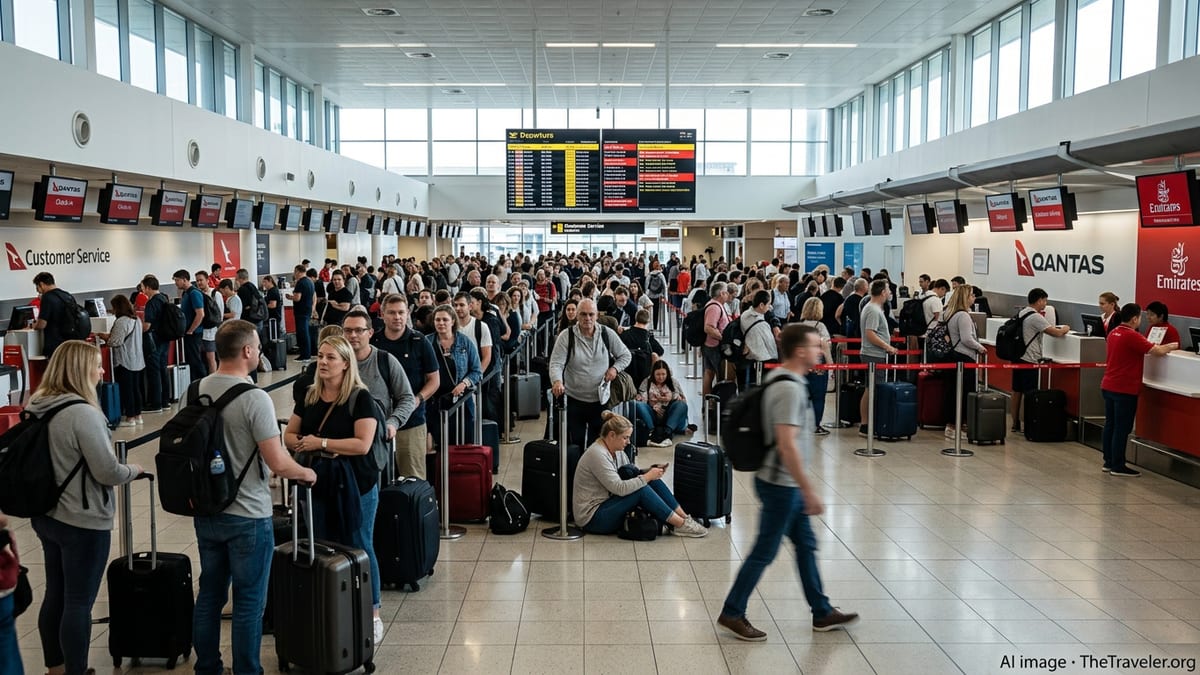
Weather and runway conditions slow morning departures
Publicly available forecasts for Sydney on Thursday, 30 July, indicated strong and gusting crosswinds building from midday, a pattern that can restrict runway configurations and limit the rate at which aircraft are able to depart. When winds shift or intensify across the runway, air traffic controllers may need to alter operating modes or temporarily pause departures for safety, creating knock-on delays for subsequent flights.
Tracking data and traveller reports showed that a number of domestic services to major east coast destinations, including the Gold Coast and Brisbane, left later than scheduled, with some aircraft held at gates or on taxiways while spacing between departures was increased. These measures are a routine part of airport operations in challenging weather, but they can quickly accumulate into longer waits for passengers, particularly during peak travel periods.
The impact was felt most acutely during the late morning and early afternoon bank of departures, when demand for runway access was highest. Once a backlog builds, later flights often inherit delays even after conditions begin to improve, leading airlines to advise customers to monitor their itineraries closely via apps and airport information screens.
Operational bottlenecks amplify delay ripple effects
Beyond the weather, Sydney Airport continues to face familiar operational pressures that can exacerbate even modest disruptions. Gate availability, aircraft turnaround times and staffing levels across ground handling, security and customer service all influence how quickly a delayed aircraft can be prepared to depart once a slot becomes available.
Industry publications and recent traveller commentary have highlighted ongoing congestion at certain domestic terminals, where tight turnaround schedules leave limited margin for absorbing unexpected ground holds. When one flight departs late, the same aircraft may then arrive late for its next sector, creating a cascade of knock-on delays across multiple routes.
Analyses of airport performance globally show that such primary disruptions, whether triggered by weather, technical checks or crew availability, tend to propagate through the network as aircraft and staff struggle to realign with planned rotations. At a busy hub like Sydney, the combination of high traffic density and tightly scheduled fleets means even a short period of constrained runway access can extend across much of the day’s timetable.
Domestic and regional travelers urged to build in extra time
The latest delays at Sydney Airport come during a period of heightened scrutiny of on-time performance across Australia’s domestic network, with regional travelers particularly sensitive to schedule changes. Many smaller airports rely on only a handful of daily services to and from Sydney, leaving passengers with fewer rebooking options if a departure is significantly delayed or cancelled.
Recent discussions among travelers have underscored concerns about tight connections at Sydney, especially when itineraries involve changing terminals between domestic and international flights. Missed onward flights can result in long waits for the next available service, as well as additional costs for accommodation and ticket changes where airlines are not required to cover expenses.
Travel platforms and consumer advocates consistently recommend that passengers allow generous buffers for connections through Sydney, particularly during the winter months when weather-related disruptions are more common. Today’s pattern of delays is likely to reinforce that advice, as even passengers on initially on-time services may find themselves arriving later than planned into the hub.
What today’s disruption means for upcoming travel
While the delays affecting dozens of departures at Sydney Airport are expected to ease as winds moderate and operations stabilise, the episode serves as a reminder of how quickly conditions can change for air travellers. Once a schedule has been compressed by weather and operational limits, it can take several hours for airlines and airport systems to recover full punctuality.
For passengers with flights scheduled over the coming days, publicly available guidance from airlines and booking sites continues to emphasise the importance of checking real-time status before leaving home, enabling notifications on mobile apps and arriving at the airport with enough time to navigate security and potential queues at check-in. This is particularly important for international departures, where cut-off times for bag drop and boarding are stricter.
The situation at Sydney also reflects broader trends in global aviation, where high demand, constrained capacity and sensitivity to extreme or fast-changing weather patterns have combined to make delays more common at major hubs. Data-driven studies of airport performance note that better forecasting of passenger flows and more flexible scheduling can help mitigate some of these pressures, but they do not eliminate the risk entirely.
Tips for minimizing disruption on the day of travel
Although individual travellers cannot control weather or airport operations, there are practical steps that can reduce the impact of sudden delays such as those experienced today at Sydney. Booking earlier departures, where possible, often provides additional rebooking options later in the day if schedules unravel. Selecting longer connection times through busy hubs can also provide a buffer when conditions deteriorate.
Passengers are widely encouraged to keep contact details up to date with their airline, download carrier and airport apps for push notifications, and regularly refresh flight information on the day of travel. Carrying essential items, medications and a change of clothes in hand luggage can make unexpected waits more manageable, particularly for families and those connecting to long-haul services.
For travellers departing Sydney in the coming hours, the central message from today’s disruption is straightforward: check flight status frequently, allow extra time to move through the terminals and be prepared for possible last-minute gate or timing changes as airlines work to clear the backlog and return operations to normal.