


More news on this day
A widespread technical issue at Manchester Airport has led to 72 flights being delayed, disrupting travel plans for thousands of passengers and creating knock-on problems across the UK and European air network.
Get the latest news straight to your inbox!
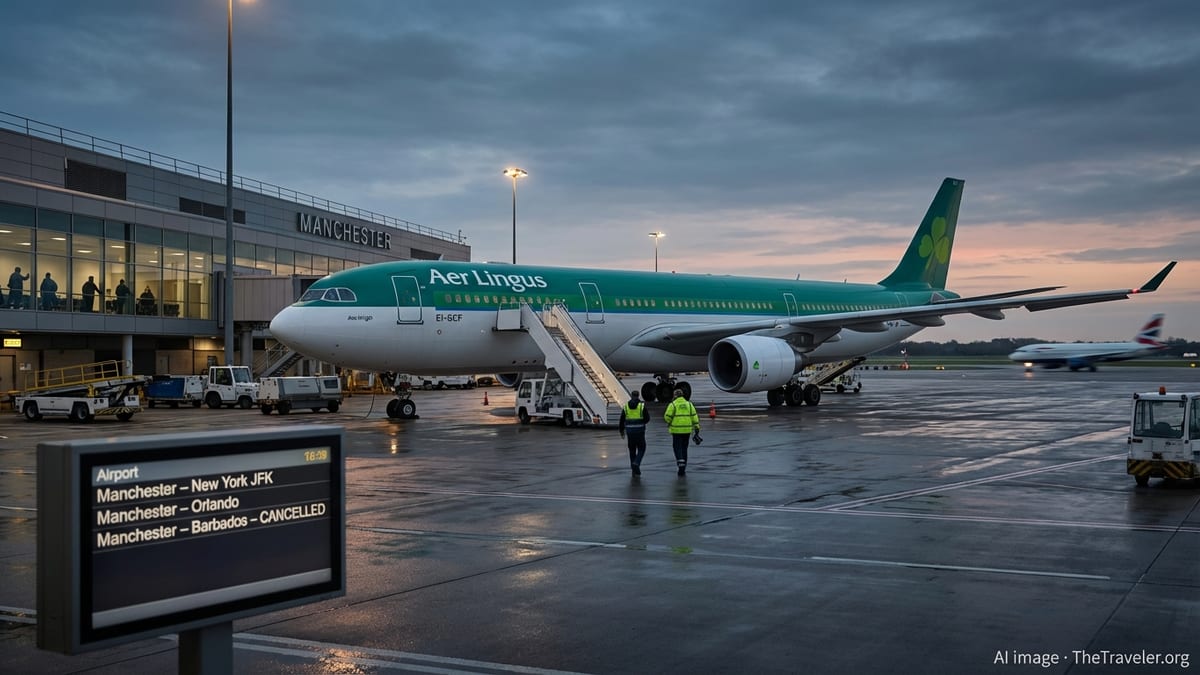
Systems glitch triggers large-scale disruption
Initial reports indicate that a technical problem affecting key airport systems triggered the wave of disruption, with departures and arrivals both impacted. Flight tracking platforms and live airport monitoring services showed an unusually high volume of delayed services from the early morning schedule onward, with delay times in many cases exceeding 45 minutes.
Publicly available airport data and live departure boards recorded dozens of services sitting in delayed status through the main morning and midday peaks, with some flights pushed back repeatedly as teams worked to restore full functionality. Affected flights included short-haul European services, domestic connections to London and other UK hubs, and popular leisure routes to Mediterranean destinations.
While the precise technical cause has not been fully detailed in publicly available updates, the pattern of disruption mirrors earlier UK air transport incidents linked to automated systems and scheduling tools, where a single failure has swiftly cascaded through tightly timed operations. Travel analysts note that once aircraft and crew are out of position, delays can continue to accumulate even after the original fault is resolved.
Manchester Airport, one of the UK’s busiest hubs, typically handles hundreds of movements each day, meaning even a short-lived systems issue can leave a long tail of disruption that lasts well into the evening schedule.
Full list shows breadth of affected routes
According to aggregated flight tracking data and media roundups based on today’s schedule, the full list of disrupted services stretches to 72 delayed flights, spanning multiple airlines and destinations. The affected departures and arrivals range from pre-dawn charter and low-cost leisure flights through to afternoon services operated by major European carriers.
Published coverage of the disruption highlights that delayed flights include services to key holiday hotspots such as Dalaman and other Turkish resorts, the Spanish islands, and major European city destinations. Additional routes to hubs including London Heathrow and Amsterdam Schiphol also appear among the delayed listings, indicating that the issue has had a knock-on impact on connecting passengers and onward itineraries.
Many of the services on the list show delays of between 30 and 90 minutes, with a smaller number experiencing longer waits as aircraft and crews were repositioned. Some flights were held at gates awaiting clearance, while others departed significantly behind schedule but remained in operation rather than being cancelled outright.
The breadth of destinations involved underlines how a single technical issue at a major hub can ripple across multiple airlines’ networks in a matter of hours, particularly during the busy late-summer travel period.
Passenger experience and advice for affected travelers
Passengers travelling through Manchester during the disruption reported longer waits in terminal departure areas, frequent changes to departure times on screens, and uncertainty around connecting flights. Live airport information pages and independent delay-tracking sites showed a rolling pattern of revised estimated departure times as teams worked through the backlog.
Travel rights specialists advise that passengers caught up in such delays should closely monitor their flight status via airline apps, airport websites, or trusted flight-tracking services, and keep all receipts for food, drink, or accommodation purchased as a result of significant disruption. Under UK and European air passenger regulations, travelers on qualifying flights may be entitled to care, assistance, and in some cases monetary compensation, depending on the circumstances and length of delay.
Because technical issues can be categorized in different ways for the purposes of compensation, travelers are encouraged to submit claims directly with their airline and to retain boarding passes, booking confirmations, and any written notices regarding the cause of the delay. Specialist advisory platforms that track Manchester Airport performance note that even relatively short delays can sometimes qualify passengers for support such as meal vouchers or rebooking options in line with airline policy.
For upcoming departures, airlines are urging passengers, via public updates and online notices, to arrive in good time for check-in and security but to verify the status of their specific service before setting out for the airport.
Knock-on impact on wider UK and European network
The disruption at Manchester has added pressure to an already busy European aviation network late in the summer season, where airports and airlines are working with high passenger loads and little spare capacity in schedules. Live monitoring sites that track airports across the region show that even short, local technical issues can quickly translate into a rise in delayed or out-of-position aircraft at other hubs.
Manchester’s role as a key base for leisure carriers and major European airlines means delays there often have secondary impacts on rotations later in the day. Aircraft delayed on outbound legs from the UK can arrive late at overseas airports, in turn pushing back return flights and leading to late-night arrivals or schedule changes for travelers not directly caught up in the initial incident.
Industry performance data from recent seasons has shown that technical faults, staffing constraints, and air traffic control restrictions frequently appear among the main causes of delay at European airports. When these issues occur during peak holiday travel periods, available capacity for recovery can be limited, which may explain the large number of flights recorded as delayed following today’s technical glitch at Manchester.
Observers note that as airlines work to restore normal timings, some late-evening and overnight services may still operate behind schedule, even once airport systems are reported to be functioning normally.
What travelers should do next
For those yet to travel, publicly accessible tools such as the Manchester Airport live departures and arrivals pages, airline mobile applications, and independent delay trackers provide the most up-to-date overview of the situation. Travelers are advised to re-check their flight status repeatedly on the day of travel, as departure times can shift at short notice while operations stabilize.
Passengers making onward connections, particularly those involving separate tickets, may wish to review alternative options and allow extra time where possible. Rail and coach links from Manchester to other UK airports and cities remain an important fallback when schedules are heavily disrupted, and can offer a practical alternative for some domestic and short-haul journeys.
Travelers affected by the disruption are also encouraged to review their travel insurance policies, as some policies include cover for extended delays and additional costs. Keeping detailed records of expenses and communication with airlines can help streamline any subsequent claims.
With Manchester Airport traffic remaining busy through early autumn, travel planners recommend that passengers build additional buffer time into itineraries and remain prepared for further short-notice schedule changes while the aviation network continues to operate under sustained seasonal pressure.
Sources: Manchester Airport live flight information | Airportia Manchester departures status | AirAdvisor Manchester Airport disruption tracker | Manchester Airport disruption coverage roundup