


Understanding how Thailand’s immigration offices operate is critical for any foreign national planning a medium to long term stay. Beyond obtaining the correct visa, expats must navigate a series of recurring interactions with the Immigration Bureau, including extensions of stay, 90 day address reporting and residence notifications. These procedures are processed almost entirely through immigration offices and, increasingly, associated online systems. A realistic view of workflows, timeframes and practical requirements at Thai immigration offices helps determine whether relocation is administratively manageable for a given individual or corporation.
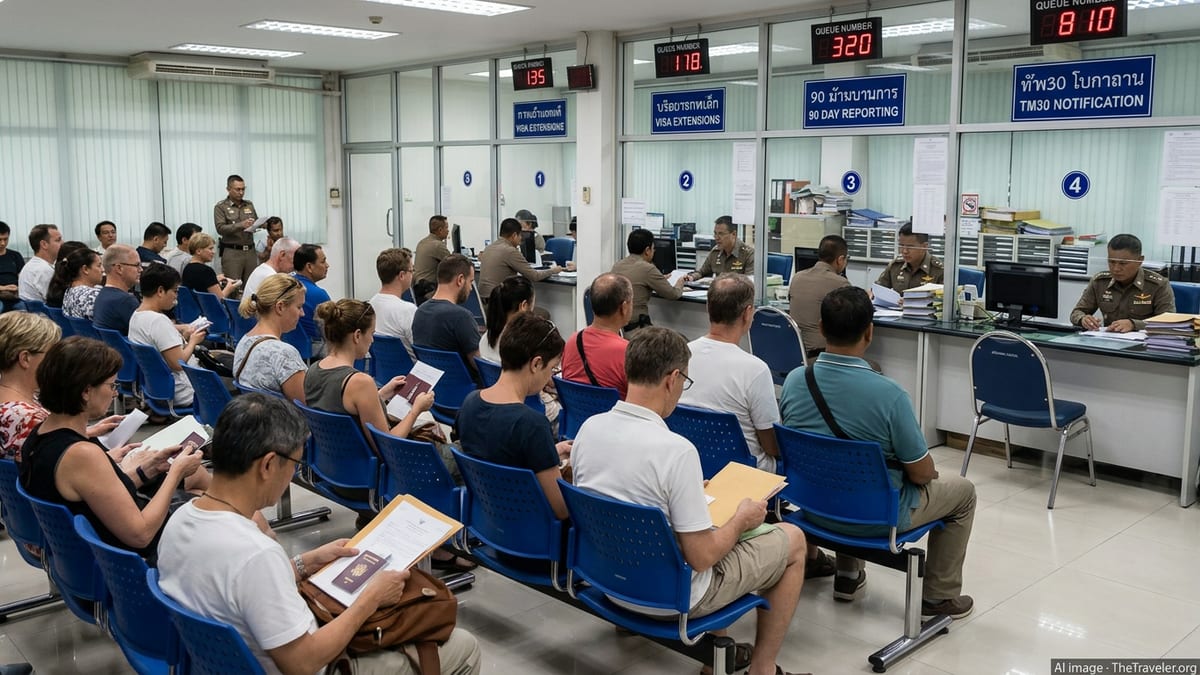
Structure of Thailand’s Immigration Office System
Thailand’s Immigration Bureau manages foreigner stay and reporting through a network of provincial and metropolitan offices. Major hubs include Bangkok area branches and regional immigration offices in cities such as Chiang Mai, Phuket and Pattaya. Smaller provinces usually have a single immigration office responsible for all foreigner services, including extensions, 90 day reporting and residence notifications. While core rules are national, implementation details, document checklists and queue management practices can vary from office to office, which directly affects the user experience for expats.
Most immigration offices operate during regular government business hours, typically Monday to Friday, with public holidays observed. Service counters for extensions of stay usually close earlier than the posted office hours to allow officers to complete processing, which means arriving in the morning is often essential for same day completion. In high volume locations, queue quotas may be issued for specific services, and once the day’s quota is reached, applicants are asked to return another day. This structural reality is a key factor expats must account for when planning deadlines and travel.
Within each immigration office, services are generally segmented by function. Separate counters or rooms handle extensions of stay, 90 day reporting, re entry permits and various certification letters. First time visitors normally start at an information or triage desk where staff check documents, provide forms and assign queue numbers. Because signage may be limited and procedures change periodically, many expats rely on printed notices posted in the office or on informal guidance from staff and other applicants to identify the correct counters and required steps.
In larger offices, some functions are partially digitized, including electronic queue systems and barcode stickers on passports that immigration staff scan to retrieve historical records. However, paper forms and physical passport stamps remain central to the process. Every interaction results in handwritten endorsements or printed stickers in the passport, and expats must preserve these as evidence for subsequent visits, online applications and compliance checks.
Extensions of Stay at Immigration Offices
For most expats already inside Thailand, extending permission to stay is one of the most consequential immigration office processes. Extensions are typically handled through form TM7, which is submitted with a passport, supporting documents and a fee that is commonly 1,900 Thai baht for standard temporary extensions. The procedure can cover a range of bases such as tourism, education, employment, retirement or family reasons, but the structural office experience follows similar steps regardless of the underlying category.
The workflow usually starts with obtaining or downloading the TM7 form, attaching a recent passport photo, and preparing photocopies of key passport pages. At the immigration office, applicants collect a queue number, wait to submit the application for preliminary document review, and then undergo a short interview or clarification with an officer. If the application is accepted, the officer places a new permission to stay stamp in the passport, recording the new expiry date and any specific conditions. In straightforward cases, this can be completed in a single visit, but high traffic offices, peak seasons or complex cases can extend the visit to several hours.
In recent years, Thai immigration has piloted and expanded the “e Extension” system, which allows online submission of extension requests for certain categories of stay. Applicants upload documents, pay fees electronically and schedule an appointment at the relevant immigration office. On the appointment date, the expat appears in person for identity verification and passport stamping, with in office processing times reportedly reduced to only a few minutes in routine cases. The e Extension platform currently supports a limited but growing set of extension types and is initially available in selected provinces, meaning many expats will still rely on the traditional in person route.
For corporate and institutional relocations, internal HR or external visa agents often pre screen extension files and coordinate document preparation to minimize rejections at the counter. However, regardless of who assists with the paperwork, the expat’s physical presence at the office remains necessary at least for the final stamp. This hybrid requirement influences scheduling of business travel, onboarding timelines and project planning for foreign staff.
90 Day Reporting and Interaction with Immigration Offices
Foreigners who stay in Thailand continuously for more than 90 days on a non immigrant visa or extension of stay are generally required to report their current address to immigration every 90 days. This is known as 90 day reporting and is processed using form TM47. The rule applies regardless of whether the address has changed, although leaving Thailand resets the 90 day count from the date of re entry. Failure to report within statutory windows typically triggers fines that can reach a few thousand baht, and repeated non compliance can create further complications.
There are three principal channels for 90 day reporting: in person at an immigration office, online using the Immigration Bureau’s digital portal, and by mail via Thai Post. In practice, in person reporting remains the most reliable, particularly for the first report of a given stay, as many offices insist on at least one physical appearance before allowing online submissions. The in person procedure is usually straightforward: the foreigner or an authorized representative takes a queue number, submits a completed TM47 together with the passport and previous 90 day receipt if available, and receives a new receipt showing the next due date.
For online 90 day reporting, eligibility often requires that the current visa or extension has already been reported in person at least once. The online system typically accepts submissions within a defined window, often up to around 15 days before the due date and for a short period after. Processing outcomes may take from minutes to several days depending on system load and internal review. If an online submission is rejected, the applicant generally must report in person before the deadline to avoid penalties. These operational uncertainties lead many expats and employers to treat online reporting as a convenience rather than a guaranteed solution.
Mail in 90 day reporting is available through registered post directly to the immigration office that oversees the foreigner’s address. This approach requires sending photocopies of key passport pages, the completed TM47 and a self addressed return envelope, usually at least 15 days before the due date. While mail avoids time in queues, it introduces postal delays and the risk of lost documents. Consequently, corporate mobility policies often prefer in person or agent based reporting, especially for critical staff.
TM30 Residence Notification and the Role of Immigration Offices
In addition to 90 day reporting by the foreigner, Thailand’s Immigration Act obliges property owners or managers to notify immigration when a foreign national stays at their premises. This requirement, known as TM30 notification of residence, is technically the responsibility of the landlord, hotel or property owner. However, in practice, immigration offices often ask expats to ensure that TM30 obligations have been met because incomplete or missing TM30 records can disrupt other processes such as extensions of stay or 90 day reports.
TM30 notification can be submitted in three main ways: in person at the local immigration office, online through the Immigration Bureau’s dedicated TM30 portal, or via postal submission. Hotels and large accommodation providers typically use electronic channels or batch submissions due to the volume of guests. Private landlords and smaller property managers may file individually at the office, submitting a completed TM30 form, copies of their property ownership documents and copies of the tenant’s passport and entry records. Once logged, immigration issues a receipt that refers to the foreigner’s presence at a particular address.
At many immigration offices, officers cross reference TM30 data during other procedures. For example, when an expat applies for an extension of stay or completes 90 day reporting, the officer may request a TM30 receipt or check the system to confirm that the address on file matches the information provided. If the property owner has not fulfilled the TM30 obligation, the officer may impose a fine on the owner, ask for immediate rectification, or in some cases delay processing of the expat’s request until TM30 compliance is shown. This interdependence means that expats often proactively coordinate with landlords before key immigration visits.
Because TM30 rules are enforced with varying intensity across provinces and over time, the actual impact on expats differs by location. Some offices focus primarily on hotels and commercial accommodations, while others actively track private rentals and may perform spot checks. From a relocation planning perspective, understanding the local immigration office’s TM30 practices helps reduce surprises at the counter, particularly for long stay tenants and families renting houses or condominiums.
Digital Transformation: Online Systems and Practical Limits
Thailand’s immigration authorities have introduced several online platforms to reduce in person congestion and modernize public services. The main tools affecting expats are the 90 day reporting portal, the TM30 online notification system and the e Extension service for certain categories of temporary stay extension. These systems allow users or landlords to submit forms, upload documents and in some cases pay fees electronically before a shorter in office appointment. For expats who are comfortable with digital processes, these options can substantially reduce queue times and make compliance more predictable.
However, practical constraints remain. Online systems may require initial in person registration or at least one prior in person transaction. Eligibility rules are sometimes interpreted differently between offices, and system downtime or processing delays can result in pending applications without clear feedback. Many platforms accept only English language input and have limited browser support, which can frustrate users. Because late 90 day reports and overstays attract fines, risk averse expats and employers often hedge against system uncertainties by submitting earlier than required or by choosing in person filing for time critical matters.
Some services are also partially outsourced. For example, the e Extension service operates via a commercial provider that manages online intake before directing applicants to immigration for final stamping. This introduces service fees on top of official immigration charges, creating a trade off between time savings and cost. In high volume categories such as education and tourism related extensions, these digital channels can significantly reduce the need for full day visits to immigration offices, but they do not yet eliminate the need for a physical passport presentation.
The wider transition to digital records, including the use of a digital arrival card instead of traditional paper forms at border checkpoints, is gradually aligning front line office processes with central databases. For expats, this convergence reduces some paperwork duplication but also increases the importance of data consistency across platforms. Inaccurate or incomplete information entered online can surface later during in person visits, leading to additional questions and, in some cases, manual corrections before an application can be finalized.
Queues, Time Management and Use of Agents
Time spent at immigration offices is one of the most tangible costs of compliance for expats. Queues can range from less than 30 minutes for routine 90 day reporting at smaller provincial offices to several hours for extensions of stay at major metropolitan branches during busy periods. Queue management practices vary: some offices issue electronic queue tickets and display numbers on screens, while others rely on manual numbering and verbal announcements. Separate queues may exist for different services, and late arrivals may find that same day quotas for popular services have already been reached.
To manage these realities, many expats and employers adopt practical strategies. Arriving before opening hours, carrying complete photocopy sets of all relevant documents and monitoring unofficial local reports about busy days can significantly improve outcomes. For filing that does not legally require the foreigner’s personal presence, such as repeat 90 day reporting, expats often authorize spouses, colleagues or visa agents to attend the office on their behalf with the necessary authorization letter, copied passport pages and previously issued receipts. This delegation can reduce lost work time and make compliance more predictable.
Professional visa agents and law firms play a notable role in the immigration office ecosystem. For a service fee, they typically pre check documents, prepare forms, manage queue tickets and interact with officers on behalf of the client. While the foreigner generally still needs to appear for key steps such as biometric capture or final stamping, the total office time can be significantly reduced. Agents can also help navigate office specific expectations, including informal document preferences or local interpretations of national rules that are not always clearly published.
From a corporate relocation standpoint, budgeting for agent assistance, especially for initial extensions and complex family cases, is often more efficient than having foreign staff independently navigate the system. However, organizations must remain aware that responsibility for legal compliance ultimately stays with the foreign national and the sponsoring entity, not with the agent. Maintaining accurate internal records of expiry dates, 90 day deadlines and past interactions with immigration offices remains essential.
The Takeaway
Thai immigration offices sit at the center of long term stay management for expats. They process extensions of stay, record address information and enforce reporting deadlines through a mix of paper forms, passport stamps and gradually expanding digital tools. Although core rules are national, implementation differences by office and the continued reliance on in person interactions shape the day to day experience of foreign residents. Understanding these operational dynamics is crucial when assessing whether relocation to Thailand is practical from an administrative standpoint.
For many expats, the system is manageable but time consuming. Regular visits for 90 day reporting, the need for coordinated TM30 compliance and annual or more frequent extensions of stay require disciplined planning. Digital platforms such as online 90 day reporting, TM30 portals and e Extension services are improving efficiency but do not fully replace the need to appear at immigration offices, particularly for first time or complex cases. These structural characteristics should be incorporated into personal and corporate relocation planning, including scheduling, budgeting for assistance and setting realistic expectations for administrative workload.
FAQ
Q1. How many times per year will a typical long stay expat need to visit a Thai immigration office?
The frequency depends on the visa type, but many long stay expats can expect at least three to four visits per year for 90 day reporting and extensions, plus any additional trips for changes of address, re entry permits or corrections.
Q2. Is the first 90 day report after arriving in Thailand always required to be done in person?
In practice, most immigration offices require the first 90 day report of a particular stay to be made in person, even if online systems exist, although specific interpretations may vary by location.
Q3. Can an expat’s spouse or colleague submit 90 day reporting on their behalf?
Yes, in many offices an authorized representative can file the TM47 form for 90 day reporting using a signed authorization letter, copies of the foreigner’s passport and any prior 90 day receipt, but local rules should be checked in advance.
Q4. How long does a typical extension of stay appointment take at a Thai immigration office?
Processing times vary widely by office and season, but expats should plan for anywhere from one to several hours in larger offices, including waiting, document screening and stamping.
Q5. What happens if required TM30 residence notifications have not been filed when an expat visits immigration?
If TM30 records are missing or incomplete, immigration officers may ask for immediate rectification, impose fines on the property owner and in some cases delay extension or reporting procedures until records are updated.
Q6. Are online services like e Extension available in all Thai provinces?
No, digital services such as e Extension are being rolled out gradually and are currently available only in selected locations and for specified categories, so many expats still rely on full in person processing.
Q7. How far in advance can 90 day online reports be submitted?
The online 90 day reporting system usually accepts submissions within a limited window that starts roughly two weeks before the due date, and expats should avoid last minute submissions in case of processing delays or rejections.
Q8. Is it possible to complete all immigration requirements in Thailand without using a visa agent?
Yes, many expats manage their own applications directly with immigration offices, but they must be prepared for paperwork, variable queues and office specific practices; agents mainly provide convenience and risk reduction, not legal necessity.
Q9. Do immigration offices in Thailand operate on weekends?
As a rule, immigration offices operate on standard government working days, Monday to Friday, and are closed on weekends and official public holidays, which requires advance planning for time sensitive deadlines.
Q10. What are the main risks of relying solely on online immigration systems in Thailand?
Key risks include system downtime, delayed processing, unclear rejection reasons and inconsistent eligibility rules between offices, all of which can force a late switch to in person filing if not planned for conservatively.