


More news on this day
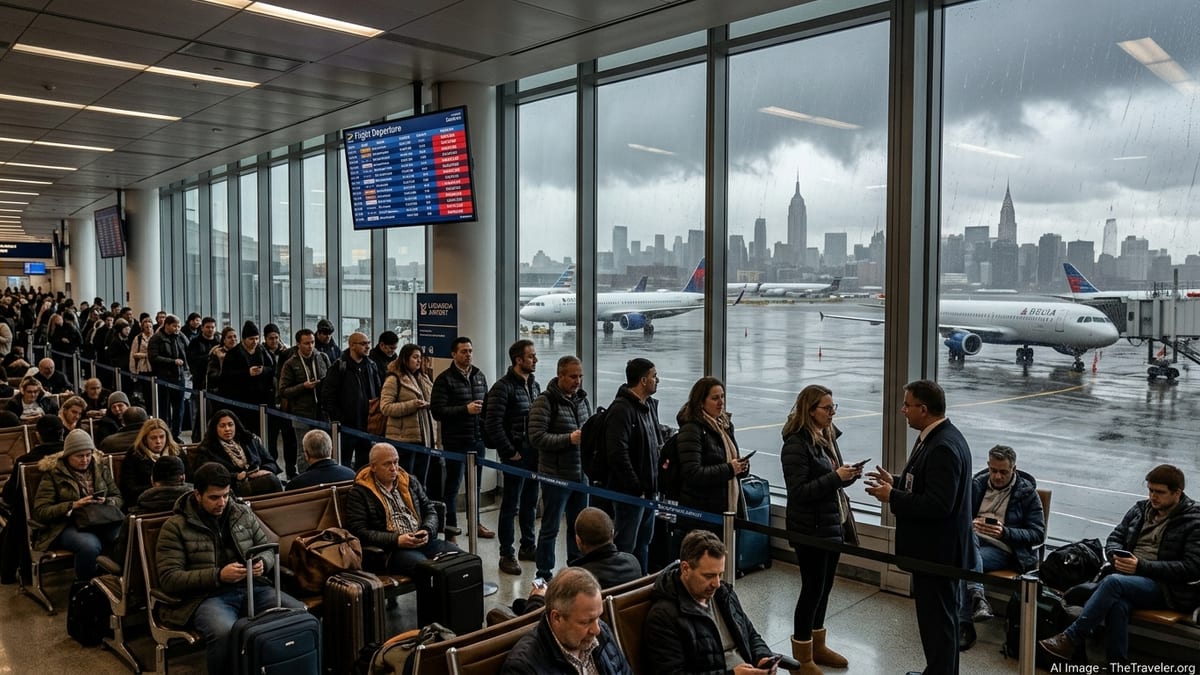
A coastal storm moving up the East Coast on Thanksgiving Day, November 26, 2026, produced strong winds and heavy rain that contributed to clusters of delays and cancellations at New York’s John F. Kennedy and LaGuardia airports and disrupted some Long Island Rail Road services, complicating one of the year’s busiest travel days for thousands of passengers.
Get the latest news straight to your inbox!
Storm conditions and confirmed disruption
The Thanksgiving disruption coincided with a coastal storm that forecasters had warned would bring strong winds, heavy rain and areas of coastal flooding to the New York City region on Thursday. National Weather Service forecasts for the day highlighted sustained northeast winds at LaGuardia Airport in the 30 to 40 mile per hour range, with higher gusts into the 50s, along with periods of intense rainfall. These conditions typically require air traffic controllers to adjust runway use and spacing between aircraft, and can affect the reliability of commuter rail infrastructure, particularly where debris and localized flooding are concerns.
Federal Aviation Administration traffic management advisories issued on November 26 noted arrival delays affecting the New York metro airports, including LaGuardia and Kennedy, during parts of the day. Separate real time tracking compiled from FAA data showed at least one short ground delay program and related constraints at LaGuardia in the late afternoon and early evening, indicating that inbound traffic to the airport was being metered because of weather and associated operational limits. Although these measures did not close the airport, they increased the likelihood of late arrivals and missed connections for passengers with tight itineraries.
Nationwide, the storm system contributed to wider holiday disruption. Flight tracking services reported several hundred cancellations and thousands of delays across the United States on Thanksgiving Day, with New York among multiple East Coast regions affected by high winds and heavy rain. New York’s issues were compounded by the concentration of traffic at its three major commercial airports and by the high volume of holiday travel, which left airlines and air traffic managers with less flexibility to rebook or reroute passengers once delays began to stack up.
Impact at LaGuardia and Kennedy
At LaGuardia, a combination of strong crosswinds, low clouds and high traffic levels produced pockets of significant delay, even at times when the FAA classified the airport’s overall status as open and operating. Live operational dashboards drawing on FAA and airline feeds showed a short ground stop and ground delay program affecting LaGuardia on Thursday evening, with average delays reported around 15 to 20 minutes during the program window, and some flights running substantially later depending on carrier and route. While precise, up to the minute counts of delayed and cancelled flights varied across tracking services and were being updated throughout the evening, the data consistently showed a noticeable uptick in late arrivals and a cluster of cancellations compared with a typical Thursday in November.
At Kennedy Airport, the pattern was similar but less concentrated at any single moment of the day. Historical comparisons of Thanksgiving performance at JFK suggest that Thanksgiving Day itself usually sees a lower percentage of disrupted departures than the peak outbound days earlier in the week, because fewer flights are scheduled. This year, preliminary figures compiled from airport and airline feeds still pointed to a meaningful number of weather related delays and cancellations at JFK on November 26, but not a complete breakdown of operations. As of early evening, the airport remained open with no extended ground stop in place, and airlines were continuing to operate reduced holiday schedules with some adjustments for the storm.
The figures available late on Thanksgiving represent snapshots and are likely to be revised as airlines finalize the status of late night flights and update operating statistics. Different data aggregators also apply distinct definitions for what counts as a delay or cancellation, which can lead to slightly different totals. What is clear from the converging sources is that both of New York’s primary international gateways experienced storm related disruption that was significant enough to affect many passengers’ plans, but did not rise to the level of a complete shutdown.
Long Island Rail Road delays on Oyster Bay and Port Jefferson branches
The storm’s impact extended to parts of the Long Island Rail Road, the busy commuter network operated by the Metropolitan Transportation Authority. Service advisories issued on Thanksgiving afternoon highlighted weather related problems on at least two branches, including Oyster Bay and Port Jefferson, which connect Nassau and Suffolk County communities to the LIRR hub at Jamaica and onward to Manhattan. These lines include stretches of track that can be vulnerable to fallen tree limbs, windblown debris and localized flooding during strong coastal storms.
In one case, an afternoon train from Jamaica to Oyster Bay experienced a delay of approximately 10 to 15 minutes after debris on the right of way required crews to slow service while the obstruction was cleared. On the Port Jefferson branch, mechanical issues affecting equipment in service during the storm added to journey times for some customers and required schedule adjustments. While the disruptions reported on Thursday did not indicate a sustained suspension of service on either branch, they underscored how even relatively minor incidents can ripple through a commuter system operating on a holiday schedule with fewer spare trains and staff available to substitute.
For travelers relying on the LIRR to reach connecting flights at Kennedy via Jamaica, or to meet friends and family along the North Shore of Long Island, these delays introduced additional uncertainty. The MTA’s pre holiday customer notices had already advised riders that Thanksgiving service would follow modified schedules, and the combination of planned changes and weather related incidents meant some journeys could take longer than usual, particularly late in the afternoon and evening as the worst of the storm passed over Long Island.
How this Thanksgiving compares with recent years
Thanksgiving week is historically one of the heaviest travel periods for New York and the United States, and New York area airports typically feature prominently in national delay rankings. Federal data for recent Thanksgiving periods show that the Wednesday before the holiday often records the highest number of delayed departures, while Thanksgiving Day itself tends to see fewer total flights but remains sensitive to weather because reduced schedules leave little spare capacity. In that context, the 2026 coastal storm followed a familiar pattern: travelers who waited to fly on Thursday encountered more challenging conditions than those who departed earlier in the week under calmer skies.
Pre holiday outlooks had already warned that a developing storm along the East Coast could complicate plans for millions of travelers and prompted some airlines to issue flexible rebooking policies for flights into and out of the Northeast on November 26. These waivers allowed eligible customers to move their trips to less affected days without change fees, provided they kept the same origin and destination and rebooked within specified windows. Such policies are now a routine part of major carriers’ responses to forecast disruptive weather and can significantly reduce the number of travelers stranded at airports if used early, but they depend on passengers tracking forecasts and notices in the days before departure.
Early indications from this Thanksgiving suggest that, even with the waivers and advance warnings, the combination of storm impacts on the East Coast and winter weather in other parts of the country produced a significant volume of delayed and cancelled flights nationwide. Within that broader picture, New York’s disruptions were notable but not unique. Other major hubs also reported weather related slowdowns and isolated incidents affecting capacity, underscoring how interconnected the national air system is during peak travel periods. For passengers, this means that a delay originating in one region can quickly cascade into missed connections and schedule changes elsewhere, even if local weather appears manageable.
What travelers should do next
For travelers still in transit on Thursday night or departing in the days immediately after Thanksgiving, the most important step is to rely on real time information from airlines, airports and transit agencies rather than on earlier forecasts or snapshots of the situation. Because both LaGuardia and Kennedy remained open and continued to operate reduced holiday schedules through the storm, individual flight status varied considerably by carrier, destination and time of day. Airline websites and mobile apps typically receive operational updates before third party tracking services and will display any rebooking options offered in response to disruption.
Passengers planning to use the Long Island Rail Road or other regional transit to connect to or from the airports should check service advisories on the day of travel, as weather related restrictions can linger even after the heaviest rain and wind have passed. While Thursday’s issues on the Oyster Bay and Port Jefferson branches were limited in scope, crews may continue inspecting infrastructure and equipment after the storm, which can require temporary speed restrictions or schedule adjustments. Allowing extra time to make airport transfers, especially early on the Friday after Thanksgiving when travel demand remains high, can help reduce the risk of missed flights.
Looking slightly ahead, airlines and airports are expected to adjust operations again for the return travel peak at the end of the holiday weekend. If no further major storms materialize, schedules at JFK and LaGuardia should gradually normalize, but some knock on effects from Thanksgiving Day’s disruption, such as aircraft and crew imbalances, may still appear in the form of isolated delays or equipment changes. Travelers holding tickets for the weekend and early next week should continue to monitor their bookings, confirm ground transport options and, where possible, build flexibility into their plans to accommodate lingering variability in departure and arrival times.