


More news on this day
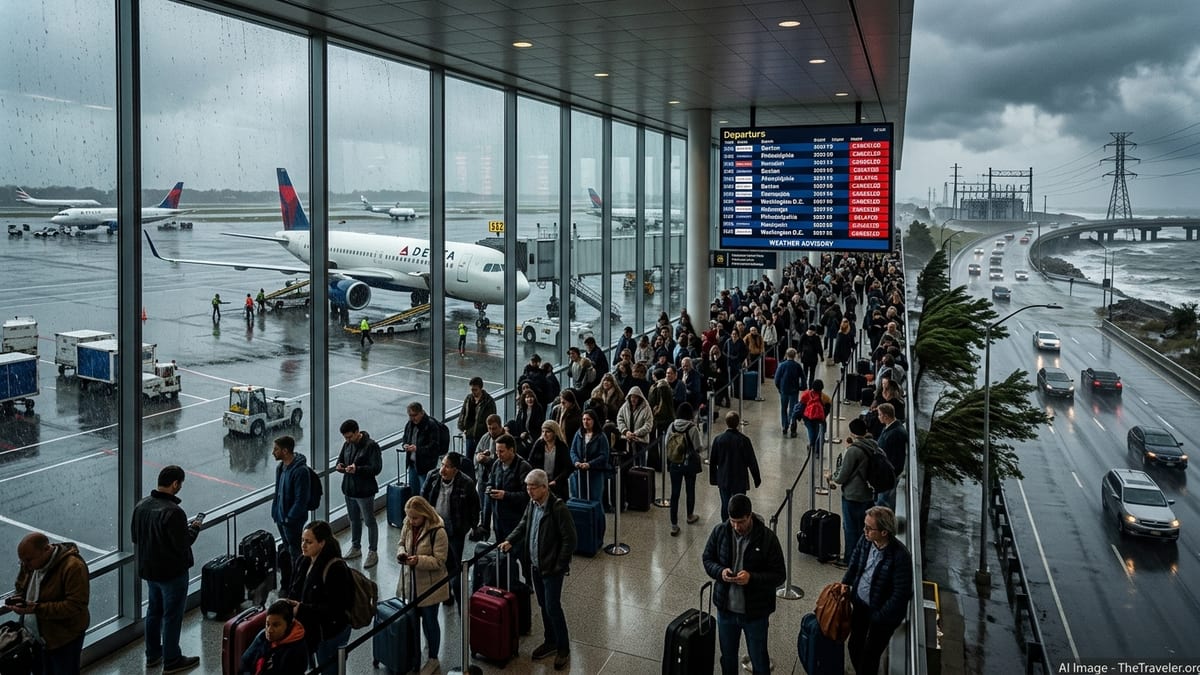
A powerful Thanksgiving nor’easter is pounding the US East Coast on Thursday, November 26, 2026, cutting electricity to hundreds of thousands of homes and businesses and disrupting flights, road traffic and rail services on one of the busiest travel days of the year.
Get the latest news straight to your inbox!
Storm Track, Warnings and Scale of Power Outages
The coastal storm, identified by federal forecasters earlier this week as a potent Thanksgiving system, is tracking north along the Atlantic seaboard after organizing off the Southeast coast. The National Weather Service has issued coastal flood warnings, high wind warnings and wind advisories from the Carolinas through New Jersey and into southern New England, highlighting threats of damaging gusts, heavy rain and localized flash flooding on Thursday into early Friday.
By Thursday afternoon, outage-tracking site PowerOutage.us was reporting on the order of 800,000 to more than 900,000 customers without electricity nationwide, with the largest concentrations in East Coast states including Virginia, Maryland, Pennsylvania and New Jersey. Several outlets cited figures above 750,000 outages by mid-afternoon, with numbers fluctuating as utility crews restored service in some neighborhoods while new outages emerged as trees and branches fell onto lines. The Weather Channel and other meteorological outlets reported that Pennsylvania alone had more than 200,000 customers offline at one point, while Virginia and Maryland each recorded well over 150,000 outages.
State officials in New Jersey, where coastal and bayside communities are facing repeated rounds of high-tide flooding, had already warned of widespread power cuts. An emergency order signed on November 25 noted that gusts between 50 and 70 miles per hour, and even higher along the immediate coast, would create elevated risks of trees toppling onto wires. Similar concerns have played out along the Delmarva Peninsula and in coastal Virginia, where local authorities temporarily closed key links such as the Chesapeake Bay Bridge–Tunnel and the Chincoteague Causeway when winds and rising waters made travel unsafe.
Flight Cancellations, Airport Impacts and Airline Waivers
The storm’s timing has been particularly challenging for air travelers. Thanksgiving Day and the surrounding days are among the busiest of the year at major East Coast hubs, and low clouds, wind-driven rain and crosswinds have combined to slow operations. The National Weather Service’s Aviation Weather Center warned that conditions would be most disruptive from the Carolinas through the Northeast on Thursday, with lingering ripple effects into Friday morning as airlines work through backlogs.
By late morning on November 26, flight-tracking services were reporting hundreds of canceled flights across the United States, with a heavy concentration at East Coast airports affected by the nor’easter. Travel outlets cited mounting cancellations and delays at New York’s LaGuardia and John F. Kennedy airports, Newark Liberty, Philadelphia International, Reagan National and Baltimore/Washington International, among others. Airlines have been using ground delay programs and throttling arrivals during periods of heaviest rain and strongest winds, and some departure queues have stretched well beyond typical holiday levels.
Looking ahead to the rest of the holiday period, forecasters and aviation analysts expect knock-on effects to continue into Friday even as the worst of the weather lifts into New England and the storm gradually weakens. Carriers including United, Delta, American and Southwest have issued weather waivers for parts of the eastern United States, allowing customers booked on affected routes to change their travel dates without standard rebooking fees, subject to fare rules and seat availability. Travelers whose flights are canceled are generally entitled to refunds if they choose not to be rebooked, in line with US Department of Transportation rules, but those whose flights are significantly delayed are primarily being offered no-fee changes rather than automatic compensation.
Road, Rail and Local Travel Disruptions
On the ground, the nor’easter is complicating journeys for those who chose to drive or take the train for Thanksgiving. Heavy rain bands have produced areas of ponding and localized flash flooding on major highways, particularly in low-lying stretches and near tidal rivers. Transportation agencies along the Mid-Atlantic and Northeast coasts have warned of temporary lane closures and speed reductions on interstates and bridges, urging motorists to build in extra time and avoid driving through standing water. With tides already elevated by astronomical conditions and so-called king tides, coastal flood warnings are in effect for parts of the Mid-Atlantic and New England coastlines, increasing the risk of water over roadways in bayside communities.
Rail travelers are also facing interruptions, though impacts have so far been more localized than at airports. Amtrak and several regional commuter rail operators have been monitoring track conditions in flood-prone areas and zones with dense tree cover. While there were no nationwide shutdowns by early Thursday evening, service adjustments and weather-related delays were reported on some Northeast Corridor trains where high water, debris on tracks or power issues temporarily restricted speeds. Transit authorities in metropolitan areas including New York City, Philadelphia and Boston have advised passengers to check for service alerts as strong winds and localized flooding can disrupt overhead power lines, signal systems and low-lying subway or light rail sections.
In several coastal cities, holiday parades and public events have been scaled back or canceled outright. The long-running 6abc Thanksgiving Day Parade in Philadelphia was among the events called off due to the combination of heavy rain and gusty winds. Farther south, Charlotte’s annual Thanksgiving Eve parade was also canceled. In New York City, organizers of the 100th Macy’s Thanksgiving Day Parade postponed the event in response to the forecast for strong winds and rain, a rare disruption that has redirected crowds and visitors who planned to gather along the traditional route on Thanksgiving morning.
Regional Variations and Conditions Beyond the East Coast
Although the most intense impacts on Thursday are concentrated along the Atlantic seaboard, the broader weather pattern is affecting travel across a wider swath of the United States. Earlier in the week, a separate winter storm spread heavy, wet snow across parts of the Midwest, including Missouri, and contributed to flight disruptions at central hubs such as St. Louis. That system is now weakening, but its legacy includes lingering slick roads and minor schedule perturbations as airlines reposition aircraft and crews.
In the Southeast, the coastal storm’s early stages brought periods of heavy rain and thunderstorms to Florida and the Carolinas on Wednesday, resulting in localized delays at airports in Orlando, Miami, Atlanta and Charlotte. As the low pressure system has moved northward, conditions have gradually improved in many of those areas, even as the focus of the worst weather shifts toward the Mid-Atlantic and Northeast. Travelers connecting through southern hubs may still encounter residual delays linked to aircraft arriving late from storm-affected airports farther north.
Farther west, impacts are more muted. The National Oceanic and Atmospheric Administration had forecast separate Pacific systems bringing showers to parts of the Pacific Northwest and Northern California around Thanksgiving, along with areas of mountain snow in the Rockies and Intermountain West. While these systems can certainly affect localized driving conditions, especially over higher passes, they are not currently causing the same level of large-scale power outages or aviation disruption seen along the East Coast. Many major hubs in the central and western United States are operating closer to normal holiday capacity, providing potential rerouting options for airlines managing East Coast bottlenecks.
What Travelers Should Do Next
Conditions and operational decisions are evolving quickly, and the most useful step for anyone traveling over the holiday is to rely on real-time information from official sources. For those flying, airlines’ own apps and websites, along with airport social media feeds and notifications, provide the most current status on specific flights and terminals. Given the combination of wind, low clouds and heavy rain, travelers with departures or arrivals on Thursday evening or Friday morning at major East Coast airports should be prepared for possible schedule changes, including rolling delays as traffic management programs are adjusted with the weather.
Passengers whose flights are canceled because of the storm should review their airline’s rebooking and refund policies. Weather waivers announced by several large carriers typically allow at least one date change on specified routes without a change fee, as long as the traveler departs by a certain date and books the same origin and destination. Hotels and short-term rental providers in key diversion cities may see increased demand as stranded passengers look for last-minute rooms, so contacting accommodation providers early is advisable when an overnight stay becomes likely. Train travelers should monitor Amtrak and regional rail alerts closely, as conditions on low-lying sections of the Northeast Corridor and other coastal routes can change within hours with the tides.
Drivers along the Mid-Atlantic and Northeast coasts are being encouraged by state transportation and emergency management agencies to reconsider nonessential travel during the periods of strongest winds and highest tides. For those who must be on the road, building in extra travel time, checking bridge and tunnel authorities for updated restrictions, and refueling before long stretches is recommended. With hundreds of thousands of power customers already offline and more outages possible as the storm continues, travelers should keep phone batteries charged when possible and have backup navigation options in case traffic lights or roadside lighting fail along their routes. Forecasters expect the nor’easter to weaken and move away from the coast by late Friday into Saturday, but some cleanup, repair work and residual schedule disruptions are likely to continue into the weekend.