


Tokyo Narita International Airport is still the main long-haul gateway for many flights into Japan, especially from North America, Europe and Oce Asia. Sitting in Chiba Prefecture around 60 kilometers east of central Tokyo, Narita can feel overwhelming on a first visit, but a bit of planning turns it into an easy, efficient entry point. This guide walks you through what to expect, using 2026 information and real examples so you can step off the plane knowing exactly what to do next.
Get the latest updates straight to your inbox!
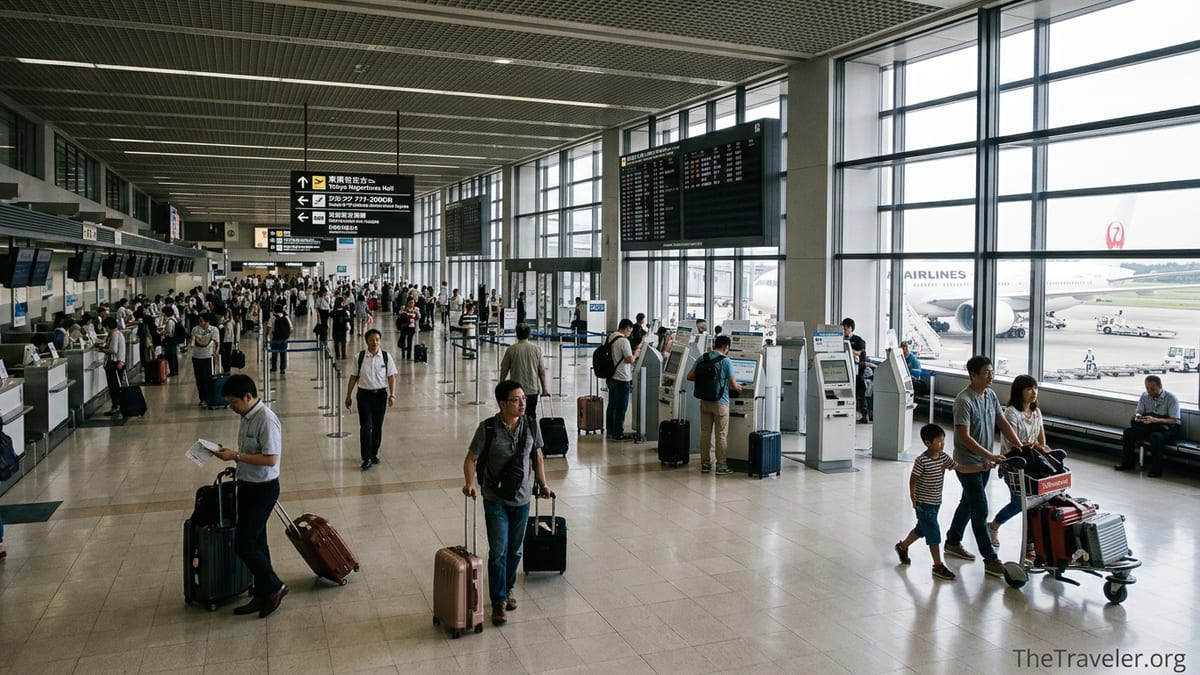
Terminals at Narita: Who Flies Where and How They Connect
Narita has three passenger terminals, and knowing which one you are using will save you a lot of confusion. Terminal 1 mainly handles Star Alliance airlines such as ANA and United, along with several SkyTeam carriers. Terminal 2 is the home of Japan Airlines and most Oneworld airlines, including American Airlines and British Airways. Terminal 3 is the low cost carrier terminal, used by airlines such as Jetstar Japan and other budget operators. The exact airline list changes occasionally, so always confirm your terminal on your booking or boarding pass before you travel.
Terminal 1 is split into a North and South Wing, both connected by a central building with shops, restaurants and the observation deck. This is where many long-haul ANA and United flights arrive. Terminal 2 has a main building and a satellite pier linked by an underground walkway and shuttle system, and sees heavy JAL traffic. Terminal 3, which started as a simple LCC facility, has gradually added more food and retail options, but it still feels more utilitarian compared with the other two.
It is important to understand that only Terminals 1 and 2 have train stations directly underneath them. Narita Airport Station serves Terminal 1, while Narita Airport Terminal 2·3 Station sits under Terminal 2 and also handles Terminal 3 passengers via a walkway. If, for example, you land on a Jetstar Japan flight in Terminal 3 and want to take the Keisei Skyliner into Tokyo, you must either walk about 10 to 15 minutes along a clearly signed indoor corridor to Terminal 2 or take the free shuttle bus and then go down to the station level.
Terminal transfers are straightforward landside. Free shuttle buses loop between all three terminals roughly every 10 to 20 minutes during the day. If you are connecting between two international flights on separate tickets and need to change terminals, you will normally clear immigration, collect your bag, transfer by shuttle or on foot, then check in again. Airside connections exist for some same-airline or same-alliance itineraries, but if your itinerary looks unusual, build in enough buffer time to move between terminals on the public side.
Arrival: Immigration, Customs and Getting Your Bearings
After landing, most international passengers are funneled through immigration, baggage claim and customs in a fairly standard sequence. Japan now uses the Visit Japan Web system for pre-arrival registration, which can speed up the process at immigration and customs. In practice, queues still build during peak arrival windows, typically mid-afternoon to early evening when multiple long-haul flights land within a short period. If your flight arrives around 15:00 to 18:00, be prepared for a possible wait at passport control.
Once through immigration, you collect your bags from the carousels and pass customs. Officers may ask a few brief questions about your stay or luggage; as long as you have completed the electronic customs declaration via Visit Japan Web or the paper form handed out on the plane, the process is usually quick. Families with small children and elderly travelers tend to be waved through with minimal delay unless something specific requires inspection.
Beyond customs, arrival halls open into the public landside areas. In Terminal 1 and Terminal 2 you will immediately see counters for major mobile providers and SIM card kiosks, currency exchange desks, ATMs, and transport information counters. For example, in Terminal 1 North Wing arrivals, you will find JR East and Keisei ticket counters on the same level as the exit to the trains, along with bus company counters selling limousine bus tickets into Tokyo. In Terminal 3, facilities are more compact, but there are convenience stores, ATM machines and several transport ticket counters.
It is worth taking 10 minutes in the arrivals area to get oriented before rushing to the city. This is a good moment to pick up a Suica or PASMO transit card if you do not already have one in your smartphone wallet, buy an eSIM or SIM card if needed, and withdraw a modest amount of cash from an ATM. While Japan has become more card friendly, many small restaurants and local buses still prefer cash, so having the equivalent of 10,000 to 20,000 yen on hand when you leave the airport is practical.
Transport into Tokyo: Trains, Buses and Taxis Compared
Narita sits much farther from central Tokyo than Haneda, so your choice of transport has a real impact on both time and budget. The premium but fastest train is the Keisei Skyliner, which runs from Narita Airport Terminal 2·3 Station and Narita Airport Station to Ueno and Nippori in roughly 40 minutes. A reserved seat one way costs around 2,500 yen to central Tokyo, and there are various discounted packages that combine a Skyliner ticket with 24 to 72 hour subway passes. Seats are reserved, luggage racks are generous and onboard Wi-Fi is standard, making it a comfortable choice if you are staying in Ueno, Asakusa or have an easy transfer from Nippori on the JR Yamanote Line.
The Narita Express, often called N EX, is JR East’s direct train service from Narita to Tokyo Station, Shinagawa, Shibuya, Shinjuku and Yokohama. Journey times to Tokyo Station are around one hour, and the one way fare is typically just over 3,000 yen to central Tokyo. All seats are reserved and seat reservations can be made online as e-tickets or at JR ticket machines and counters in the arrival halls. For a jet lagged traveler heading straight to a hotel near Shinjuku or Shinagawa, rolling your suitcase directly from the Narita Express platform to your hotel’s front door after one train ride is often worth the small time and price premium.
If you are cost conscious, Keisei’s Access Express and Main Line limited express trains are cheaper alternatives, with fares to central Tokyo roughly half the price of the premium services, but they take longer and may be more crowded during commuter peaks. Meanwhile, airport limousine buses connect Narita with major hotel clusters, Tokyo City Air Terminal, Shinjuku Expressway Bus Terminal and Tokyo Disney Resort. A typical one way fare into central Tokyo by bus is in the 3,000 yen range, and journey times can vary from about one hour off peak to two hours or more if expressways are congested, such as on Sunday evenings or around holiday periods.
Taxis and private transfers from Narita into central Tokyo are usually the most expensive option. A standard licensed taxi to central Tokyo can easily exceed 20,000 yen, and traffic conditions are unpredictable. Flat rate taxi services and prebooked private cars are available and may make sense if you are a family of four with heavy luggage or arriving very late at night when train options taper off. However, for most travelers, a Narita Express or Skyliner ticket plus a short taxi hop at the Tokyo end is often the best overall balance of cost, speed and convenience.
Money, Connectivity and Practical Services in the Terminals
Narita’s terminals are well equipped with money and connectivity services, but the mix varies slightly by terminal. ATMs from Japanese banks and international networks such as Seven Bank are available in all terminals landside and in the departure areas airside. Most foreign debit and credit cards work at these machines, although daily withdrawal limits may be set by your home bank rather than the Japanese side. Exchange counters offer cash currency conversion, though the rates at ATMs using a major network card are often more favorable than over-the-counter exchanges.
Mobile connectivity is straightforward. Major Japanese carriers and several MVNOs operate counters in the arrivals halls of Terminals 1 and 2, selling physical SIM cards and pocket Wi-Fi rentals. For example, a typical visitor SIM with several gigabytes of data for 7 to 14 days is usually priced in the low thousands of yen, while a pocket Wi-Fi device rented for a week may run slightly higher depending on data limits. Many travelers now arrive with eSIMs purchased in advance through international providers, which can be activated as soon as you land; airport staff are used to helping visitors confirm that roaming data is working correctly before they leave the building.
Other practical services include luggage delivery and storage. Yamato Transport and Japan Post counters in the arrivals areas offer same or next day delivery of suitcases directly to hotels or Airbnbs in Tokyo and other major cities. For instance, sending a medium suitcase from Narita to a central Tokyo hotel usually costs under 3,000 yen and can be a smart move if you plan to take crowded commuter trains into the city during peak hours. Coin lockers and manned luggage storage counters are available landside and airside, letting you leave a bag for a few hours if you want to use a long layover to explore nearby Narita City or simply lighten your load.
Medical clinics, pharmacies and baby care rooms are scattered through the terminals. If you arrive with a minor medical issue or need basic over the counter medication, information desks can direct you to the nearest pharmacy or clinic. Drinking water fountains are installed throughout, and most areas have accessible toilets and barrier free routes. Narita’s official facility guides include detailed maps of accessible paths, elevators and services for passengers with reduced mobility, so if you have particular needs, it is worth reviewing these in advance or speaking with your airline about assistance at Narita.
Food, Shopping and Lounges: Making the Most of Your Time at Narita
Narita offers a solid range of food options, from quick convenience store snacks to sit down Japanese meals. Landside you will find familiar chains such as Yoshinoya for gyudon beef bowls, Udon and ramen shops, cafes serving sandwiches and pastries, and convenience stores like Lawson or FamilyMart where you can grab bento boxes and onigiri for under 1,000 yen. Airside, especially in Terminals 1 and 2, the mix expands to include sushi counters, izakaya style bars, noodle shops, and international fast food brands, so you can choose between a last bowl of tonkotsu ramen before departure or a safer burger if you are rushing with kids.
Shopping is centered around duty free zones and specialty stores. Cosmetics, liquor and electronics shops cluster just beyond security. Japanese souvenir stores sell regionally branded sweets, green tea and character goods themed around anime and gaming franchises. Prices for cosmetics and liquor are often competitive on international flights, but do not assume every gadget or camera part is cheaper than in central Tokyo; if you are planning serious electronics shopping, places like Akihabara or Shinjuku often offer better selection and after sales support.
Lounge options at Narita are strongest in Terminals 1 and 2. Star Alliance and ANA operate large lounges in Terminal 1, while Japan Airlines offers Sakura Lounges for eligible Oneworld passengers in Terminal 2. On top of airline run spaces, several independent and credit card based lounges are available, particularly in Terminals 1 and 2, where holders of certain premium cards can enter for a small fee or for free. Recent updates to Narita’s lounge listings stress that there are currently no full service lounges located inside Terminal 3 itself, and passengers using that terminal are usually directed to facilities in Terminal 2 if their airline ticket and security rules allow a landside transfer before clearing security.
If you do not have lounge access, the public observation decks, especially the one on the roof of Terminal 1’s central building, are a pleasant way to pass time on a clear day. In 2026 the upper floor of Terminal 1 underwent renovations that added more seating areas, digital art installations and refreshed restaurant spaces. With large windows overlooking the runways, this area is popular with plane spotters and offers a sense of space that is sometimes lacking in crowded gate areas during busy departure banks.
Sleeping, Showers and Long Layovers
Many travelers pass through Narita on long layovers or after late arriving flights that do not connect smoothly with onward domestic or Shinkansen services. Within the airport, you can find day rooms and shower facilities that can be rented for short blocks of time. For example, several rest facilities in Terminals 1 and 2 offer simple private rooms with beds and showers, bookable in hourly units, which can be a lifesaver if you arrive on an overnight flight from Europe and want a real nap before heading into Tokyo.
Capsule hotels and full service hotels cluster both around the airport and one or two train stops away. Well known airport hotels from international chains operate dedicated shuttle buses from all three terminals, usually departing every 20 to 30 minutes through the day and evening. A typical rate for a mid range airport hotel room booked in advance can fall in the mid to upper 10,000 yen range per night, depending on season. If you have an early morning flight, staying at an airport hotel the night before reduces stress and allows you to walk or shuttle to your check in area in a matter of minutes.
For truly long daytime layovers, consider leaving the airport entirely. Narita City is less than 15 minutes away by local train from Narita Airport Station, and the area around Naritasan Shinshoji Temple offers a classic temple street with unagi restaurants, souvenir shops and a spacious park. Coin lockers at Narita stations and bag storage services at the airport make it easy to travel light. Just remember to leave enough buffer time to clear security again; returning to the airport at least two hours before an international departure is sensible, slightly more during peak holiday seasons.
Overnight camping in the public areas of the terminals is technically possible but not especially comfortable, and cleaning routines mean staff may ask you to move or sit up at certain times. Security checks and occasional announcements continue through the night as cleaning and maintenance crews work. Unless your budget is extremely tight, a cheap capsule hotel or business hotel near the airport will usually give you a better rest ahead of a long flight.
Planning Tips for Departures from Narita
When leaving Japan from Narita, build in enough time for both transport and airport formalities. If you are taking the Narita Express from Shinjuku or Shinagawa, or the Skyliner from Ueno or Nippori, aim to board a train that arrives at the airport at least two hours before a short haul Asia flight and about three hours before a long haul flight to North America or Europe. This gives you a margin for small train delays, ticket machine confusion or longer than expected queues at check in and security.
Check in counters typically open two to three hours before departure, although some long haul flights open earlier. If you are traveling with checked baggage, proceed directly to your airline’s counters, which are clearly indicated on overhead screens by flight number and departure time. Security and outbound immigration are usually efficient but can slow down at peak times when several large aircraft depart within a short window, for example late morning or late evening waves operated by major alliances.
Duty free shopping and dining options are located after security, so you do not need to shop landside unless a specific store you want is before screening. Keep a close eye on boarding times; in Japan, boarding often begins 30 to 45 minutes before departure, and gates sometimes close earlier than travelers used to more flexible boarding in other regions might expect. If you are relying on a tax refund counter for large purchases made in city department stores, go directly there after security as lines can build up near popular departure times.
Finally, check whether your airline uses facial recognition or automated boarding gates, which are gradually being rolled out in some parts of Narita. In these cases, you may be asked to scan your passport and boarding pass at a self service kiosk before security, then use face recognition or QR code boarding at the gate itself. Staff are on hand to guide travelers unfamiliar with the system, but it is wise to arrive at the gate at the first call rather than waiting for a final boarding announcement.
FAQ
Q1. How long does it take to get from Narita Airport to central Tokyo?
In typical conditions, the fastest trains such as the Keisei Skyliner take around 40 minutes to Ueno, while the Narita Express takes about one hour to Tokyo Station. Buses and cars can take from about one hour off peak to two hours or more if expressways are congested.
Q2. Which is better from Narita, the Skyliner or the Narita Express?
It depends on where you are staying. The Skyliner is usually faster and slightly cheaper if you are heading to Ueno, Asakusa or Nippori, while the Narita Express is more convenient for Tokyo Station, Shinagawa, Shibuya, Shinjuku and Yokohama because it goes directly to those stations without transfers.
Q3. Can I use my Suica or PASMO card to pay for the train from Narita?
You can tap a Suica or PASMO card to pay the basic fare on JR or Keisei trains, but for premium services like the Narita Express or Skyliner you still need a separate limited express ticket or seat reservation. Many travelers use a mix of IC card for the base fare plus a paper or electronic limited express ticket purchased at the station.
Q4. Is Narita Airport open 24 hours a day?
The airport buildings and some services operate around the clock, but shops, restaurants and transport options have more limited hours. Trains mostly stop around late evening to early night, and some terminal areas may be partially closed for cleaning. If you have a very late or early flight, confirm the first and last train or bus times for your specific day.
Q5. Are there showers and places to rest inside Narita Airport?
Yes. Terminals 1 and 2 have shower facilities and day rooms that can be rented by the hour on the airside and sometimes landside. Airline lounges also often offer showers. These are popular with passengers on overnight arrivals or long layovers, so it can be worth going straight to the reception desk on arrival to secure a time slot.
Q6. What is the easiest way for a family with children to get from Narita into Tokyo?
Many families prefer the Narita Express or limousine buses because there is no need to change trains with luggage and strollers. For example, taking a Narita Express directly to Shinjuku and then a short taxi ride to your hotel is often less stressful than managing transfers on local or commuter trains with small children and suitcases.
Q7. Can I walk between Narita’s terminals instead of taking the shuttle bus?
Yes, but walking is only practical between Terminals 2 and 3, which are linked by a clearly signed indoor walkway that takes around 10 to 15 minutes. Terminal 1 is located farther away, so passengers usually use the free shuttle bus when moving between Terminal 1 and the other terminals.
Q8. Is there luggage delivery from Narita to Tokyo hotels?
Yes. Companies such as Yamato Transport operate counters in the arrivals areas where you can arrange same or next day delivery of your suitcases directly to many hotels and private addresses. This service is especially helpful if you plan to travel into Tokyo during peak commuter times or change trains multiple times.
Q9. How early should I arrive at Narita before my international flight?
Arriving about three hours before a long haul international departure is a comfortable guideline. That allows for check in, security, outbound immigration and some buffer in case of queues. During major Japanese holidays such as Golden Week, Obon or New Year, or if you need to process tax refunds, building in extra time is sensible.
Q10. Is it worth staying overnight near Narita instead of in central Tokyo?
If your flight arrives very late at night or departs early in the morning, staying at an airport or nearby hotel can reduce stress and transport costs. On a normal schedule, most visitors prefer to stay in central Tokyo for better access to sights and dining, using Narita only as a transit point at the start and end of their trip.