


Tokyo Narita International Airport can feel confusing at first glance. It has three separate passenger terminals, multiple train stations, and different airline alliances scattered across the buildings. Yet with a bit of advance knowledge, navigating Narita is straightforward. This guide explains how each terminal works, which airlines use them, and what to expect when you arrive, depart, or transfer through the airport.
Get the latest updates straight to your inbox!
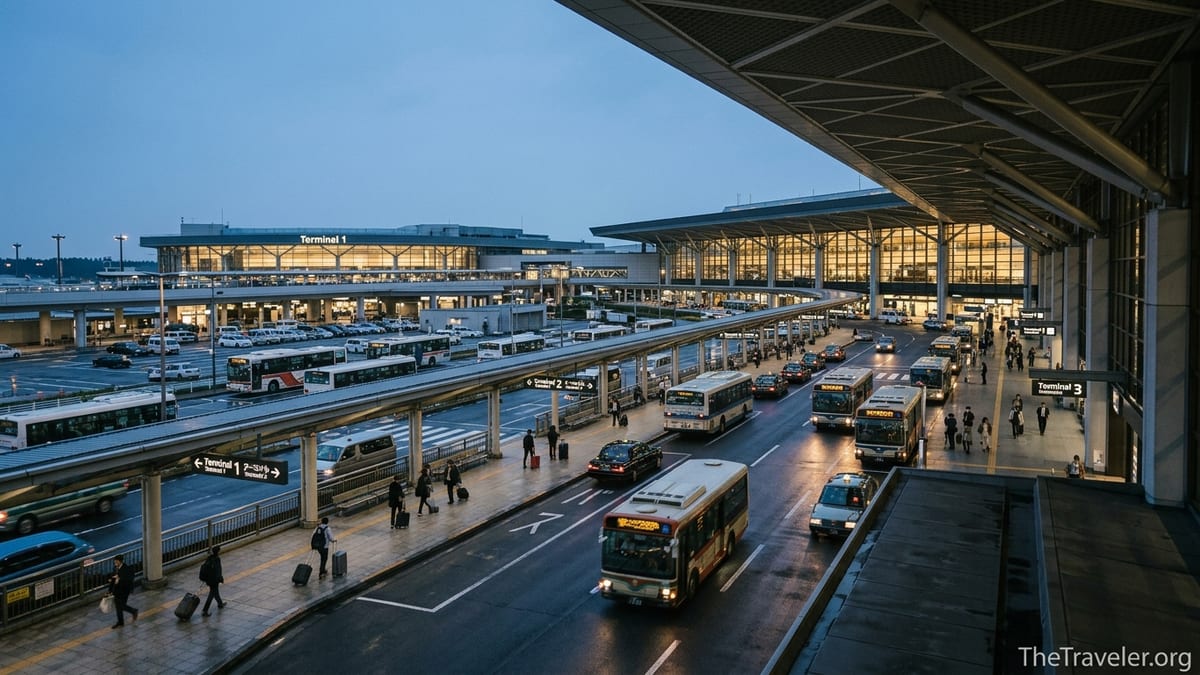
Narita in a nutshell: three terminals, two stations, one big hub
Narita International Airport sits about 60 kilometers east of central Tokyo and serves as one of Japan’s main international gateways. It has three passenger terminals: Terminal 1, Terminal 2 and Terminal 3. All three handle international flights; Terminals 2 and 3 also see some domestic services. A free shuttle bus links the terminals, and two underground train stations connect the airport to Tokyo and beyond.
In broad terms, Terminal 1 is home to most Star Alliance and SkyTeam airlines, including All Nippon Airways (ANA) and many European and North American partners. Terminal 2 is the base for Japan Airlines (JAL) and other Oneworld carriers, along with a mix of non-alliance international airlines. Terminal 3 is the compact low-cost carrier terminal used by airlines such as Jetstar Japan and Peach Aviation on many budget routes.
On the rail side, Terminal 1 has Narita Airport Terminal 1 Station on the basement level, served by JR lines such as the Narita Express and by Keisei trains. Terminals 2 and 3 share Narita Airport Terminal 2·3 Station, also on the basement level of Terminal 2, which is the stop for JR and Keisei services including the Skyliner. Most international visitors arrive or leave via these two stations, then follow clear signage up to the relevant terminal.
For many travelers, the main question is simple: which terminal do I actually need? The answer depends on your airline and route. While your ticket and boarding pass will always show the correct terminal, understanding Narita’s basic layout can save time and stress, especially if you are making a tight connection or arriving after a long-haul flight.
Terminal 1: Star Alliance, SkyTeam and long-haul heavyweights
Terminal 1 is Narita’s largest and one of its oldest buildings, but it has been extensively renovated and feels modern. It is divided into a North Wing, a South Wing and a central building that links the two. Most Star Alliance airlines, led by ANA, use the South Wing, while many SkyTeam members and several non-alliance carriers use the North Wing. This alliance-based layout has been in place since the mid-2000s and remains broadly accurate today, although individual airline assignments can shift slightly over time.
In practice, this means that if you are flying ANA to cities like Los Angeles, Singapore or Frankfurt, or connecting from United Airlines, Lufthansa or Singapore Airlines, you will almost certainly be in Terminal 1 South Wing. Travelers flying with Korean Air, China Airlines, China Eastern or China Southern are usually handled in the North Wing. Newer carriers such as ZIPAIR Tokyo, which offers low-cost long-haul flights to destinations like Honolulu and Los Angeles, also operate from Terminal 1’s North Wing on many routes.
The terminal is structured vertically. On the B1 level you find the Narita Airport Terminal 1 Station concourse, ticket machines, JR and Keisei ticket counters, and services such as SIM card vendors and baggage delivery counters. The first floor is arrivals, with baggage claim, customs and access to buses and taxis. Check-in and most departure facilities are located higher up, typically around the fourth floor, while restaurants, observation decks and some airline lounges are on the upper levels.
To see how this works in real life, imagine a traveler arriving from San Francisco on a United flight and connecting to an ANA service to Sapporo. Both flights operate from Terminal 1, though not always from the same wing. After landing, the traveler would follow transfer signs, clear transit security and then walk to the domestic gate area used by ANA. With a protected connection on a single ticket, a two-hour layover is usually comfortable, as walking times inside Terminal 1 are modest and wayfinding is clear.
Terminal 2: Japan Airlines hub and Oneworld stronghold
Terminal 2 is the busiest terminal at Narita and the main base for Japan Airlines. It also hosts many Oneworld partners such as American Airlines, British Airways, Cathay Pacific and Qantas on most of their Narita routes. Several non-alliance carriers, including some Southeast Asian and Middle Eastern airlines, also use Terminal 2, so it has a wide mix of destinations and passenger profiles at any given time.
If you are flying JAL between Tokyo and major cities like New York, London, Sydney or Bangkok, or if you are on a JAL domestic connection to cities such as Fukuoka or Okinawa, you will almost always use Terminal 2. A typical itinerary might be Los Angeles to Tokyo Narita on American Airlines, then a connection on Japan Airlines from Narita to Osaka Itami. Both flights normally operate from Terminal 2, so you would stay within the same building for your connection. After passing immigration and customs on arrival, you would follow signs for domestic departures and re-check your bags if necessary before clearing security again for the onward flight.
Terminal 2 is directly served by Narita Airport Terminal 2·3 Station on its basement level. High-speed Keisei Skyliner services to Ueno and Nippori, as well as JR Narita Express and rapid trains to Tokyo Station and other points in the city, all stop here. Many travelers prefer using the station at Terminal 2, as it often offers more frequent express services and is physically closer to Terminal 3 via the access corridor.
One detail that can surprise visitors is the scale of the departures area. Terminal 2 has a large, bright departure lobby with a long line of check-in counters, a central security zone and extensive duty free retail after security. For example, travelers flying Emirates from Narita to Dubai, or JAL to Honolulu, will find international brand boutiques, Japanese confectionery shops and electronics stores grouped together in a compact but busy airside mall. Food options range from quick noodle counters and fast food chains to sit-down Japanese restaurants and casual cafes, which can be useful during longer layovers.
Terminal 3: compact home for low-cost carriers
Terminal 3 is Narita’s dedicated low-cost carrier terminal. It opened in 2015 and was designed with simplicity and lower operating costs in mind. The building is smaller and less ornate than the other terminals, with straightforward signage and mostly open-plan boarding areas. Airlines such as Jetstar Japan and Peach Aviation base many of their domestic and regional flights here, especially on routes to Sapporo, Osaka, Fukuoka and Okinawa, as well as some international routes to Southeast Asia.
One key difference at Terminal 3 is that it has no train station directly beneath it. Instead, passengers arriving by train disembark at Narita Airport Terminal 2·3 Station in Terminal 2, then either walk or take a short shuttle bus to Terminal 3. The walk along the signposted access corridor typically takes around 10 to 15 minutes at a normal pace with wheel-friendly flooring and clear color-coded markings underfoot. Travelers with heavy luggage, mobility issues or tight timing may prefer the shuttle bus, which usually takes just a few minutes.
Inside Terminal 3, facilities are more basic than in Terminals 1 and 2 but still comfortable for most travelers. The landside area features a large food court that stays open for extended hours and offers affordable Japanese staples like ramen, curry rice and bento, along with coffee shops and convenience-store-style outlets selling snacks and drinks. Seating is more utilitarian, and amenities like lounges are limited, but this is consistent with the terminal’s budget focus and helps keep fares low on the airlines that operate here.
As a real-world example, consider a backpacker flying into Narita on a full-service airline to Terminal 1, then connecting to a Jetstar Japan flight from Terminal 3 to Naha in Okinawa on separate tickets. Because the tickets are not linked, the traveler would need to clear immigration, collect luggage, take the free shuttle bus from Terminal 1 to Terminal 2, walk or ride to Terminal 3, then check in again at the Jetstar counters. With this kind of self-transfer, allowing at least three to four hours between flights is wise to allow for queues, bus waits and the walk between terminals.
Which terminal is my airline in?
Airline allocations at Narita are generally stable but can shift due to seasonal schedules, new routes or operational changes, so always check your e-ticket or airline app before traveling. That said, some broad patterns are reliable. Japan Airlines and most Oneworld airlines typically use Terminal 2. All Nippon Airways and most Star Alliance carriers use Terminal 1 South Wing. Many SkyTeam members and several non-alliance airlines use Terminal 1 North Wing. Low-cost carriers such as Jetstar Japan and Peach Aviation tend to use Terminal 3 for the bulk of their services.
For instance, if you are flying with British Airways from London to Tokyo Narita, you can expect to arrive at Terminal 2, sharing the building with JAL and other Oneworld partners. If your connecting onward flight to Sapporo is on JAL, your connection will likely remain within the same terminal. In contrast, if you are arriving on Lufthansa from Frankfurt, you will almost certainly land in Terminal 1, often in the South Wing, and connect there to other Star Alliance airlines such as ANA or United on onward legs.
Some airlines occupy interesting middle ground. ZIPAIR Tokyo, a low-cost long-haul carrier wholly owned by JAL, operates many of its flights from Terminal 1 North Wing, despite its JAL connection. Meanwhile, full-service international airlines that are not part of one of the three global alliances may be assigned to either Terminal 1 or Terminal 2 based on operational needs rather than strict alliance rules. Travelers flying on airlines such as Emirates or certain Southeast Asian carriers should always confirm their terminal in advance, since these assignments can occasionally change.
If you are unsure, one practical strategy is to search the airline name and flight number along with “Narita terminal” on your airline’s official website or app a day or two before departure. At the airport, large multilingual information boards in the arrivals halls and departure lobbies clearly show airlines and their assigned counters and wings. Ground staff near station exits and bus stops are used to helping lost travelers and can quickly point you to the correct building if you have your flight number handy.
Transferring between Terminals 1, 2 and 3
Narita provides a free shuttle bus system connecting all three terminals on the landside. Buses usually run every few minutes during the day and evening, with typical ride times of roughly 10 minutes between Terminals 1 and 2, about 3 minutes between Terminals 2 and 3, and around 14 minutes between Terminals 1 and 3, subject to traffic conditions. The bus stops are clearly marked outside the arrivals floors, and LED signs on the buses indicate which terminals they serve in both Japanese and English.
There is also a pedestrian access corridor between Terminals 2 and 3. Walking at a relaxed pace with a suitcase, most travelers cover the distance in around 10 to 15 minutes. The path is indoors or covered, with travelators along part of the way, and painted floor markings reminiscent of a running track make it easy to follow. For someone arriving by train at Terminal 2·3 Station and heading to a Terminal 3 flight with plenty of time and light luggage, this walk is often the simplest choice.
However, walking between Terminal 1 and the other terminals is not practical for most travelers, and airport authorities generally direct passengers to use the shuttle buses instead of attempting to cross the airfield road network on foot. If you land late at night, check the latest operating hours of the shuttle buses and train services, as some routes may reduce frequency later in the evening. In that case, it may be worth allowing extra buffer time between flights or choosing a hotel near the airport if you have an overnight layover.
Consider a few real scenarios. A traveler arrives on ANA from Chicago into Terminal 1 and has a separate low-cost flight from Terminal 3 to Fukuoka three hours later. After immigration and baggage claim in Terminal 1, they would take the shuttle bus to Terminal 2, then either walk or take a second short shuttle to Terminal 3, check in again and clear security. Three hours is often enough, but any delays on the first flight or long lines at security could make the connection stressful, which is why many seasoned travelers prefer at least four hours for cross-terminal self-transfers. By contrast, a protected same-terminal connection, such as JAL to JAL entirely within Terminal 2, can often be comfortable with a 90-minute to two-hour layover, as bags are usually checked through and the only formalities are security and, in some cases, immigration.
Ground transport: knowing which station or bus stop to use
Choosing the right terminal is only half the story at Narita. You also need to know which ground transport options fit best with your terminal and budget. The airport has two train stations: Narita Airport Terminal 1 Station under Terminal 1, and Narita Airport Terminal 2·3 Station under Terminal 2. High-speed services like JR Narita Express and Keisei Skyliner, as well as slower but cheaper JR and Keisei rapid trains, serve these stations and connect Narita with Tokyo Station, Shinjuku, Shibuya, Ueno and other areas.
As an example, a visitor staying near Tokyo Station and arriving at Terminal 1 might choose the Narita Express, which offers direct, reserved-seat trains taking roughly an hour into central Tokyo. Fares vary by class and booking, but travelers can expect to pay on the order of a few thousand yen each way for the convenience and comfort. Budget-conscious travelers arriving at Terminal 2 or 3 often choose Keisei’s Access Express or other commuter-style services to Ueno or Asakusa, with lower fares in exchange for slightly longer travel times and fewer amenities.
Airport limousine buses and other coach services depart from dedicated bus stops outside each terminal’s arrivals level. These buses connect Narita to major hotel districts such as Shinjuku, Shibuya and Ginza, as well as to other airports and regional cities. For instance, a traveler staying in a Shinjuku business hotel might book a limousine bus ticket from Terminal 2 for a ride that typically takes around 90 minutes, depending on traffic, and costs roughly the same as or slightly more than a discounted rail ticket. Buses are especially handy for travelers with large luggage or those heading to hotels not directly served by major train stations.
Taxis and ride services are widely available but significantly more expensive than trains or buses for the long journey into central Tokyo. A typical taxi ride from Narita to central Tokyo can cost the equivalent of well over ten times a budget train fare, depending on traffic and destination. For most travelers, taxis make sense mainly for late-night arrivals when trains and many buses have stopped running, for families or groups sharing the fare, or for those with mobility issues who prefer a direct door-to-door option. Regardless of mode, always check the terminal on your reservation; many ground transport services ask you to specify Terminal 1, 2 or 3 at the time of booking.
The Takeaway
Narita Airport’s three-terminal layout can look intimidating on a map, but the system is more logical than it first appears. Terminal 1 mainly handles Star Alliance and SkyTeam airlines, Terminal 2 is the stronghold of Japan Airlines and its Oneworld partners, and Terminal 3 serves low-cost carriers on domestic and regional routes. Free shuttle buses tie everything together, and two train stations on the basement levels connect the airport efficiently to Tokyo and other cities.
For a smooth trip, the most important steps are simple: confirm your terminal with your airline before you travel, allow extra time for cross-terminal transfers, and choose ground transport that matches both your budget and your arrival terminal. If you land in Terminal 1 and plan to catch a budget flight from Terminal 3, build in a comfortable buffer and be ready to use the shuttle buses and access corridor. If your entire journey is on a single alliance and ticket, you will usually stay within one terminal, simplifying your connection considerably.
Above all, remember that Narita is used to hosting millions of international travelers every year. Signs are multilingual, staff are accustomed to helping confused passengers find the right building, and the terminal layouts prioritize straightforward movement between trains, buses, check-in halls and gates. With a bit of advance familiarity and a clear idea of which terminal you need, Tokyo Narita Airport becomes far less of a puzzle and far more of an efficient entry point to Japan and the wider Asia-Pacific region.
FAQ
Q1. How do I find out which terminal my flight uses at Narita? You can check your e-ticket, airline app or booking confirmation, all of which usually list the terminal. At the airport, information boards show airlines and their terminals, and staff at train stations and bus stops can confirm it if you provide your flight number.
Q2. Can I walk between Narita’s terminals? You can comfortably walk between Terminals 2 and 3 using the signposted access corridor, which takes around 10 to 15 minutes at an average pace. Walking between Terminal 1 and the other terminals is not practical, so most travelers use the free terminal shuttle buses instead.
Q3. How long does the shuttle bus between terminals take? Under normal conditions, the shuttle bus usually takes around 10 minutes between Terminals 1 and 2, about 3 minutes between Terminals 2 and 3, and roughly 14 minutes between Terminals 1 and 3. These times can vary with traffic, so allow extra margin if you have a tight connection.
Q4. Which terminal does Japan Airlines use at Narita? Japan Airlines primarily operates from Terminal 2 at Narita, handling both its international and many of its domestic flights there. Most Oneworld partners such as American Airlines and British Airways also use Terminal 2 for their Narita services.
Q5. Which terminal does ANA use at Narita? All Nippon Airways mainly uses Terminal 1, particularly the South Wing, for its international and many domestic flights. Other Star Alliance airlines such as United Airlines and Lufthansa also operate from Terminal 1, making it the primary hub for Star Alliance at Narita.
Q6. What happens if my arrival and departure flights are in different terminals? If your flights are on a single through-ticket, you will follow transfer signs and, if necessary, use the free shuttle bus between terminals after clearing any required immigration or security checks. If you booked separate tickets, you usually need to collect your bags, exit to the public area, ride the shuttle bus to the new terminal and check in again, so allow extra time.
Q7. Is Terminal 3 much more basic than Terminals 1 and 2? Terminal 3 is simpler and more utilitarian than the other terminals, reflecting its focus on low-cost carriers. It has fewer premium lounges and high-end shops, but it does offer a large, affordable food court, convenience-style shops and essential services, which most budget travelers find perfectly adequate for short waits.
Q8. Which train station should I use for each terminal? Use Narita Airport Terminal 1 Station if you are arriving at or departing from Terminal 1. If you are using Terminal 2 or Terminal 3, use Narita Airport Terminal 2·3 Station under Terminal 2, then walk or take the shuttle bus to Terminal 3 if needed. Both stations are served by JR and Keisei lines, including Narita Express and Skyliner services on most schedules.
Q9. How much time should I allow for a transfer at Narita? For a same-terminal, protected connection on one ticket, many travelers are comfortable with 90 minutes to two hours, assuming flights are on time. For cross-terminal or self-transfer connections, especially when changing from a full-service carrier to a low-cost airline or vice versa, allowing at least three to four hours provides a safer buffer.
Q10. Are there hotels near Narita if I have a long layover or early flight? Yes, there are several airport hotels and business hotels near Narita that offer free or low-cost shuttles to and from the terminals. Staying overnight can be a good option if you arrive late, depart very early or prefer not to rush a tight transfer, especially when moving between different terminals or airlines.