


More news on this day
Aviation turbulence across Southeast Asia is colliding with an already fragile tourism rebound in Thailand, Malaysia, and Vietnam, as weather, fuel costs, and geopolitical tensions disrupt flight networks and push travelers to rethink how and when they visit the region.
Get the latest news straight to your inbox!
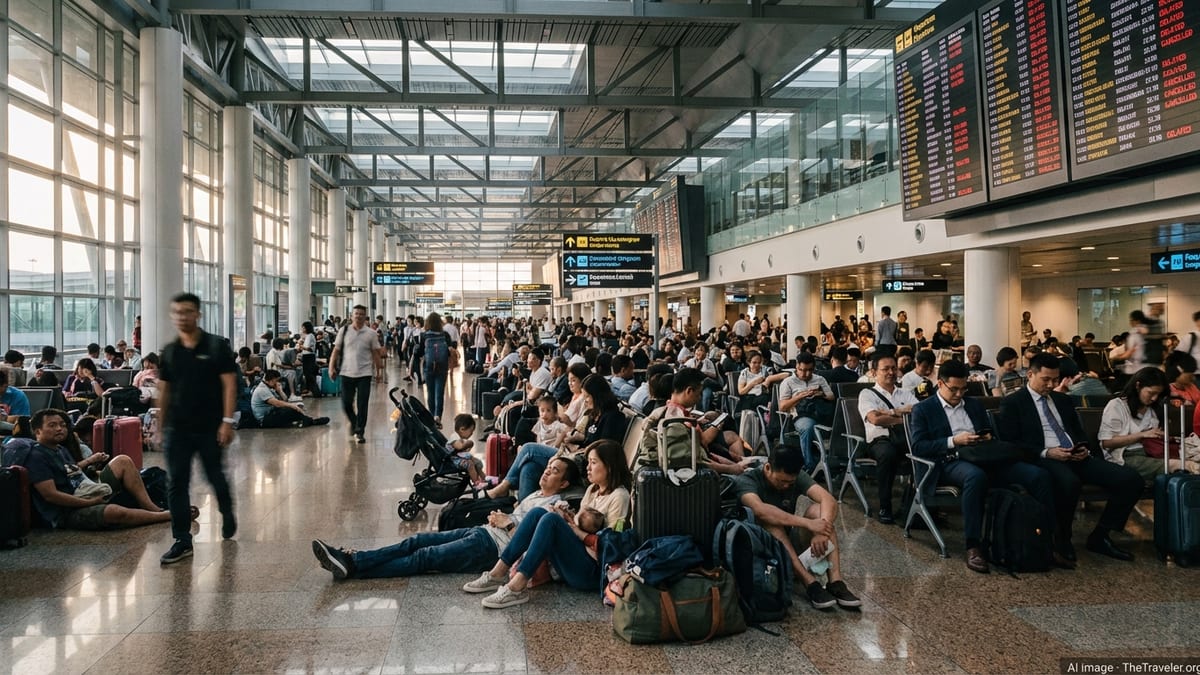
Weather, Fuel and Geopolitics Create a New Aviation Bottleneck
Publicly available data and airline advisories indicate that a convergence of severe weather, higher fuel prices, and conflict-related airspace constraints is putting unusual pressure on Southeast Asia’s aviation system. Regional low cost carriers have warned that storms and typhoon activity are disrupting key corridors that connect mainland Southeast Asia with North Asia and beyond, triggering rolling delays and short notice schedule changes.
Recent advisories from carriers operating out of Malaysia’s main hubs point to typhoon driven disruption on routes into East Asia, with warnings that flight timings may change with limited notice as airlines navigate shifting storm tracks. This comes on top of lingering route adjustments linked to the conflict in the Middle East, which has altered some long haul flight paths into Asia and heightened the sensitivity of airlines to fuel burn and schedule reliability.
In Vietnam, government notices and local media coverage describe a dual challenge of fuel price pressure and constrained supply, prompting at least one major airline to reduce or suspend several domestic routes from April 2026. Reports indicate that these cuts affect secondary city links that feed tourism hotspots, effectively narrowing options for visitors who previously relied on direct point to point services.
Industry briefings in Thailand and Vietnam highlight that air traffic control capacity and crowded airspace are also emerging as structural constraints. Civil aviation data out of Hanoi shows that about a quarter of flights in June departed late, with a significant share of delays attributed to air traffic management factors, compounding the impact of weather and operational issues during the northern summer peak.
Thailand Shifts From Volume to Value Amid Capacity Strain
Thailand’s tourism rebound remains central to its economic outlook, but official planning documents signal a deliberate shift away from pure volume growth as aviation constraints bite. Forecasts from Thai economic and tourism agencies for 2026 assume roughly 30 to 36 million international arrivals, below the most optimistic pre pandemic expectations and short of some earlier industry projections, even as per visitor spending is expected to rise.
Monetary policy reports from the Bank of Thailand link this recalibrated outlook to a mix of global headwinds, including energy price volatility and fluctuations in air connectivity. Projections for 2026 show flat or modestly rising visitor numbers compared with 2025, but with higher average expenditure per trip and stronger overall tourism receipts, reflecting a strategy that privileges longer stays and higher yielding markets over sheer headcount.
Tourism authority communications describe a pivot toward what officials have branded a quality led or “value over volume” approach. Campaigns launched for 2026 emphasize themed experiences, regional dispersal beyond Bangkok and the main resort islands, and niche segments such as wellness, sports, and cultural festivals. Analysts note that this dovetails with capacity limits at major airports and a finite number of slots on key regional routes, especially during peak seasons when weather disruptions are most acute.
Thai economic performance reviews for late 2025 already show signs of this structural change. The number of international tourists dipped year on year, but accommodation and food services still expanded slightly, supported by higher spend per visitor. Policy papers suggest that sustaining this model while aviation networks remain fragile will depend on better coordination of schedules, investment in secondary airports, and efforts to spread demand more evenly across the calendar.
Vietnam Balances Rapid Growth With Rising Delays
Vietnam has been one of Southeast Asia’s fastest growing aviation markets in the first half of 2026, with civil aviation statistics showing international passenger volumes rising strongly compared with the previous year. This surge in demand, however, has collided with infrastructure and resource constraints, producing what local travel media describe as a “summer squeeze” across major airports.
Civil Aviation Authority figures for June indicate that Vietnamese airlines operated more than 25,000 flights that month, with an on time performance rate of about 76 percent. Nearly a quarter of services departed late, and analysis of the causes shows that late arriving aircraft and air traffic management restrictions account for a significant share, alongside weather and other operational issues.
Separate government notices in March outlined fuel supply concerns that led the national carrier to pare back less profitable domestic routes from April 2026. The suspended or reduced services primarily connect northern and central cities with secondary tourism destinations, which travel agents say will likely push more visitors onto trunk routes via Hanoi and Ho Chi Minh City, increasing pressure on those hubs.
Vietnamese carriers have also issued winter and holiday period advisories in recent months warning travelers to monitor schedules closely due to fog at northern airports and seasonal weather disruptions. These patterns, combined with rising passenger numbers, suggest that Vietnam’s tourism growth in the near term will be constrained less by demand and more by the capacity and resilience of its aviation system.
Malaysia Faces Knock-On Effects From Regional Skies
Malaysia’s major airports function as important regional transfer points, and the latest wave of aviation disruption has highlighted both their strategic role and their vulnerability to shocks beyond the country’s borders. Malaysian based low cost and full service carriers operate dense networks across Southeast Asia and into North Asia, meaning that typhoon systems, airspace restrictions, and congestion in neighboring countries can ripple quickly through schedules.
Recent advisories from leading budget airlines headquartered near Kuala Lumpur warn that flights to East Asian destinations may face delays and potential cancellations as typhoons move through the East China Sea and surrounding areas. Although Malaysia itself is outside the direct path of these storms, the need to re route aircraft and manage crew hours has knock on effects for flights to Thailand, Vietnam, and domestic resort destinations such as Langkawi and Sabah.
Tourism officials and analysts in Kuala Lumpur, writing in local economic and industry reports, have noted that higher fuel costs and a strong focus on capacity discipline among airlines are limiting the rapid restoration of pre pandemic flight frequencies. Carriers are prioritizing routes with consistent year round demand, which can leave seasonal leisure destinations with fewer seats than tour operators would like during peak holiday periods.
Malaysia’s tourism strategy documents for 2026 stress diversification of source markets and increased promotion of multi destination itineraries that combine Malaysia with neighboring countries. However, the current aviation environment is complicating these plans, as travelers grow wary of tight connections across multiple carriers and hubs that are already operating close to capacity.
Travelers Confront a New Reality in Southeast Asia
For visitors planning trips to Thailand, Malaysia, and Vietnam in the coming months, the pattern emerging from public data and airline communications points to a more complex and less predictable travel environment. Weather related schedule changes, slower restoration of secondary routes, and congestion at key hubs are reshaping how itineraries are built and executed.
Travel trade commentary across the region indicates that flexible planning is becoming essential. Agents and tour companies are encouraging travelers to allow more transit time between flights, consider flying into secondary airports when available, and build greater tolerance for schedule shifts into their plans. Dynamic pricing, influenced by fuel costs and limited capacity, is also making it more difficult to secure last minute deals on popular routes.
Regional economic assessments from multilateral institutions show that tourism will remain a core growth driver for all three countries, but also underscore that aviation bottlenecks could cap the pace of recovery through 2026 and 2027. Forecasts for Thailand in particular point to tourism receipts returning to or exceeding pre pandemic levels even as headcounts remain lower, reinforcing the shift toward higher value segments and more targeted marketing.
As Southeast Asia navigates this historic shift, the balance between aviation resilience and tourism ambition is becoming a defining policy challenge. For travelers, the new reality is straightforward: the region’s beaches, cities, and cultural sites remain as compelling as ever, but reaching them now demands more planning, patience, and attention to rapidly changing conditions in the skies.