


More news on this day
A recent freight train derailment near a cluster of golf courses outside Eureka has disrupted regional rail operations, unsettled nearby leisure traffic, and drawn fresh attention to how heavy industry and recreation share the same narrow corridors.
Get the latest news straight to your inbox!
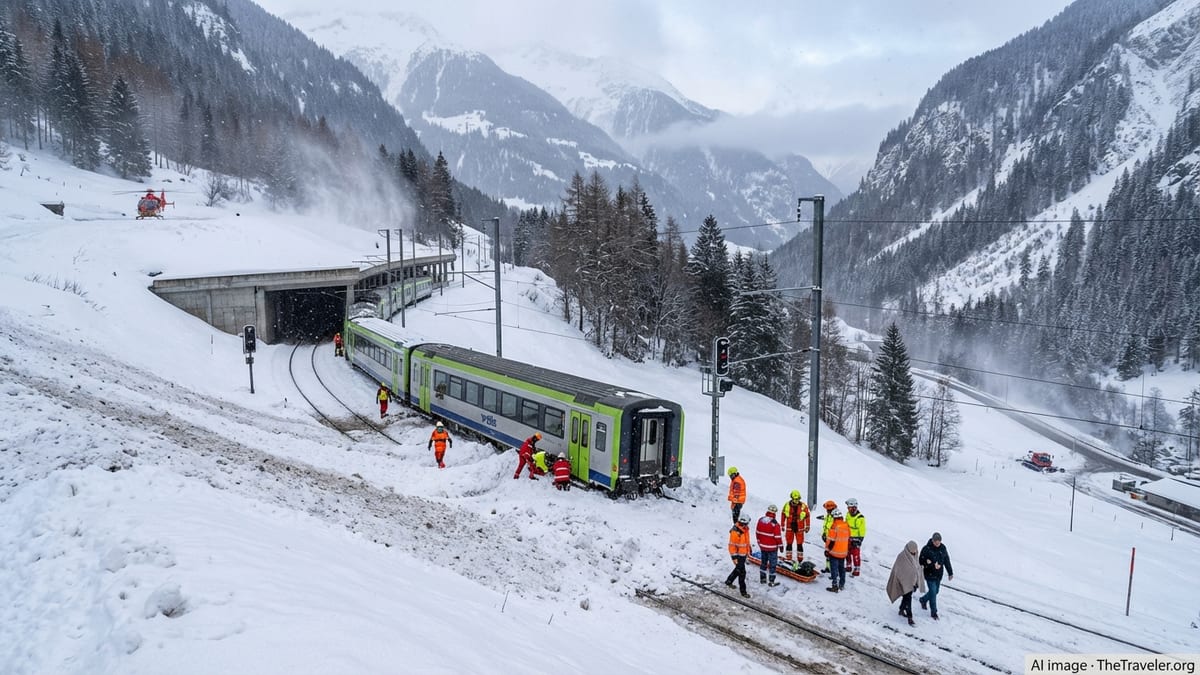
Derailment near fairways rattles a quiet golf corridor
Initial reports describe a freight consist leaving the main line and coming to rest near golf course property on the outskirts of Eureka, in an area better known for manicured fairways than rail incidents. Early information from rail safety databases and regional media indicates that several cars left the track close to a stretch where trains run parallel to local roadways serving multiple golf facilities. The incident did not involve a passenger service, and there were no early indications of serious injury, yet the location alone has amplified interest among travelers and golfers who rely on the corridor.
Publicly available summaries suggest the train was engaged in routine freight movement when it encountered trouble near a junction leading toward a local yard. The complex weave of sidings, signals, and crossings that fan out from industrial Eureka toward more rural recreation zones can create operational pressure points, particularly when long trains traverse older infrastructure. In this case, the derailment occurred close enough to golf course access roads that course operators and visitors reported service disruptions and unusual rail activity in an area that typically sees predictable, low‑drama freight traffic.
The incident has also revived memories of prior derailments along scenic lines serving Eureka and surrounding communities, where disused freight cars and older right‑of‑way scars still dot the landscape. For regulars at nearby courses, the sight of rail equipment off the track is an unwelcome reminder that heavy industry remains only a fence line away from putting greens and driving ranges.
While the precise mechanical trigger is still being evaluated through formal investigations, past records for the broader Eureka area highlight issues ranging from signal compliance to track geometry. That broader context is informing how analysts frame this latest event and its implications for travel through the region.
Travel disruptions for visitors heading to Eureka’s courses
For travelers, the immediate effect of the derailment has been uncertainty. Rail passengers looking to combine a journey to Eureka with tee times at nearby clubs have encountered changing timetables, potential bus substitutions, and in some cases recommendations to consider highway travel instead. Published coverage of similar recent derailments on other lines shows that railroads often suspend sections of service for days or even weeks while conducting inspections and repairs, and early indications suggest a comparable pattern may unfold here.
Golf visitors who planned car‑free itineraries are among the most affected. Package trips that stitched together rail arrivals, shuttle transfers, and afternoon rounds have in some cases been reorganized at short notice, with operators leaning on charter coaches or rideshare arrangements. In a region where rail has increasingly been promoted as a scenic, lower‑stress alternative to driving, the sudden need to pivot back to road transport has come as a disappointment.
On the road network, the derailment’s footprint has been more subtle but still noticeable. Gate closures at level crossings, heavy equipment staged along access routes, and intermittent lane reductions have added minutes to journeys between Eureka’s lodging districts and the cluster of golf courses just beyond town. For drivers unfamiliar with the area, detours around blocked crossings have required careful attention to local signage and navigation apps.
Despite these inconveniences, most routes into the Eureka golf belt remain open, and reports indicate that airports and interstate highways serving the broader region are operating normally. Travelers who build in extra time, check rail operator advisories in advance, and stay flexible on arrival and departure windows are still finding workable paths to the fairways.
Environmental and safety concerns in a recreational landscape
The proximity of the derailment to golf facilities has sharpened local focus on environmental safety. Freight trains moving through the Eureka area can carry a mix of commodities, from lumber and agricultural products to industrial inputs such as fertilizers or petroleum‑related goods. In past incidents elsewhere, minor spills near golf courses have produced strong odors and short‑term concerns about runoff toward ponds and creeks that form part of course design.
In this case, initial public information has not pointed to a major hazardous‑materials release, yet the very possibility has encouraged renewed scrutiny of commodity flows through recreation zones. Course managers, local residents, and visiting golfers have shown heightened interest in understanding what typically moves along the line, how derailments are contained, and what monitoring occurs when rail equipment comes to rest near greens, fairways, or water hazards.
Rail safety data assembled by national regulators show that derailments remain relatively rare when compared with overall train movements, but that they tend to cluster at complex junctions, in yards, and on aging infrastructure. Some of those risk factors overlap with the edges of urban and recreational areas, where yards transition toward open country and land values have encouraged development of golf properties near existing rail rights‑of‑way.
Advocacy groups focused on both transportation safety and outdoor recreation have used previous derailments nationally to argue for stronger disclosure of hazardous cargoes, expanded buffer zones between tracks and sensitive land uses, and more transparent emergency‑response planning. The Eureka‑area event is already being cited in that ongoing debate, underscoring how golf tourism, neighborhood quality of life, and rail logistics intersect.
Rail operators respond with inspections and timetable changes
According to publicly available statements and past practice in similar cases, rail operators typically respond to derailments near populated or recreational zones with a sequence of measures: securing the site, rerailing or removing damaged cars, inspecting and repairing track, and then gradually restoring service. Early indications from the Eureka corridor suggest that this pattern is unfolding again, with specialized crews using cranes, track machines, and engineering assessments to certify the line for renewed traffic.
During this process, timetables often remain fluid. Freight flows may be rerouted onto alternate lines, compressing capacity elsewhere, while any passenger services that normally share the track can experience suspensions or extended journey times. Travelers with flexible itineraries may see late‑breaking opportunities once partial service resumes, yet those with fixed tee times or onward connections are being advised through general guidance to monitor schedule changes closely.
The derailment has also prompted conversations about signal systems, train handling around key junctions, and the length and weight of freight consists passing near recreation corridors. While detailed causal findings will emerge only after formal investigation, prior analyses of derailments across the network have highlighted the value of robust crew training, clear operating rules in congested zones, and sustained investment in track maintenance.
Railroads, regulators, and local planners often review lessons from each incident and consider targeted improvements. For the Eureka corridor, that may translate into refinements to dispatcher protocols at nearby yards, updated infrastructure at key control points, or renewed consideration of how speed and train length are managed where tracks run close to public recreation areas.
What travelers to Eureka’s golf region should know now
For travelers planning near‑term trips to golf courses outside Eureka, the derailment is a factor to weigh rather than a reason to cancel altogether. Courses remain open, lodging providers are welcoming guests, and highway access is intact. The largest uncertainty revolves around rail timetables, particularly for those hoping to arrive by train and avoid renting a car.
Prospective visitors are finding it useful to adopt a layered approach: checking rail service advisories in the days before departure, confirming shuttle or transfer options with accommodation providers, and allowing extra time on travel days to accommodate possible bus bridges or detours. Travel insurance that covers disruption can also provide added peace of mind, especially for longer, pre‑booked itineraries involving multiple destinations.
Those already in the Eureka area are reporting that, aside from localized construction activity near the tracks and occasional noise from recovery operations, the atmosphere on the courses remains largely unchanged. Fairways are open, clubhouses are operating as usual, and most of the visible impact is confined to the rail corridor and nearby road shoulders.
In the longer term, the incident is likely to feed into broader discussions about how transportation corridors coexist with the region’s growing appeal as a golf and outdoor‑recreation destination. For travelers, that evolving dialogue may eventually translate into more resilient infrastructure, clearer information when incidents occur, and better coordination between railroads, tourism operators, and local communities that share the same slice of landscape.