


More news on this day
Water has begun flowing again at London Gatwick Airport after a major supply outage on Sunday, July 26, left toilets unusable, restaurants closed and travelers facing significant disruption at one of Europe’s busiest summer gateways.
Get the latest news straight to your inbox!
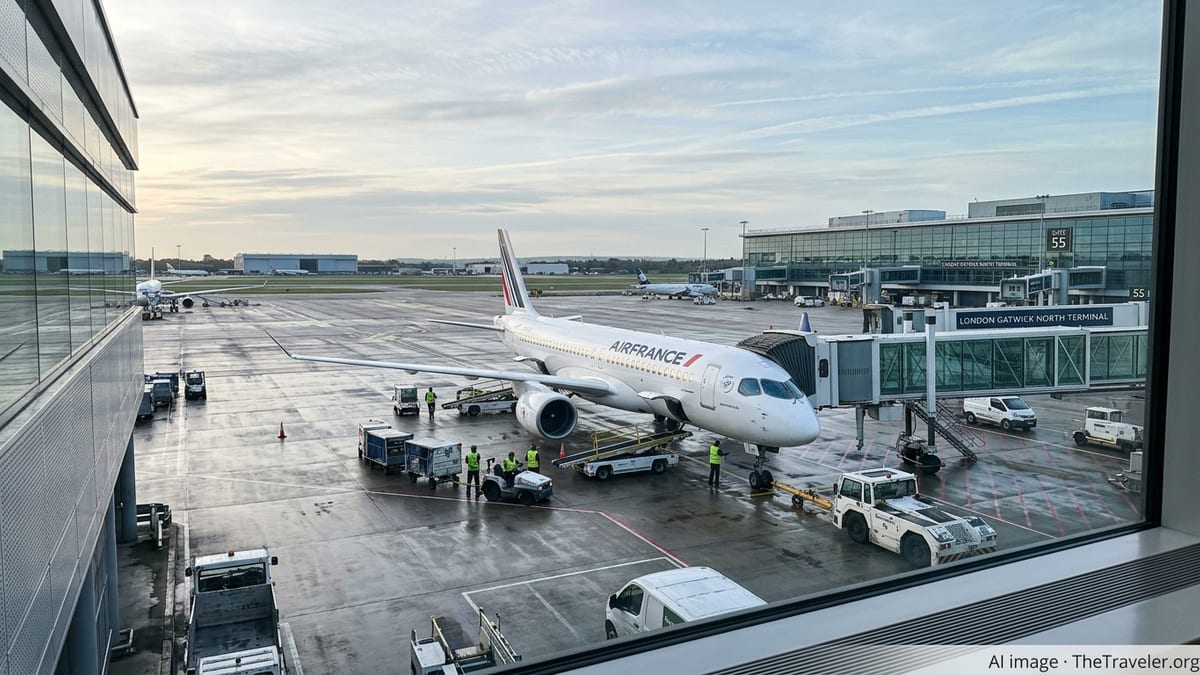
Service Gradually Restored After Treatment Plant Failure
Published coverage indicates that the disruption originated outside the airport, after a power issue at a regional water treatment facility supplying Gatwick and parts of the surrounding area. The fault led to a sharp drop in water pressure across both the North and South terminals, cutting off supplies to toilets, kitchens and many staff facilities during a peak holiday weekend.
By Monday, reports from British and international outlets suggested that water pressure had been restored across most of the airport, allowing toilets to reopen and food and beverage outlets to begin trading again. Some venues were understood to be operating with limited menus or reduced seating while systems were flushed and safety checks were completed.
Publicly available information shows that the airport focused on restoring basic sanitation and drinking water first, before progressively bringing commercial operations back online. Travelers arriving later in the day reported more facilities open than those who had passed through the terminals during the height of the outage.
Travel industry observers note that while the technical cause lay off site, the incident highlighted how quickly a critical utility failure can cascade through a complex aviation hub, disrupting core services even when runways and air traffic systems remain unaffected.
Passenger Experience: Long Queues, Limited Facilities
Throughout Sunday, images and accounts shared in media coverage described passengers queueing for the few working toilets and congregating in terminal areas where bottled water and temporary provisions were made available. Many bars, restaurants and coffee shops were closed for several hours, removing key amenities for families, elderly travelers and those facing delays or missed connections.
According to reports from outlets including Reuters, the Associated Press and British broadcasters, airport operators encouraged passengers to arrive prepared for reduced services, suggesting that travelers bring filled water bottles and purchase food in advance where possible. Some travelers described using facilities on board aircraft or in airport lounges that were able to maintain limited water supplies.
The disruption coincided with a busy summer getaway period, amplifying the sense of crowding in concourses and gate areas. With many dining and restroom facilities out of service, public seating areas quickly filled, and some passengers chose to wait in outdoor drop-off zones or nearby hotels until closer to departure times.
Despite the challenging conditions, publicly available accounts suggest that most flights continued to operate, with airlines focusing on keeping turnarounds on schedule while working around restricted catering and cleaning options on the ground.
Operational Impact on Flights and Airport Services
While runways and air traffic control were not directly affected by the water issue, knock-on effects were felt across a range of airport operations. Ground handling teams and cleaning crews had to adapt to limited access to running water, and some aircraft cleaning and catering services were reduced or modified.
Published coverage indicates that both terminals remained open, but with selected areas cordoned off where toilets and taps were out of service. Some passengers reported minor delays at security and boarding as staff managed crowding and directed travelers towards the small number of available facilities.
According to travel industry reports, airlines operating at Gatwick attempted to minimize additional disruption by maintaining their flying programmes where possible. There were no widespread cancellations attributed solely to the water outage, although individual services experienced delays as aircraft turnaround times adjusted to the temporary constraints.
For connecting passengers, the lack of food options and limited toilets in certain zones added stress to already tight transfer windows. Some opted to purchase refreshments on board or at onward destinations rather than rely on the airport’s restricted retail offering during the outage period.
Infrastructure Resilience and Questions for Providers
The events at Gatwick have raised fresh questions about infrastructure resilience at major European airports during a period of high travel demand. Aviation analysts note that while power and IT redundancies are now standard at large hubs, dependence on external utilities such as regional water networks can remain a critical vulnerability.
Recent public scrutiny of water suppliers in southeast England, highlighted in national reporting and parliamentary committee work, has already focused attention on supply reliability and the speed of response to major interruptions. The Gatwick disruption is likely to add to calls for more robust contingency planning around key transport nodes.
Commentary in travel and business media suggests that airports may now face pressure to review on-site storage capacity, emergency pumping arrangements and rapid deployment options for temporary sanitation facilities. For passengers, the incident underscores the importance of carrying basic essentials such as refillable water bottles, hand sanitiser and small supplies of snacks when travelling through busy hubs.
For London Gatwick, the return of water service marks the start of a recovery phase that will involve not only restoring normal operations but also reviewing how disruption unfolded, how information was shared with travelers, and what additional safeguards might limit the impact of any similar incident in future peak seasons.
What Travelers Need to Know Now
With water supplies largely restored, reports indicate that most toilets, restaurants and shops at Gatwick are returning to normal operating hours. However, some outlets may remain closed or operating on reduced menus while systems are fully checked and restocked, particularly in areas that experienced the lowest water pressure.
Airlines and travel advisers are recommending that passengers flying in the coming days continue to allow extra time at the airport, monitor flight status closely and check pre-departure guidance from their carrier. Travelers connecting through Gatwick should be prepared for residual congestion in some parts of the terminals as cleaning backlogs are resolved and deferred maintenance is completed.
Publicly available information suggests that the wider regional water network is stabilising following the power issue at the treatment works, reducing the likelihood of further sudden outages. Even so, travel experts advise that those with early morning departures or late-night arrivals keep basic toiletries and a small supply of water easily accessible in hand luggage, in case services are still adjusting.
As the busy holiday season continues, many in the travel sector will be closely watching how Gatwick and its utility partners follow up on the outage, and whether lessons from this episode lead to visible changes in how critical services are protected at one of the United Kingdom’s key international gateways.