


More news on this day
A freight train derailed near the rural intersection of 80th Street and 150th Avenue in the Ormonde area of Warren County, Illinois, disrupting a key rail corridor through western Illinois and drawing attention to safety along lightly populated stretches of track used by both freight and passenger services.
Get the latest news straight to your inbox!
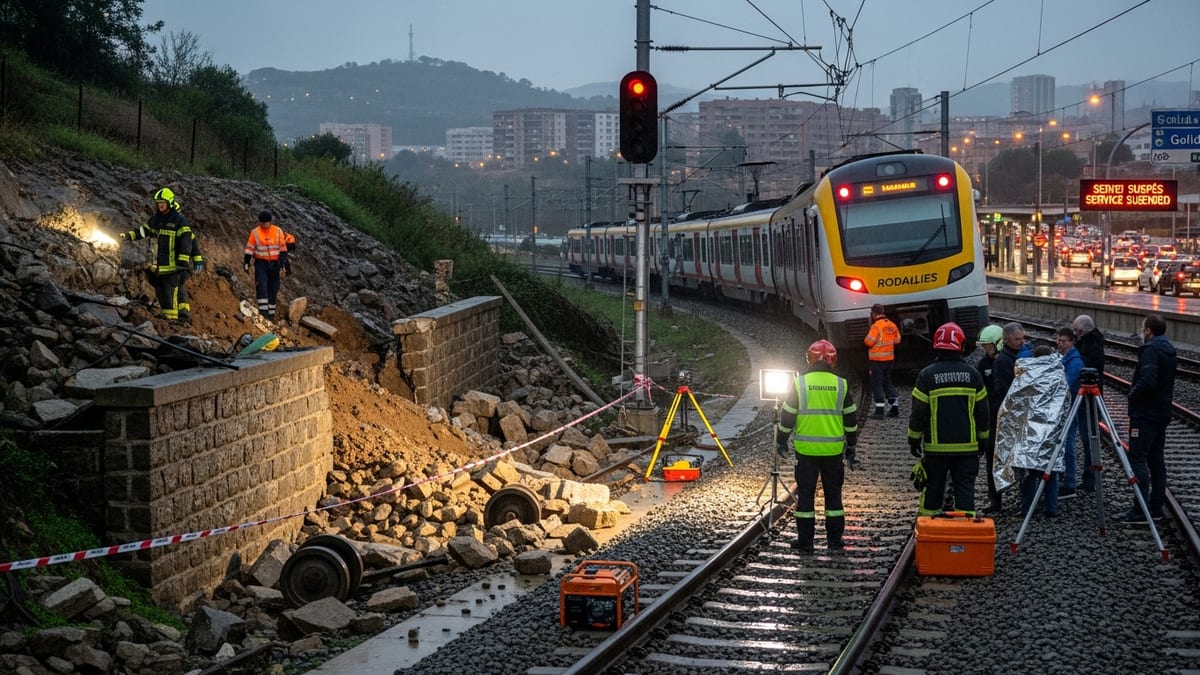
Rural rail corridor shaken by overnight derailment
Publicly available mapping data shows that 80th Street and 150th Avenue intersect in a sparsely populated farming area southwest of Monmouth, along a freight rail line that crosses Warren County on an important east to west route. Early reports indicate that multiple freight cars left the tracks near this crossing, with some coming to rest close to adjacent fields and local roads.
Initial information circulating on regional outlets and social media suggests the derailment occurred during hours of darkness, when freight traffic is common on this corridor. The location, far from major towns, appears to have limited direct impact on residential areas, but has complicated access for road and rail crews moving heavy equipment to the scene.
At this stage, publicly accessible reports do not indicate any fatalities, and there are no widely reported large scale evacuations in the Ormonde vicinity. Travel disruptions, however, are being felt well beyond Warren County as trains that normally use this route are delayed, rerouted or held short of the affected segment.
Local observers describe a scene typical of rural derailments: a line of freight cars tipped or jackknifed along the ballast, with agricultural land on either side and emergency vehicles staged on gravel section roads. From a distance, the incident underscores how critical but vulnerable single track main lines can be in largely agricultural regions.
Impact on passenger services and regional mobility
The rail line crossing Warren County near Ormonde forms part of a broader network that supports both freight movements and long distance passenger trains linking Chicago with communities across the Midwest. When a freight derailment blocks the line, it can lead to cascading delays for passenger operations far from the actual site of the incident.
According to publicly shared accounts from travelers and rail observers, at least one long distance passenger service experienced significant disruption on June 17, with discussions referencing a freight train derailment near Monmouth and the need for detours or alternative arrangements. Passengers reported extended travel times and uncertainty as dispatchers and operators evaluated whether trains could safely bypass the blocked section or required bus connections.
Such incidents highlight the dependence of passenger services on host freight railroads across Illinois. Even when passenger trains are not directly involved in an accident, the condition of shared track and the availability of alternative routes can determine whether travelers reach their destinations on time or face hours of delay.
For road users, the derailment near 80th Street and 150th Avenue appears to have had a more localized effect. Rural grid roads are generally flexible, allowing drivers to detour a few miles north or south to find an open crossing, but agricultural traffic, school routes, and emergency response times can still be affected while crossing approaches remain blocked or under inspection.
Safety context in Warren County and western Illinois
The Ormonde area sits along a long established rail corridor that carries substantial volumes of grain, manufactured goods and other freight across western Illinois. State planning documents and county maps show a lattice of numbered township roads intersecting the line at regular intervals, many of them protected only by crossbucks or basic warning devices rather than advanced gates and signals.
Illinois wide reports on railroad safety and hazardous materials incidents have documented dozens of derailments over recent years, ranging from minor yard mishaps to high profile events involving hazmat releases and large property damage. While there is no indication from early public information that the Ormonde derailment involved a major hazardous spill, any freight incident inevitably prompts renewed scrutiny of what each train is carrying and how well communities along the line are prepared for emergencies.
Rail safety advocates frequently point to rural derailments as evidence that investment is needed across the entire network, not only in dense urban corridors. Western Illinois, with its mix of unit grain trains, intermodal traffic and through freights, depends heavily on the reliability of tracks that converge on hubs such as Galesburg and the Quad Cities.
For Warren County, the Ormonde derailment now becomes part of a broader conversation about grade crossing protections, track maintenance and emergency access in areas where trains and farm equipment share the same narrow band of transportation infrastructure.
Response, cleanup and expected restoration of service
Railroad incident response typically unfolds in several phases: securing the site, assessing damage, rerailing or cutting up affected cars, and then repairing track and signaling so trains can move again at normal speeds. In an agricultural setting like 80th Street and 150th Avenue near Ormonde, access roads and field conditions strongly influence how quickly heavy cranes and maintenance of way equipment can reach the derailment.
Photographs and descriptions from similar incidents in the region suggest that temporary service restrictions, such as slow orders or single tracking around repaired segments, can persist for days after the last derailed car is removed. Ballast replacement, tie work and careful inspection of rail and fastenings are required before dispatchers can confidently route high speed freight and passenger trains over the site.
In the meantime, freight carriers often hold trains on sidings, reroute some traffic over longer paths, or reschedule movements to clear backlogs once the line reopens. For communities along the corridor, this can translate into periods of unusually quiet tracks followed by intensive train activity as pent up demand moves through.
Travelers planning rail trips across Illinois in the days following the Ormonde incident are likely to encounter advisories about potential delays and altered schedules, particularly for long distance services that rely on this western approach to and from Chicago.
What travelers and nearby residents should watch for
For residents around Ormonde and along 80th Street and 150th Avenue, the most visible signs of the derailment will be work crews, machinery and potentially temporary road closures near the tracks. Dust, noise from heavy equipment and nighttime lighting are common as railroads work to restore the line quickly.
Travelers using intercity passenger rail across Illinois should pay close attention to alerts from operators, station announcements and local news coverage in the near term. Even after the main line reopens, residual congestion can lead to schedule adjustments, different stopping patterns, or the use of substitute buses over shorter segments.
From a broader travel perspective, the Ormonde derailment serves as a reminder of the interconnected nature of the rail system across the Midwest. A single incident in a quiet corner of Warren County can ripple outward to affect itineraries hundreds of miles away, influencing how visitors reach national parks, college towns and major cities that depend on a mix of rail, road and air links.
As investigators and company teams document the sequence of events near 80th Street and 150th Avenue, the findings are expected to contribute to ongoing national discussions about track inspection technology, train handling practices and infrastructure investment. For travelers, the practical takeaway is a renewed appreciation for the complex logistics behind every on time rail journey through rural Illinois.