


More news on this day
A recent freight train derailment near Mesa has led to a patchwork of traffic restrictions and detours on key routes, forcing drivers to reconsider travel plans across the East Valley while cleanup and inspections continue.
Get the latest news straight to your inbox!
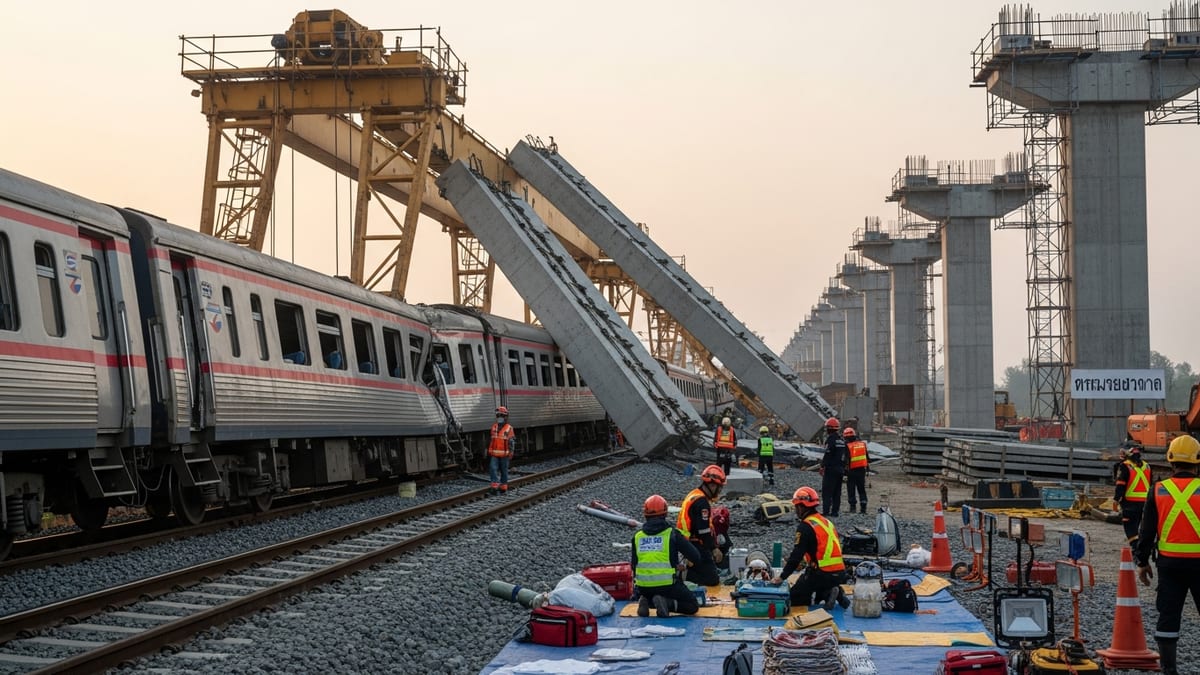
Derailment disrupts key road and rail corridors
Published coverage indicates that a freight consist left the tracks near a busy rail corridor serving the Mesa area, scattering railcars close to adjacent roadways. Initial assessments describe a low-speed incident with no reported major injuries, but the location of the derailment has created significant complications for both local streets and regional through-traffic.
Publicly available information shows that several railcars came to rest within reach of nearby intersections, prompting transportation agencies to block access while engineers evaluate track stability and surrounding ground conditions. Road users have encountered sudden closures near rail crossings, with concrete barriers and cones funnelling vehicles into a limited number of open lanes.
The derailment has also affected normal rail operations through the corridor. Passenger and freight movements are being rerouted where possible, lengthening journey times and adding pressure to other lines that feed into the Phoenix metropolitan area. For travelers relying on timed connections to airports or highway transfers, even modest delays have begun to ripple across the wider network.
According to regional transportation data, the affected alignment runs through an area that already manages frequent construction and maintenance lane restrictions. The derailment therefore arrives at a time when detour capacity is constrained, amplifying congestion on parallel arterials and freeways.
Traffic restrictions and detours around Mesa
Current traffic information from public dashboards and mapping tools indicates that multiple approaches to the derailment zone are partially or fully restricted. Drivers are encountering lane drops, turn prohibitions, and temporary signal timing adjustments on key east west and north south routes that ordinarily feed into Mesa’s core.
On some corridors, westbound traffic has been shifted to a single lane past work areas where crews are staging heavy equipment for rail repairs and debris removal. In other locations, grade crossings are fully closed, forcing motorists to make lengthy jogs north or south before they can cross the tracks. These patterns have added several minutes to typical peak period travel times across the city.
Data from Mesa’s traffic restriction mapping tools shows a dense cluster of temporary control permits in the vicinity of the rail line, reflecting the rapid deployment of barricades and control devices. For visitors unfamiliar with the area, the resulting maze of orange cones, variable-message boards, and police-controlled intersections has made navigation more challenging.
Surface streets near major shopping areas and business districts are also cycling through intermittent restrictions as traffic engineers attempt to balance local access with the need to keep detour routes moving. Short-term closures for oversized recovery vehicles and rail inspection crews can occur without much advance warning, further complicating journey planning for both residents and travelers.
Impact on travelers, tourism, and airport access
The derailment’s timing is particularly disruptive for leisure and business travelers who rely on Mesa as a gateway to wider Arizona destinations. The city’s location along key freeway links means that traffic shifts here can affect itineraries stretching from Phoenix to the state’s mountain and desert resort regions.
Reports from regional travel outlets note that congestion on alternative freeway segments has increased as motorists divert away from affected crossings and surface streets. Delays near key junctions add uncertainty for visitors trying to make check in times, tours, and scheduled activities, especially during hotter daytime hours when stop and go traffic becomes more taxing.
Access routes connecting Mesa with Phoenix Sky Harbor International Airport and Phoenix Mesa Gateway Airport are also indirectly influenced. While core airport freeways remain open, slower arterial approaches and rail-adjacent bottlenecks require additional buffer time. Travel planners are advising visitors to leave earlier than usual for outbound flights and to consider rail and transit options where available.
Local hospitality businesses and attractions could see shifting visitation patterns in the short term, as visitors adjust plans to avoid perceived trouble spots. Some may opt for ride hail services or shuttle providers familiar with current detours, while others may choose to base themselves closer to airport corridors until the situation stabilizes.
Rail safety scrutiny and infrastructure checks
In the wake of the derailment, rail infrastructure in and around Mesa is facing renewed scrutiny. Publicly available technical documents for the region already highlight several busy rail road crossings as candidates for future upgrades, including potential grade separations to reduce conflict points between trains and road traffic.
The current incident has prompted a round of inspections not only at the immediate derailment site but also along nearby segments where track geometry, ballast conditions, and signaling may influence long-term safety. Rail operators typically conduct detailed analyses of wheel profiles, rail wear, and train handling data after such events to determine whether infrastructure, equipment, or operational factors played the larger role.
City transportation plans published in recent years emphasize the importance of maintaining smooth interactions between freight rail corridors and rapidly growing traffic volumes. The derailment underscores how quickly a localized rail incident can cascade into widespread impacts on driving, transit reliability, and emergency response times in a metropolitan area of Mesa’s scale.
While full investigative findings may take months, the episode is likely to feature in future discussions about investment priorities, with advocates for rail safety and road congestion relief both pointing to the same corridor as a critical pressure point in the East Valley’s transportation network.
What drivers and visitors should do next
For the coming days, travelers headed through or around Mesa are being urged by transportation advisories and local media coverage to build extra time into driving schedules. Early departures, flexible meeting times, and alternate routing can help offset the unpredictable delays associated with periodic lane closures and incident response activity.
Navigation apps that integrate live traffic data are proving useful for real-time detour selection, but users are still encouraged to cross reference routes against official traffic restriction maps to avoid dead-end closures at rail crossings. Visiting drivers unfamiliar with local shortcuts may find it easier to remain on major freeways and arterials, even when these appear slower, because these corridors are more likely to be actively managed with signal timing and incident response resources.
Travelers planning day trips from Mesa to surrounding destinations such as Scottsdale, downtown Phoenix, or the Superstition Mountains may consider shifting departure windows away from peak commuting hours. Early morning or later evening movements can reduce the risk of getting caught behind temporary closures or rail-related inspections.
For now, published information suggests that restrictions tied directly to the derailment remain temporary but open-ended. Until rail repairs are complete and transportation agencies scale back barricades and detours, both residents and visitors should remain prepared for evolving traffic patterns throughout the Mesa area.