


More news on this day
Rail passengers in parts of the United Kingdom faced significant disruption after a fire at a busy railway station led to the cancellation of multiple services and widespread delays across the network, according to early reports and broadcast coverage.
Get the latest news straight to your inbox!
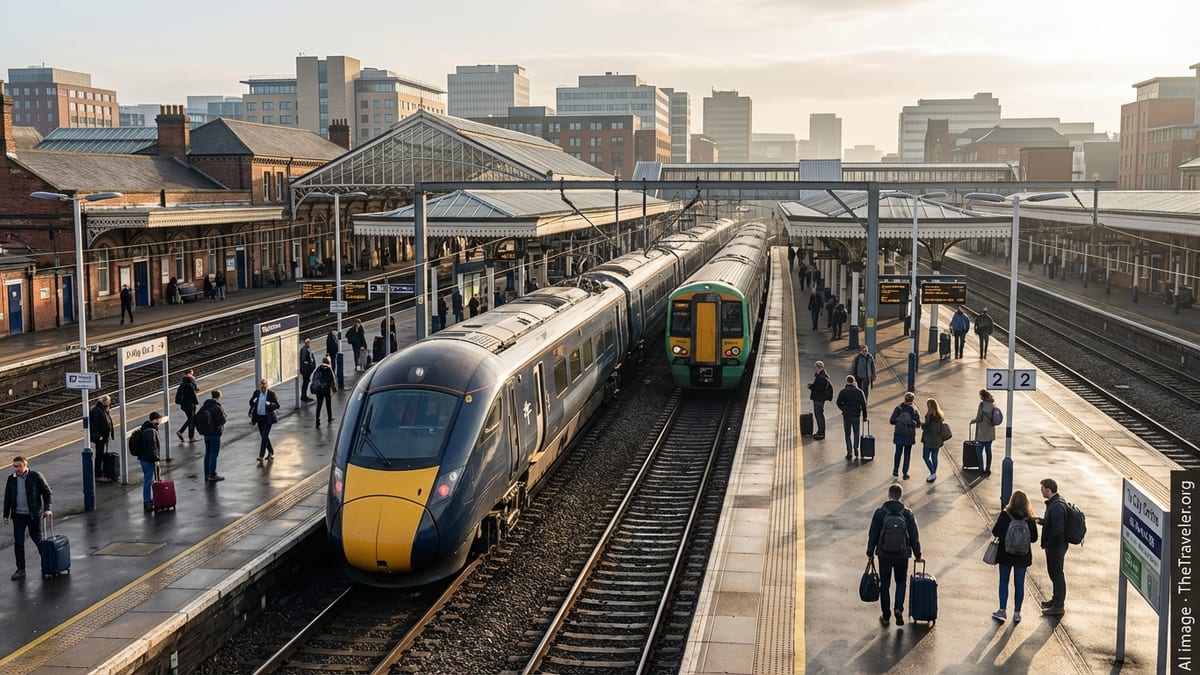
Services Halted as Fire Prompts Emergency Response
Broadcast footage and online updates from UK media indicate that trains were brought to an abrupt halt after a fire was reported at a central railway station, forcing operators to suspend services while the incident was assessed. Initial coverage suggests that platforms and concourse areas were evacuated as smoke was seen in parts of the station complex.
Rail staff and emergency crews redirected passengers away from affected areas while power to certain tracks was reportedly isolated as a precaution. Public information screens showed a growing list of cancellations and delays, with operators advising travellers not to attempt journeys unless essential.
Although detailed timelines continue to emerge, reports suggest that disruption began shortly after the incident was detected and continued into subsequent services, impacting both local and longer-distance routes. Some trains already en route were terminated short of their destinations or diverted to alternative stations.
By late morning, rail operators were advising that disruption was likely to continue for several hours, even after the fire was brought under control, due to the need for safety inspections and the complex process of resuming normal timetables.
Passengers Face Cancellations, Delays and Crowding
The sudden loss of capacity at a key station caused immediate knock-on effects for passengers. Publicly available journey planners showed severe delays on routes passing through the affected location, with some services cancelled outright and others running with significantly revised timings.
Passengers reported crowded concourses at nearby stations as travellers attempted to re-route their journeys. Social media posts highlighted long queues at information points and ticket offices as people sought clarity on whether they could continue their trips or needed to abandon travel plans.
Some rail operators activated ticket acceptance with other companies and on alternative routes, allowing passengers to travel via different stations where possible. However, published updates noted that capacity on substitute services was limited, particularly at peak times, and that passengers might not be able to board their first chosen train.
With limited real-time information in the early stages, many travellers turned to online rail apps and live departure boards for guidance. According to travel updates shared in local and national media, those who could postpone journeys were encouraged to do so to ease pressure on the network.
Safety Checks and Station Inspections Under Way
Once the fire was contained, attention shifted to assessing the safety of the station infrastructure. Reports describe inspections of signal rooms, electrical equipment and trackside cabling to determine whether any assets had been damaged by heat or smoke. Until these checks were completed, some platforms remained closed and a reduced number of trains were permitted to pass through the area.
Rail industry statements cited in media coverage stressed that services would only resume when it was safe to do so. This meant that, even after visible signs of the fire had disappeared, restrictions on train movements continued, prolonging disruption for passengers.
Engineering teams were also reported to be examining overhead lines, lighting systems and ventilation equipment to confirm that no hidden faults had been introduced by the incident. Any repairs, even minor ones, had the potential to lengthen the time before full operations could restart, particularly if specialist parts or additional staff were required.
Transport commentators noted that incidents involving fire at stations can have disproportionate effects on timetables because they often require both power isolation and evacuation of enclosed spaces, two measures that significantly limit rail operations even when physical damage appears limited.
Knock-on Impact Across the Wider Rail Network
Because the affected station sits on a busy section of the rail network, the incident produced wider repercussions beyond the immediate area. According to journey data shared in travel updates, some intercity services were diverted or short-terminated, while regional routes saw altered stopping patterns to keep trains moving around the bottleneck.
Connecting services were also hit, with passengers missing onward trains as initial delays cascaded through the timetable. This particularly affected travellers heading to airports, major cities and evening events who had planned tight connections through the disrupted station.
Rail analysts pointed out that in a tightly scheduled network, a single blocked node can quickly trigger widespread timetable instability. As diagrams and rolling stock are displaced, train crews may also be left in the wrong locations, causing further cancellations even after lines reopen.
Publicly available information from journey planners suggested that some disruption to late services could continue into the night, as operators worked to reposition trains and crews for the following day. Passengers were advised to check the status of first-morning departures, which can sometimes be affected when the previous day’s timetable is heavily disturbed.
Advice for Affected Travelers
Travel information services encouraged passengers to monitor live updates from rail operators and national journey planners before setting out, particularly for time-sensitive trips. Where tickets were bought in advance, coverage indicated that many operators were offering flexibility, allowing travel on later services or on alternative routes at no extra cost.
Those who chose not to travel due to the disruption were advised through public messaging to retain proof of purchase for potential refunds or compensation. The level of reimbursement typically depends on the type of ticket held and the length of delay experienced, as set out in each operator’s published terms.
Passenger groups highlighted the importance of building additional time into journeys when significant incidents occur on the rail network. They also recommended that travellers with accessibility needs contact rail assistance services ahead of time if diverted to unfamiliar stations, where step-free routes and facilities may differ from those originally planned.
As investigations into the cause and impact of the station fire continue, rail users are expected to face some residual disruption before the full timetable is restored. Transport observers suggest the incident will likely feed into ongoing discussions about station resilience, fire protection systems and the communication of real-time information during sudden rail emergencies.