


More news on this day
Thousands of travelers across Scandinavia have been caught in mounting disruption at Oslo Gardermoen Airport this week, as widespread cancellations and delays on SAS and Norwegian services ripple through one of Northern Europe’s busiest aviation hubs.
Get the latest news straight to your inbox!
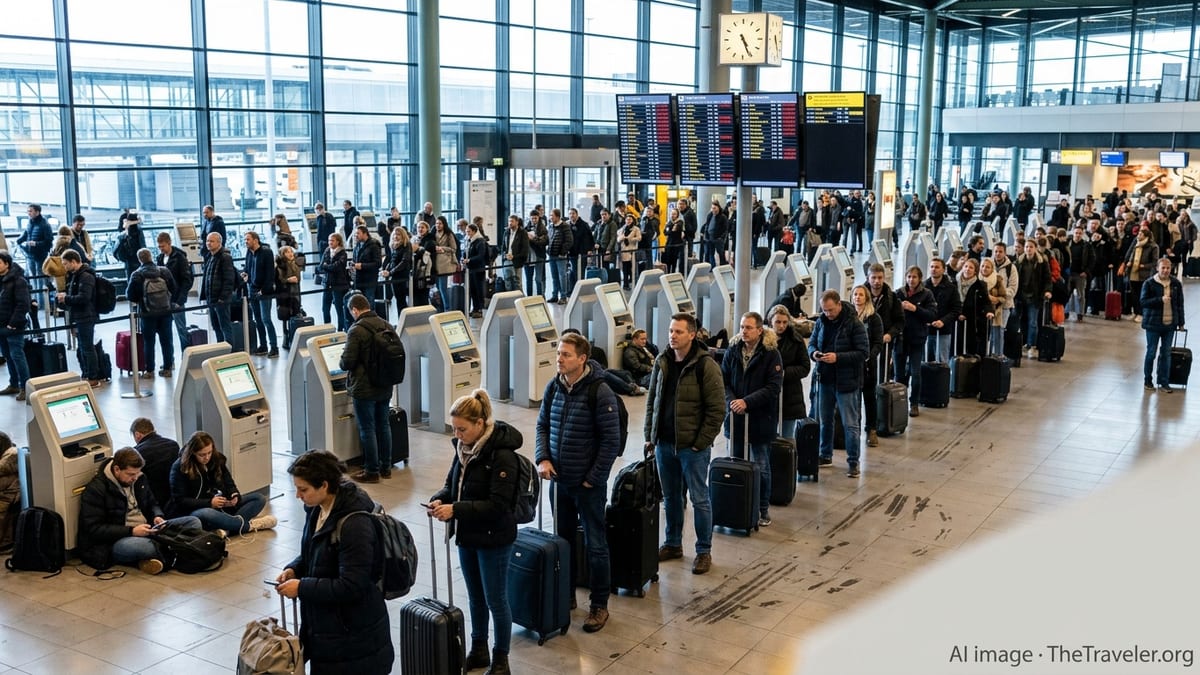
Hub Under Strain at the Start of Summer Peak
Oslo Gardermoen Airport functions as Norway’s primary international gateway and a central transfer point for domestic routes, meaning disturbances at the hub quickly cascade across the wider Scandinavian network. Publicly available airport and schedule data for services in early June show a growing pattern of irregular operations involving key domestic and regional routes that feed through Gardermoen.
Oslo Gardermoen’s role as a connector between Norwegian regional cities and major European destinations amplifies the impact of each cancelled departure. When flights between primary domestic corridors such as Bergen, Trondheim and Stavanger fail to operate as planned, onward connections to the rest of Europe are jeopardized, compounding delays for both local and international passengers.
The onset of the summer travel season typically brings higher load factors and tighter aircraft utilization, leaving airlines with less flexibility to recover from disruptions. Current schedules indicate dense peak operations at Oslo Gardermoen, which heightens the risk that any operational breakdown will trigger broader congestion across check-in, security and baggage handling areas.
Ripple Effects Across SAS Operations
SAS, one of the two dominant carriers at Oslo Gardermoen, has been under particular pressure in recent months as it restructures its network and grapples with cost challenges, including fuel prices. Industry coverage earlier in the spring highlighted a substantial wave of SAS flight cancellations linked to high operating costs and adjustments to capacity, especially on Norwegian domestic routes.
Recent timetable changes and operational notices show that selected SAS services touching Oslo have been altered, with some departures removed from near-term schedules and others adjusted in timing. While individual flight-status pages may still list upcoming departures as scheduled, passenger reports and earlier cancellation waves suggest that reliability on certain domestic and regional routes remains fragile.
The cumulative effect for travelers using Oslo Gardermoen as a connecting point is significant. Missed onward flights, long rebooking queues and overnight delays have increasingly become part of the travel experience for those relying on SAS to move between Scandinavian cities or onward to European hubs such as Copenhagen and Stockholm.
Norwegian Network Disruptions Add to Chaos
Norwegian, the other major operator at Oslo Gardermoen, is also navigating a complex operating environment in 2026. The airline’s own network plans show a busy peak-summer schedule on key domestic routes into Oslo, including services from northern Norway and major coastal cities, creating a tightly wound operation vulnerable to disruption.
Publicly accessible information on Norwegian’s flight status and earlier advisory material points to periods of stress on the carrier’s system in recent months, with weather events, high demand and operational bottlenecks all contributing to irregular operations. When Norwegian flights into Oslo arrive late or are cancelled, passengers lose onward connections not only on Norwegian’s network but also on separate tickets with other airlines, increasing overall congestion in the terminal.
The overlap between SAS and Norwegian on many domestic corridors means that problems at one airline can quickly limit the alternatives available to affected travelers. When both carriers are running at or near full capacity, same-day rebooking options shrink, leaving many passengers facing extended delays or the prospect of rerouting via secondary airports and overnight stays.
Passenger Experience: Long Queues and Uncertain Connections
Travelers transiting Oslo Gardermoen during the disruption have described a patchwork journey characterized by sudden schedule changes, repeated gate revisions and long waits at service desks. Online forums, consumer-rights discussions and social media posts from the past several weeks highlight a steady stream of complaints about late-notice cancellations on Scandinavian routes, missed connections and difficulties in securing timely rebookings.
Some passengers report discovering cancellations only when attempting to check in, while others recount being offered new itineraries that would extend short-haul journeys by many hours. The experience is often particularly challenging for those holding separate tickets, where missed connections can result in complex and costly rebooking chains involving multiple carriers.
The operational strain also appears to be affecting the broader airport experience. Accounts from recent travelers point to crowded departure halls, pressure on food and beverage outlets and uncertainty over whether scheduled flights will depart on time. For many, the combination of unpredictable departures and high summer passenger volumes has turned what should be a straightforward journey through Oslo Gardermoen into an exhausting ordeal.
What Travelers Can Do if Their Plans Unravel
Consumer information resources and passenger-rights guides emphasize that travelers facing cancellations and long delays at Oslo Gardermoen should document all disruption and keep records of communications with airlines. Under European air-passenger regulations, many itineraries departing from or arriving into Norway may qualify for assistance such as meals, accommodation and rebooking in the event of significant disruption, although eligibility depends on the specific circumstances of each case.
Publicly accessible advice also encourages passengers to monitor flight status directly through airline channels and airport information boards rather than relying solely on third-party apps, which can lag during periods of intense disruption. With same-day alternatives limited when networks are stretched, travelers are often urged to react quickly to rebooking offers and to consider rerouting via secondary hubs in Scandinavia or continental Europe where feasible.
The current turbulence affecting SAS and Norwegian operations around Oslo Gardermoen underlines the vulnerability of tightly scheduled networks at the start of the peak season. As airlines work to stabilize their operations, passengers planning trips through Scandinavia in the coming days are being advised by travel commentators to build in longer connection times, stay alert to schedule changes and be prepared for rapidly evolving airport conditions.