


More news on this day
A major drone attack over Russia’s Leningrad region triggered significant disruption at St. Petersburg’s Pulkovo airport on Wednesday, forcing delays and restrictions on flights as the city prepared to host President Vladimir Putin for a high-profile economic forum.
Get the latest news straight to your inbox!
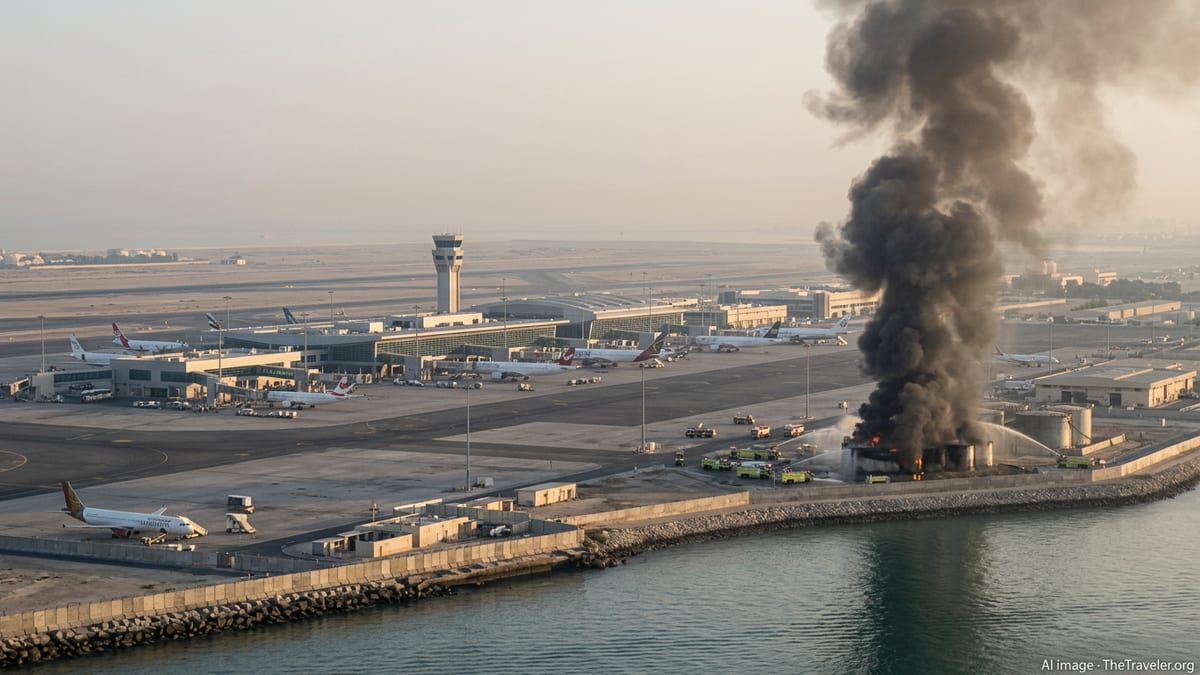
Airspace restrictions as drones approach Russia’s second city
Publicly available information indicates that Russian air defenses engaged dozens of drones over the Leningrad region in the early hours of June 3, prompting a temporary airspace lockdown around St. Petersburg. Russia’s Defense Ministry said unmanned aircraft were intercepted over multiple districts surrounding the city, part of what it described as a large-scale attack.
Regional officials reported that an air-raid warning was introduced overnight, with residents receiving mobile alerts about the threat of drones and possible problems with mobile internet. Local coverage in Russian-language outlets described explosions and air defense activity audible from several parts of the wider metropolitan area.
Initial reports suggested that most of the drones were destroyed before reaching central St. Petersburg, but debris was said to have fallen in several neighborhoods. Images published by Russian media appeared to show shattered windows and superficial damage to buildings consistent with blast waves or falling fragments.
The attack unfolded just as delegations were arriving in the city for the St. Petersburg International Economic Forum, intensifying attention on the vulnerability of one of Russia’s most prominent political and business showcases.
Flights halted and diverted at Pulkovo airport
According to data shared by Russia’s federal aviation watchdog, Pulkovo airport imposed a temporary halt on both incoming and outgoing flights as the drone threat developed. The restrictions were described as a safety measure, effectively freezing movements at the city’s main air hub during the busiest part of the morning schedule.
Social media posts from flight-tracking enthusiasts and passengers showed aircraft holding over neighboring regions or diverting to alternate airports while air defenses operated over the Leningrad region. Some aircraft approaching St. Petersburg were placed in extended holding patterns, while others were rerouted to destinations including Moscow and regional hubs further inland.
Russian outlets that monitor the aviation sector reported that dozens of flights were delayed and a number were canceled outright as airlines adjusted their schedules. Airport announcements urged passengers to remain in the terminal while staff attempted to rebook disrupted travelers and coordinate revised departure times.
By mid-morning local time, officials said the airspace restrictions had been eased and preparations had begun to resume departures from Pulkovo. However, the ripple effects of the shutdown were expected to persist through the day, with late-arriving aircraft and crew availability complicating efforts to restore normal operations before the opening of the economic forum.
Damage reports from St. Petersburg and surrounding areas
Regional authorities said that multiple drones had been intercepted over districts including Kronstadt, Kirovsky and Krasnoselsky on the approaches to St. Petersburg. Published coverage in Russian business and regional media described minor structural damage to several buildings, including broken windows and localized façade impacts.
In some areas, debris from intercepted drones reportedly landed near residential neighborhoods. Leningrad regional officials indicated that a small number of private houses in at least one district suffered light damage attributed to falling fragments. Initial reports noted several injuries in St. Petersburg itself but emphasized that there were no confirmed fatalities linked to the overnight barrage.
Separate Ukrainian and Russian-linked outlets highlighted claims that fuel or energy infrastructure in the wider region may have been among the intended targets. Ukrainian and independent media pointed in particular to previous incidents in which oil terminals and ports around the Gulf of Finland were struck in similar long-range drone operations.
Russian emergency services were reported to be assessing damage throughout the morning, while municipal crews worked to clear debris and board up damaged windows in affected districts. Local authorities announced that temporary support points and hotlines had been set up for residents seeking assistance with repairs or documentation.
Economic forum opens amid tightened security
The attack coincided with the opening of the St. Petersburg International Economic Forum, one of Russia’s most prominent annual gatherings for domestic and foreign business figures. President Vladimir Putin is scheduled to deliver a keynote address during the event, which brings together senior Russian officials and delegations from allied and neutral countries.
Forum organizers and Russian media had already highlighted tightened security measures across the city, including expanded road closures, restricted access zones, and heightened checks around strategic sites. The drone attack further reinforced the atmosphere of alert, with analysts noting that the timing appeared calculated to coincide with both the forum and Putin’s planned presence in his home city.
Publicly available schedules indicated that visiting heads of state, senior ministers from several energy-producing countries, and high-ranking officials from China and Central Asia were expected to attend sessions in the coming days. The flight disruptions at Pulkovo raised questions about whether some delegations might face delays reaching the venue or adjust their travel plans.
While Russian officials have sought to present the forum as a demonstration of resilience and international engagement despite sanctions and the ongoing war in Ukraine, the drone incident underscored the extent to which the conflict has reached deep into Russia’s own territory and its key economic centers.
Drone warfare increasingly targets Russian infrastructure
The overnight barrage around St. Petersburg fits into a wider pattern of long-range drone strikes that have targeted Russian infrastructure far from the front lines over the past year. Ukrainian officials have repeatedly signaled their intention to strike oil facilities, logistics hubs and military sites that support Russia’s campaign in Ukraine, while rarely commenting in detail on individual operations.
Independent monitoring of previous attacks shows that drones have repeatedly forced Russian airports to halt operations, sometimes for several hours at a time, causing cascading delays across the domestic aviation network. Earlier waves of strikes led to significant disruptions at Moscow’s main airports and prompted Russia to redeploy additional air defense assets to protect major cities and industrial facilities.
Analysts cited in open-source reporting argue that even when drones are intercepted before reaching their targets, the need to close airspace, ground flights and mobilize emergency services imposes economic and psychological costs. In the case of St. Petersburg, the latest episode highlighted how a relatively small number of unmanned aircraft could temporarily paralyze traffic at a key international gateway on the eve of a flagship political event.
As the economic forum proceeds under heavy security, observers will be watching for signs of further attempts to disrupt the gathering, as well as for any shifts in Russia’s air defense posture around St. Petersburg and other major hubs. The latest drone strikes appear likely to intensify debates in both Moscow and Kyiv about the evolving role of long-range unmanned systems in the wider conflict.